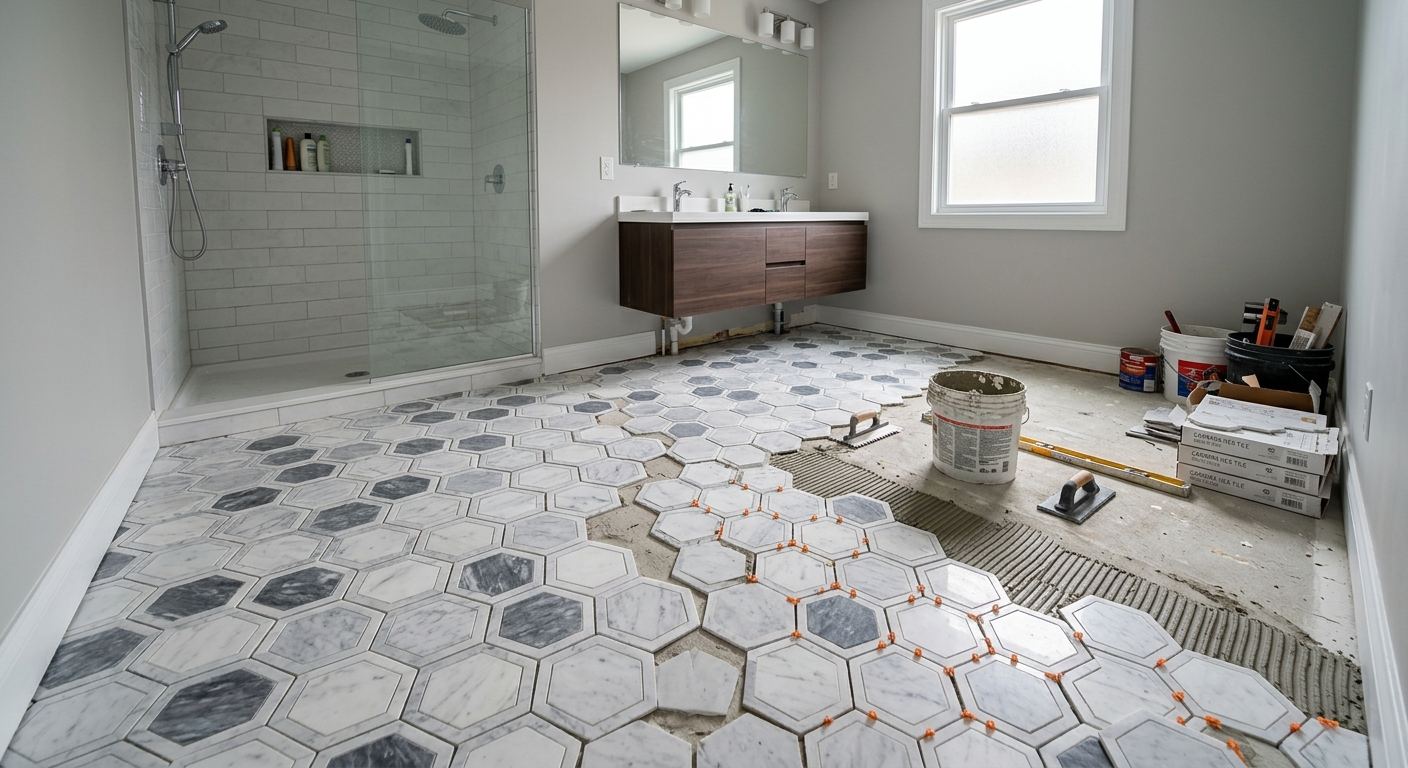
Bathroom renovation options and costs in New Edinburgh
Bathroom renovation in New Edinburgh, Ontario typically starts with three paths: a cosmetic refresh, a mid-range full renovation, or a high-end upgrade. With local housing stock common to the Toronto economic region—many homes were built well before modern drainage and venting conventions—bathrooms often have older plumbing layouts. In a 2021 Census snapshot, New Edinburgh’s population is 3,539 (Statistics Canada, 2021 Census), which means the market is active but neighbourhood-specific trades demand can move lead times. In practical terms, that age factor matters more than climate: Toronto’s humidity isn’t what drives cost—labour intensity and labour rates do. Once walls and floors come off, you may also discover asbestos-containing materials in older floor tile or dated wiring remnants that require licensed remediation and electrical upgrades.
Contractor availability and labour premiums are also a GTA reality. Bathroom work is detail-heavy—tiling, custom shower waterproofing, and drain reconfiguration—so realistic GTA budgets often land in the low-to-mid five figures for a standard 3-piece full renovation, with higher-end work pushing toward the upper local bands. In New Edinburgh, trade demand is especially noticeable around the Ottawa River corridor and older pocket streets where post-war homes are common and homeowners frequently chase bigger shower upgrades. From there, the easiest way to compare proposals is to start with a clear scope category—then you can see where your project sits in the table below.
| Renovation Scope |
What's Included |
Typical Duration |
Price Range |
| Cosmetic refresh (paint, fixtures, accessories only) |
Paint, swap vanity or faucet, replace toilet/lighting as requested, new accessories, caulking and minor touch-ups; no wall/floor demo beyond necessary access |
2–5 days |
$2,500–$6,500 |
| Mid-range full renovation (new tile, vanity, tub/shower, electrical) |
Demo and disposal, new tub/shower surround or alcove, tile floor + walls (per plan), vanity, toilet, updated lighting/exhaust fan, basic waterproofing and sealant work |
2–3 weeks |
$12,000–$22,000 |
| High-end full renovation (custom tile, steam shower, heated floors) |
Custom waterproofed shower or steam-ready shower system, premium tile, heated floor circuit, upgraded electrical and ventilation, designer fixtures, niche shelving, more extensive layout tie-ins |
3–5 weeks |
$22,000–$30,000 |
| Shower-only installation (convert tub to walk-in shower) |
Remove tub, install walk-in shower base and waterproofing, tile surround, new glass door/enclosure, plumbing adjustments for drain/supply where needed |
1.5–3 weeks |
$8,500–$16,000 |
| Bathtub replacement or tub-liner install |
Remove and replace alcove tub (or liner prep + liner), new tub surround sealing, new fixtures, recaulk; limited tile disturbance depending on fit and wall condition |
5–10 days |
$1,200–$5,000 |
| Tile-only installation (floor + surround, existing layout kept) |
Floor tile + selected wall tile, new grout/sealant, waterproofing upgrades within tiled areas, surface prep and leveling as required |
1–2.5 weeks |
$6,000–$14,000 |
Prices are estimates only and vary by project scope, site access and material selection.
What affects the price of bathroom renovation in New Edinburgh
In Toronto and across Ontario, you can see bathroom quotes swing by 30–50% for the “same” bathroom because the cost drivers are mostly labour-intensive trades and hidden-condition risk. Unlike some renovation types, bathrooms combine tilework, waterproofing, plumbing rough-in and often electrical—so GTA hourly rates and the time it takes to do things correctly create the premium. In the Toronto economic region, older post-war and 1960s–1980s homes can have cast-iron or undersized drains, galvanized supply lines, and ventilation that doesn’t meet today’s expectations. When we open walls, it’s common to discover issues that require drain reconfiguration, vent corrections, and new shut-offs, which pushes budgets upward even when the visible finishes stay simple.
As an example, a straightforward mid-range refresh-to-full-reno path that includes electrical and new tile often lands in the lower end of the local full renovation band (roughly $12,000–$22,000). If you uncover asbestos-containing materials in vinyl floor tile or older drywall compound (commonly in pre-1985 homes), abatement and licensing can add about $1,500–$5,000+ before any design upgrades. Conversely, if your tub-to-shower conversion keeps the drain line in a workable location and the subfloor is flat, you may control costs closer to the lower shower installation band (around $4,000–$12,000 for labour-focused scopes, before major layout work).
Two common New Edinburgh scenarios that raise cost: (1) moving a drain or supply line, which triggers rough-in work and inspection steps; (2) discovering an unlevel subfloor or rot, which forces additional backer, underlayment, or concrete patching. A cost-lowering scenario is when you keep the same layout and use a consistent tile format—less cutting, faster waterproofing sequencing, and fewer membrane transitions.
| Price Factor |
Why It Matters |
Cost Impact |
| Layout change — moving drain or supply lines requires rough-in work |
New drain runs, venting tie-ins, and shut-offs increase labour and inspection scope |
Can add several thousand dollars depending on distance and wall access |
| Tile selection — large-format porcelain vs. mosaic vs. ceramic |
Harder tile types need better substrate prep and more precise cuts; mosaic increases labour density |
Typically shifts costs by about $1,000–$4,000 for labour and waste |
| Fixture tier — builder-grade vs. mid-range vs. designer brands |
Valve trim, shower systems, and vanity hardware vary widely in price and install complexity |
Often adds $800–$6,000+ in materials |
| Subfloor condition — rot or unlevel concrete adds scope |
Membrane and tile fail faster if the substrate isn’t sound and flat |
Commonly adds $500–$3,500 (or more) depending on repairs needed |
| Electrical — adding GFCI outlets, exhaust fan, heated floor circuit |
Bathrooms require safe wiring and proper ventilation; heated floors require circuit planning |
Often adds $900–$3,500 |
| Waterproofing method — membrane type and extent |
Quality waterproofing systems reduce mould risk and protect the structure in Ontario humidity |
Can change costs by $600–$2,500 based on membrane choice and coverage |
| Older-home surprises — asbestos tile, cast-iron drains, galvanized pipes |
Abatement and plumbing replacement require licensed steps and more time |
Adds roughly $1,500–$5,000+ for abatement; plumbing upgrades vary widely |
| Bathroom size — sq ft drives tile and labour time directly |
More square footage increases tile quantities, layout time, and curing/wait times |
Budget swings are often $2,000–$8,000 for larger footprint changes |
Permits & regulations in Ontario
In Ontario, many “like-for-like” bathroom updates don’t require a permit. Typically, cosmetic work such as swapping fixtures in the same locations (faucet and vanity, replacing a toilet, re-caulking and painting) and retiling where you’re not changing plumbing or structural elements usually doesn’t trigger permit requirements. However, if you relocate plumbing—moving a drain or supply line—or you change the bathroom’s ventilation setup by installing an exhaust fan that requires new wiring/circuit work, permits and inspections are often required. If you’re altering framing or making structural wall changes, that also generally moves the job into permit territory. Electrical work must meet Ontario electrical code and be performed by a licensed electrician, or signed off by one.
A homeowner in New Edinburgh can verify a contractor step-by-step. First, ask for the contractor’s Ontario trade licence information (where applicable to the scope) and confirm it matches the company name on the quote. Second, request a certificate of insurance showing general liability coverage and ensure the policy covers renovations/bathroom work; if abatement is anticipated, confirm the right licensed coverage is provided before work begins. Third, ask how WSIB/WCB clearance is handled: request proof of coverage or a clearance letter, and confirm the documents are current for the project start date. Finally, ensure the quote clearly states which permits (if any) the contractor will pull, and list inspection milestones so there are no surprises when work reaches rough-in or final close-up stages.
Choosing tile, waterproofing and fixtures for your New Edinburgh bathroom
In a New Edinburgh bathroom renovation, your budget usually comes down to three material decisions: tile choice, waterproofing method, and fixture tier. Tile is more than appearance—installation complexity changes with format, absorption rate, and how often you’ll cut around niches, curbs and corners. Ceramic tile is a solid entry option when the substrate is sound and the layout is straightforward. Porcelain typically performs better in wet areas and tolerates heavy daily use, but it demands precise prep and stronger substrate flatness. Natural stone looks premium, yet it requires careful sealing and can be less forgiving on variation and installation tolerances.
Waterproofing is the mould-prevention system. In Ontario’s humid bathroom environment, the safest approach is to use the correct system for your shower details and follow manufacturer transition rules at changes of plane. A paint-on membrane can work for some applications, while bonded sheet membranes and Schluter-style systems are often chosen where you want predictable coverage behind tile and stronger detail resilience around corners and niches. The key is correct installation, not just the product name.
For fixtures, going from builder-grade to mid-range often pays back in smoother valves, better trim finishes and easier serviceability. For example, if your mid-range full renovation budget is in the $12,000–$22,000 range, upgrading to a reputable shower valve and a frameless enclosure can be justified because it upgrades the “daily touch points” and resale appeal. But overspending on high-end stone and steam features can be poor value if your layout or plumbing upgrades are already pushing you toward the upper band—those hidden condition costs usually deserve priority first.
| Material / Option |
Pros |
Cons |
Price Range |
| Ceramic tile (floor + walls) |
Lower material cost, wide colour selection, good for straightforward layouts |
More risk of chipping at edges; may require careful selection for wet-zone slip resistance |
$3,000–$8,000 |
| Porcelain tile (floor + walls) |
Better durability and water resistance, consistent sizing options for cleaner lines |
Can cost more per sq ft and demands excellent substrate flatness for large formats |
$6,000–$12,000 |
| Natural stone (marble, travertine, slate) |
Luxury look and unique variation, strong resale appeal when properly selected |
Higher maintenance (sealing), more labour time, and potential sensitivity to water/etching |
$10,000–$20,000 |
| Frameless glass shower enclosure |
Brightens the bathroom, modern look, better sightlines for small spaces |
More expensive than partial enclosures; requires precise framing and hardware |
$2,500–$6,500 |
| Prefab tub surround (acrylic) |
Fast install, fewer tile transitions, easier waterproofing detailing |
Less custom design flexibility than fully tiled walls |
$1,200–$3,500 |
| Custom shower pan (tile or linear drain) |
Great for modern layouts; improved drainage with linear options; fully integrated look |
More time and waterproofing detailing; can be costly if layout requires re-plumbing |
$4,500–$12,000 |
How to choose a bathroom renovation contractor in New Edinburgh
Start by verifying licensing, insurance, and coverage—because bathroom work mixes trades. Ask for the contractor’s Ontario trade licence information relevant to your scope, and require a certificate of general liability insurance that matches the company doing the work. For workers, confirm WSIB/WCB status: request proof of coverage or a clearance letter so you’re not left exposed if an injury occurs on site. In addition, if your project includes any demolition that might disturb older materials, ask how disposal and any required abatement would be handled under the right licensing and documentation.
Next, get 2–3 itemised written quotes—not just a lump sum. Your quote should break out labour and materials separately, including waterproofing method, tile installation approach, shower system components, electrical scope and plumbing rough-in allowances. Read the exclusions carefully: disposal included or extra? permit pull included or billed separately? who supplies things like glass doors, niche shelving, and backer boards? Warranty matters too: confirm workmanship warranty length and whether it’s transferable to future owners. Product/manufacturer warranty is separate—ask for model numbers and proof of purchase process.
Finally, protect your cash flow. In New Edinburgh, a safe payment schedule is usually no more than 10–15% upfront, with the rest tied to milestones, and a holdback until final completion and sign-off. Also insist on a start date and estimated completion timeline in writing.
- Itemised quote with labour and materials lines (tile, waterproofing, plumbing fixtures, electrical labour)
- Clear waterproofing specification (membrane type and coverage areas, not just “waterproofed”)
- Permit responsibility stated in writing (who pulls permits, inspection dates)
- Disposal and dumpster fees included or clearly priced
- Subfloor prep and leveling method described (especially if you have older or uneven floors)
- Written timeline with dependency notes (glass fabrication lead time, curing times)
- Proof of insurance certificate and WSIB/WCB clearance letter before work starts
- Licensed electrician/plumber listed where rough-in or circuit work is included
- Warranty in writing: workmanship length and how defects are handled
- Payment schedule tied to milestones; avoid large deposits
- Sample contract language for change orders (how extras are approved and priced)
- Site protection plan (floor protection, dust control, doorway protection)
Red flags I commonly see with bathroom contractors in New Edinburgh: vague scopes that only say “plumbing and electrical as needed,” no waterproofing specification, refusing to provide insurance/WSIB proof, unrealistic timelines that ignore curing and backer/membrane sequencing, and quotes that don’t explain what happens if hidden conditions (like old drain lines or asbestos-containing tile) are found.
Frequently asked questions — bathroom renovation in New Edinburgh
What's the ROI on a bathroom renovation?
In New Edinburgh and the broader Toronto market, a bathroom renovation ROI usually depends on quality, functionality and how aligned the changes are with the home’s price tier. A well-executed bathroom tends to be a “must-have” buyer expectation, but deep luxury upgrades don’t always recoup dollar-for-dollar—especially if the rest of the home needs work. If you keep the layout and invest in durable waterproofing, good ventilation and mid-range finishes, you’re more likely to protect resale value. For homeowners aiming to stay in the practical band, a mid-range full renovation often falls around $12,000–$22,000, while cosmetic refreshes are smaller bets. If you move plumbing, add heated floors, or build a custom shower, ROI can be higher in buyer appeal, but your cash outlay typically goes toward the upper end of local ranges.
Do I need waterproofing behind the tile?
Yes—if you want long-term performance, waterproofing behind the tile in Ontario bathrooms is the standard practice. Bathrooms face constant moisture from shower use, and Ontario humidity doesn’t forgive shortcuts. Even if your current tile looks fine, grout lines don’t prevent water from reaching backer boards and framing. In a renovation in New Edinburgh, a reputable contractor will waterproof the wet-zone walls and shower areas using a membrane system appropriate to your shower details (for example, bonded sheet membrane or a well-detailed sheet/membrane approach). If you’re converting a tub to a walk-in shower, waterproofing becomes even more critical because the entire shower area must be properly sealed, including transitions at corners and at any niche openings.
How do I compare bathroom renovation quotes?
Compare quotes like-for-like by forcing itemisation. In New Edinburgh, two quotes can both advertise “full renovation,” but one may include a full waterproofing system and permit handling while the other treats those as extras. Ask each contractor to list labour and materials separately: tile installation method, waterproofing type and coverage, plumbing rough-in allowance, electrical scope (exhaust fan, GFCI requirements), and disposal. Confirm whether permits are included. A good comparison also includes hidden-condition allowances: older homes may require drain reconfiguration and vent corrections, and some pre-1985 material may require asbestos abatement. If one quote is targeting the $12,000–$22,000 band while another is near the $22,000–$30,000 range, you should be able to point to the exact line items driving the difference.
Can I live at home during a bathroom renovation in New Edinburgh?
Often yes, but it depends on the schedule and what you’re doing. For a cosmetic refresh, you can usually remain in your home with minimal disruption. For mid-range full renovations, you may be without a functional shower or tub while the plumbing and waterproofing are completed and tile cures. Contractors sometimes work on one area at a time so you can keep using another bathroom, if you have one. If it’s your only bathroom, plan for a temporary solution such as using a nearby shower, setting up a temporary toilet, and protecting living areas from dust. You’ll get the most accurate answer from a contractor who provides a written timeline and explains critical path items—demo, rough-in, membrane curing, and tile installation sequencing—because that determines how many days you’ll be inconvenienced.
What's the best bathtub material for a New Edinburgh home?
The “best” tub material usually depends on your existing plumbing access, your insulation needs and how much you want to modify the surround. In many Ontario homes, an alcove tub replacement or tub-liner approach can work well if the framing and subfloor are solid. Acrylic tubs are common because they’re lightweight, easier to install and keep warmth better than some cast-iron options. Cast iron is durable but heavier and may require more structural care during removal. If your goal is a clean, modern look with lower maintenance, many homeowners choose a tub replacement in the ~$1,200–$3,500 band (or higher if scope expands), or they convert to a shower for accessibility and quicker cleaning. In older homes where hidden plumbing issues appear, the “best” choice becomes the one that avoids unnecessary demolition while still meeting ventilation and waterproofing expectations.
Is it worth renovating a bathroom before selling in New Edinburgh?
It can be worth it, particularly if your bathroom is dated, has visible water damage, poor ventilation or risky maintenance issues (like failing caulking or loose tile). In New Edinburgh and the Toronto market, buyers often evaluate bathrooms early and assume ongoing maintenance if they see deferred repairs. A full renovation can be a strong selling move when it improves both function and durability—especially because moisture problems can deter buyers or reduce offers. If you’re trying to balance spend and appeal, a mid-range full renovation is commonly planned in the $12,000–$22,000 range, targeting lasting waterproofing, new fixtures and a clean layout. If you’re only doing superficial changes, you may still raise buyer confidence, but a cosmetic-only job can underdeliver if plumbing vents, subfloor flatness or shower waterproofing are already compromised.