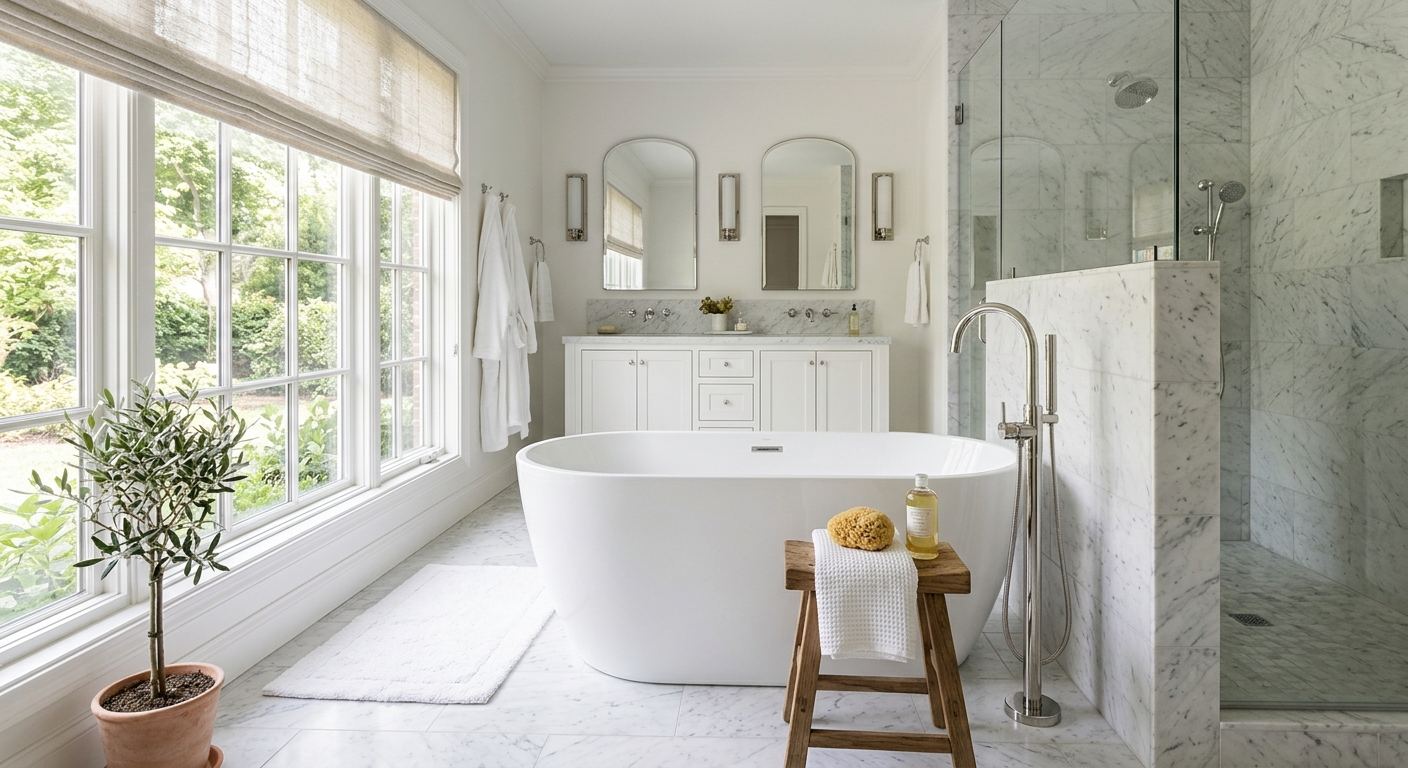
Bathroom renovation options and costs in Bentley
In Bentley, bathroom renovations range from simple refreshes to full gut-and-rebuild projects, and the right option depends on how dated your plumbing and finishes are. With 61.5% of homes in the broader area built before 1981, many bathrooms start with older layouts—think cast-iron or aging drain lines, dated venting, and supply plumbing that may not be sized or conditioned for modern fixtures. That housing reality matters more for your final budget than weather alone, because the Red Deer region’s cost pressure is driven by labour, scope, and hidden site conditions. Bentley is also supported by a strong skilled-trade market across Alberta, where plumbing, electrical and tile labour can price higher than in smaller markets.
Because 80.2% of homeowner households in the profile own their homes, many projects prioritize durability and long-term value rather than quick cosmetic changes. Neighbourhoods around downtown Bentley and the main residential corridor see steady demand, since older houses there often have multi-trade coordination needs (plumbing + electrical + tile) once walls come open.
For most homeowners, a typical full remodel commonly lands around the regional band of $25,000 – $50,000, while complex full upgrades can exceed $50,000 when plumbing/venting, framing adjustments, and premium finishes are involved. If you’re deciding between options, the table below gives practical expectations for scope, duration, and price—so you can compare quotes apples-to-apples.
| Renovation Scope |
What's Included |
Typical Duration |
Price Range |
| Cosmetic refresh (paint, fixtures, accessories only) |
Paint, new vanity top or vanity, toilet/fixtures swap (no plumbing relocation), hardware/accessories, re-caulk, mirror/lighting replacement where wiring is existing and unchanged |
3–7 days |
$3,000–$12,000 |
| Mid-range full renovation (new tile, vanity, tub/shower, electrical) |
Demo, waterproofing, floor and wall tile, vanity and lighting updates, tub/shower swap (or surround replacement), exhaust fan upgrade, GFCI receptacle if required, new plumbing trims |
2–3 weeks |
$25,000–$40,000 |
| High-end full renovation (custom tile, steam shower, heated floors) |
All mid-range items plus custom layout upgrades, heated floor wiring/circuit, premium tile/stone, steam shower components, upgraded finishes and expanded waterproofing strategy |
3–5 weeks |
$40,000–$65,000 |
| Shower-only installation (convert tub to walk-in shower) |
Convert tub area to walk-in shower, new shower valve/trim (as required), tile floor + walls, linear or standard drain option, waterproofing, exhaust fan check/upgrade if needed |
1–2 weeks |
$18,000–$28,000 |
| Bathtub replacement or tub-liner install |
Remove and replace tub and re-seal; or install tub liner where existing tub is serviceable, new tub surround caulking/trim, plumbing trims match existing rough-in |
4–8 days |
$2,500–$8,000 |
| Tile-only installation (floor + surround, existing layout kept) |
Tile floor and wet-wall surround, remove/reinstall fixtures as needed within existing footprint, waterproofing prep, grout/seal, caulking and finishing where layout remains unchanged |
5–12 days |
$10,000–$22,000 |
Prices are estimates only and vary by project scope, site access and material selection.
What affects the price of bathroom renovation in Bentley
Two contractors can quote the “same” bathroom renovation in Bentley and still be 30–50% apart. In the Red Deer economic region, those gaps usually come from labour availability, the exact scope (what’s being moved or replaced), and what’s discovered once walls and floors are opened—not from weather exposure. Alberta’s strong skilled-trade demand means plumbing, electrical and tile crews can be priced at a premium, and schedules can influence the cost (especially when a project depends on multiple trades at once).
Older housing stock is the biggest driver here. With 61.5% of homes built before 1981, hidden conditions are common: cast-iron drain sections may need replacement, galvanized supply lines may require changes for pressure and corrosion control, and ventilation can be inadequate for modern shower steam loads. If your renovation triggers asbestos abatement—often tied to older vinyl floor tile or aged drywall compounds—the budget can increase quickly. In practice, that kind of discovery can add $1,500–$5,000+ in containment, testing, and disposal coordination.
Concrete examples from Bentley: (1) keeping the existing vanity and toilet footprint usually keeps rough-in work minimal, which protects your budget and often keeps your project closer to the $25,000–$40,000 mid-range band; (2) converting a tub to a walk-in shower often requires changes to drain slope/placement and additional waterproofing, nudging the job toward the $18,000–$28,000 shower conversion band and sometimes higher; (3) upgrading an undersized exhaust fan or adding a properly placed fan vent can require attic/ceiling access, which impacts labour time.
| Price Factor |
Why It Matters |
Cost Impact |
| Layout change — moving drain or supply lines |
Requires rough-in work, patching, possibly subfloor/framing adjustments |
Often +10% to +30% |
| Tile selection — large-format porcelain vs. mosaic vs. ceramic |
Large panels increase installation complexity; mosaics increase grout lines and labour |
Typically +$3,000 to +$8,000 |
| Fixture tier — builder-grade vs. mid-range vs. designer brands |
Higher tiers cost more and may require better installation tolerances |
Typically +$1,500 to +$7,000 |
| Subfloor condition — rot or unlevel concrete adds scope |
May require replacement, flattening, moisture remediation and additional prep layers |
Typically +$2,000 to +$6,000 |
| Electrical — adding GFCI outlets, exhaust fan, heated floor circuit |
Licensed electrical work and proper circuit protection increase labour and parts |
Typically +$800 to +$4,500 |
| Waterproofing method — membrane type and extent |
Better systems add material cost but reduce future leak risk |
Typically +$1,000 to +$4,000 |
| Older-home surprises — asbestos tile, cast-iron drains, galvanized pipes |
Testing, abatement, pipe replacement and inspection coordination add time and disposal costs |
Often +$1,500 to +$5,000+ |
| Bathroom size — sq ft drives tile and labour time directly |
More surface area means more tile, thinset, waterproofing, and set/cure time |
Typically scales +$5,000 to +$15,000 |
Permits & regulations in Alberta
In Alberta, many bathroom updates in Bentley are considered straightforward cosmetic work, which typically does not require a permit. Swapping fixtures—such as replacing an existing vanity, toilet, tub trim, faucet trim, mirrors, and accessories—usually stays in the “like-for-like” lane when you’re not changing plumbing rough-ins. Replacing a shower surround with the same footprint and not moving supply/drain lines is commonly treated as a renovation rather than a major structural change.
Permits are usually required when you move plumbing or make additions that change how the system works. For example, relocating a drain or supply line, converting a tub to a walk-in shower with changes to the drain arrangement, adding/relocating a new vent path, or making structural wall changes generally require permitting and inspections. Electrical work must meet Alberta code; adding a new exhaust fan, adding a new circuit for a heated floor, or installing/relocating GFCI-protected receptacles typically requires proper execution by (or sign-off from) a licensed electrician.
To verify a contractor in Bentley, follow three steps: (1) check their Alberta trade licence using the appropriate online registry listing for the trade(s) they claim to perform; (2) request a certificate of liability insurance and confirm coverage dates and amounts; and (3) ask for proof of WCB/WSIB coverage (or the appropriate coverage letter/documentation for their status). A credible contractor will provide these quickly and clearly before the project starts.
Choosing tile, waterproofing and fixtures for your Bentley bathroom
In Bentley bathrooms, your budget usually gets decided by three product choices: tile, waterproofing, and fixture tier. First, tile selection sets both material price and labour complexity. Entry-level ceramic tile can be economical, but it often hides less well if your surface isn’t perfectly flat. Porcelain tile is usually the “best value” choice for wet areas because it handles moisture and wear better while still supporting strong installation techniques. Natural stone (marble, travertine, slate) looks premium, but it can add cost not only in material, but also in sealing and careful layout to avoid uneven colour or texture.
Second is waterproofing. In Alberta’s bathroom conditions—where warm showers meet cooler bathroom spaces—moisture management is what protects your tile and framing. A paint-on membrane can work in certain systems, but a bonded sheet membrane or a proven tile-system approach generally offers stronger continuity, especially at corners, niches, and transitions. Choosing the “right” method often prevents mould and grout deterioration over time, regardless of whether your home is older.
Third, fixture tier affects both upfront cost and long-term satisfaction. Builder-grade fixtures can keep you closer to the mid-range $25,000–$40,000 renovation band, while designer options can push higher, especially when you’re also upgrading valves, shower hardware, and lighting. As a practical example: upgrading from standard ceramic to porcelain in a typical mid-size bathroom may add roughly $2,000–$5,000 in materials, but it’s often justified if it reduces replacements and improves slip resistance. If you’re already near the $50,000 threshold, saving on tile thickness but investing in a robust waterproofing system can be the smarter trade-off.
| Material / Option |
Pros |
Cons |
Price Range |
| Ceramic tile (floor + walls) |
Lower cost, wide design selection, good for budget remodels when surfaces are well-prepped |
Not as durable as porcelain for some wear conditions; may require more careful grout/surface planning |
$5,000–$10,000 |
| Porcelain tile (floor + walls) |
Higher moisture and wear resistance, consistent size/shape for cleaner layouts, strong wet-area performance |
Material cost is higher; large formats demand skilled installation and careful subfloor prep |
$8,000–$15,000 |
| Natural stone (marble, travertine, slate) |
Luxury look, unique character, excellent high-end finish |
Sealing/maintenance, potential for surface variation, higher labour time and material waste |
$15,000–$30,000 |
| Frameless glass shower enclosure |
Clean appearance, easier visual match with tile; improves perceived space |
Higher hardware and installation demands; requires precise framing and waterproof detailing |
$2,500–$6,500 |
| Prefab tub surround (acrylic) |
Fast install, smooth non-tile cleaning, good for tighter budgets |
Less “custom” look than tile; cut-outs must be sealed correctly to avoid moisture issues |
$1,200–$3,500 |
| Custom shower pan (tile or linear drain) |
Better slope/drain performance, modern linear drain look, integrated waterproofing detail potential |
More labour and detailing; quality depends heavily on installer waterproofing and pan prep |
$4,500–$12,000 |
How to choose a bathroom renovation contractor in Bentley
Choosing the right contractor in Bentley starts with proof, not promises. For Alberta licensing, ask which trades they’re performing and verify each licence online for the relevant trade class. Request liability insurance documentation (certificate of insurance) and confirm it’s current for the job dates. For WCB/WSIB coverage, ask for the clearance letter or proof of coverage documentation so you’re not stuck with liability if something happens on-site.
Next, get 2–3 itemised written quotes. You want line items for labour and materials (demo, rough-in plumbing, waterproofing materials, tile setting, electrical items, disposal, and any permit fees). Avoid quotes that only present one number without explaining exclusions. Carefully check what’s not included: niche build-outs, subfloor replacement, grout/seal finish choices, venting modifications, asbestos testing/abatement, and whether permit pulls and inspections are included.
Warranty matters too. Ask for the workmanship warranty length and whether it covers waterproofing and tile installation failures specifically. Also confirm manufacturer product warranties and whether any labour warranty is transferable if you sell the home. Payment schedule should be conservative: never pay more than about 10–15% upfront; use milestone payments and hold back a portion until the final walkthrough and punch list are complete. Finally, get a written start date and completion estimate, including a plan for material lead times.
- Verify each relevant Alberta trade licence before signing.
- Confirm liability insurance is active for the project duration.
- Request WCB/WSIB clearance/proof and keep it on file.
- Use itemised quotes: labour vs materials, not one lump sum.
- Ask whether permits and inspections are included in the price.
- Clarify disposal and dumpster fees (demo debris, tile, packaging).
- Confirm waterproofing system type and coverage details (corners, niches, transitions).
- Get the tile setting method and who supplies underlayment/membrane.
- Ask what happens if hidden conditions are found (subfloor rot, pipe corrosion).
- Review warranty: workmanship duration, product warranties, and transferability.
- Set a payment schedule with a holdback until final sign-off.
- Ensure the timeline includes lead times for tile, vanities, glass, and fixtures.
Red flags I see in bathroom renovations around Bentley: contractors who won’t provide licensing/insurance proof; quotes that don’t mention waterproofing methods; “allowance” pricing that’s unrealistically low (then changes after demo); no clear timeline or no start/completion dates in writing; and payment requests that ask for large upfront amounts without signed milestones.
Frequently asked questions — bathroom renovation in Bentley
How do I compare bathroom renovation quotes?
In Bentley and across Alberta, comparing bathroom renovation quotes comes down to line items and scope clarity, not the bottom-line number. Ask each contractor to break down labour and materials (demo, rough-in plumbing changes, electrical, waterproofing, tile setting, disposal, and any permit/inspection fees). Make sure they state exactly what’s included if hidden issues appear—especially in older homes (61.5% built before 1981 in the local profile), where cast-iron drain sections or older supply lines can change the scope once walls are opened. Also compare the “finish tiers”: if one quote uses mid-range tile and another uses high-end stone, the pricing won’t match. A realistic full remodel typically sits around $25,000–$50,000; if one quote is far below that without explaining upgrades and allowances, treat it as incomplete.
Can I live at home during a bathroom renovation in Bentley?
Often, yes—especially for cosmetic updates or short “bathroom refresh” projects—but it depends on how your contractor sequences work. In Bentley, most homeowners can stay in the home during a renovation when demolition and plumbing changes are contained to the bathroom only, with a clear plan for water access. For mid-range full renovations that take about 2–3 weeks, you may have limited shower access on certain days, but a contractor can sometimes stage work so you can use another washroom temporarily. If the project includes moving plumbing, replacing the tub/shower, or doing major tile and waterproofing, expect a brief period where there’s no functional shower until waterproofing cures and the tile pan is complete. Plan for a temporary wash setup and confirm in writing when water shut-offs will occur and how long you’ll be without access.
What's the best bathtub material for a Bentley home?
The “best” bathtub material depends on your bathroom setup and the level of renovation. For many Bentley homes, replacing an existing tub with an acrylic tub or a tub-insert/tub-liner approach can be practical if the rough-in plumbing locations are staying the same. Acrylic is typically lighter than cast iron and can be easier to install without major floor modifications, which helps protect the budget. If you’re doing a full renovation and replacing the surround and waterproofing details, many homeowners choose acrylic for speed and maintenance, or they choose a heavier premium option when they want a more upscale look. For budgeting, bathtub replacement typically falls around $1,500–$6,000 (with scope bumps if you need tile, new fixtures, or any plumbing adjustments). In older (pre-1981) homes, confirm the condition of the drain and trap before assuming a like-for-like swap.
Is it worth renovating a bathroom before selling in Bentley?
Usually, yes—if you target fixes that improve function and address visible wear, and you avoid over-customizing relative to your home’s overall value. In Bentley, many homes were built decades ago; with 61.5% of dwellings built before 1981 in the local profile, buyers often expect modernized wet-area details, good ventilation, and updated finishes. A well-planned renovation can also reduce inspection concerns by using proper waterproofing and code-appropriate electrical for GFCI protection and safe fan operation. If you’re close to the mid-range full remodel budget, that typical $25,000–$50,000 range often produces the most noticeable outcome (tile refresh, vanity/lighting updates, and a cleaner layout). But if you find hidden issues after demo, keep a contingency—otherwise you can spend more than the market will reward. The best approach is to prioritize waterproofing, safe ventilation, and durable finishes over “trend-only” design.
How do I plan a bathroom renovation on a tight budget in Bentley?
Start by separating what’s “must-do” from what’s optional. On a tight budget in Bentley, you can often keep costs down by preserving your layout when possible—less movement of drains and supplies means less rough-in work and fewer surprises. Another budget lever is choosing porcelain tile over natural stone: porcelain usually balances durability and installation practicality without the sealing/maintenance cost of stone. Keep waterproofing at the top of your list—cutting corners there can cost far more later. If your goal is a refresh rather than a full rebuild, a cosmetic update can be a cost-effective step before you expand later; full renovations commonly land around $25,000–$50,000, while shower conversions often run higher than many people expect due to drain/slope and waterproofing. Finally, budget for hidden conditions in pre-1980 homes: set aside contingency and ask contractors how they handle asbestos testing/abatement possibilities and disposal costs if they’re discovered once walls open.
What's the difference between a cosmetic and a full bathroom renovation?
A cosmetic renovation is usually limited to surfaces and fixtures without relocating plumbing or changing the structural components. Think paint, new vanity or mirror, fixture swaps in the same locations, accessory upgrades, and re-caulking. A full bathroom renovation involves demolition down to the key wet-area assemblies, then rebuilding with updated waterproofing, tile installation, and often electrical and plumbing upgrades. In Bentley, the distinction matters because older homes (61.5% built before 1981 in the local profile) frequently hide issues once demolition starts—such as aging drains, ventilation gaps, or older electrical/wiring and moisture pathways. That’s why a “straight refresh” can become a larger project after opening walls. As a planning reference, cosmetic work typically fits below mid-range full remodel budgets, while mid-range full renovations commonly sit in the $25,000–$50,000 band once tile, waterproofing, and multi-trade labour are included.