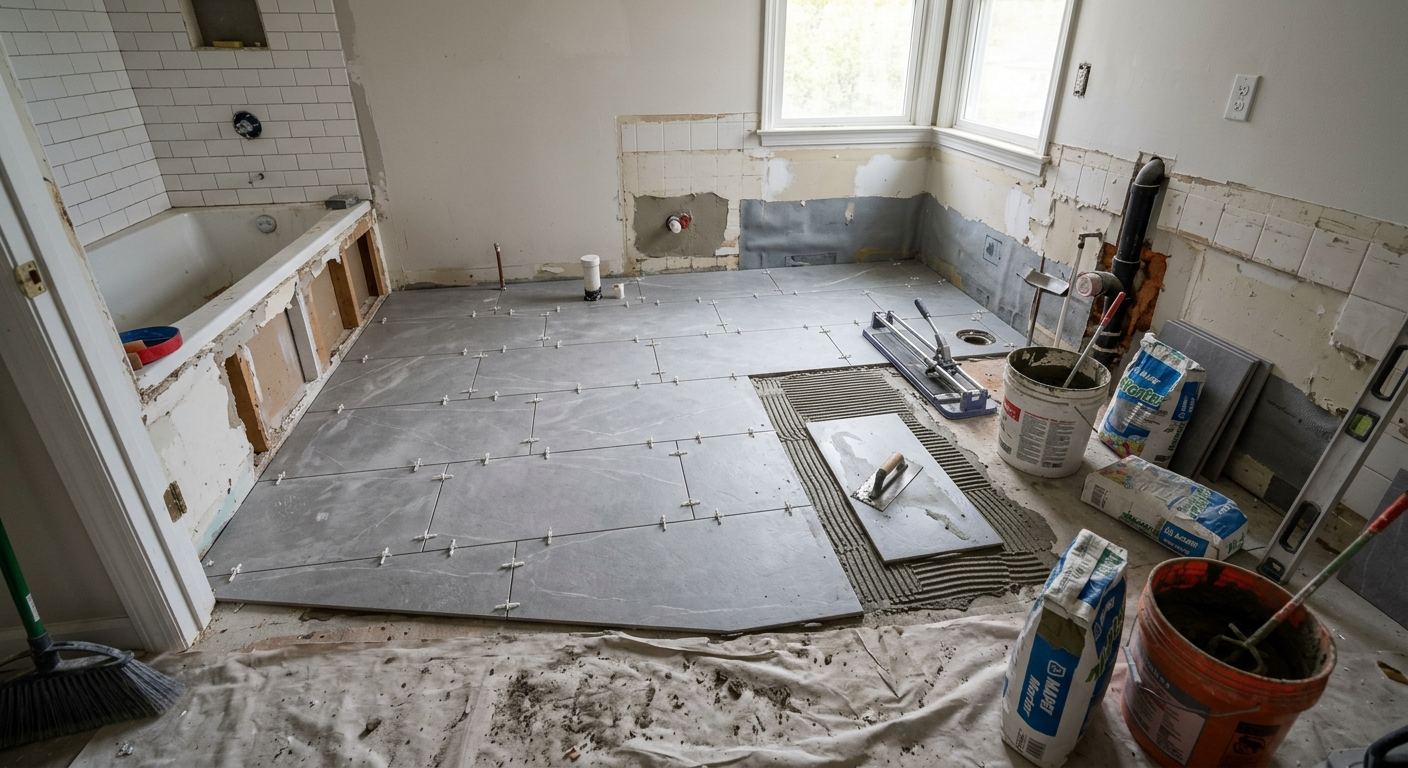
Bathroom renovation options and costs in Fraser
Fraser, Alberta is a small community (population 3,276 per the Statistics Canada, 2021 Census) where most bathroom renovations are done in existing homes rather than new construction. That matters, because many older properties in the Calgary economic region have dated plumbing layouts and drain systems, and demolition can uncover hidden issues such as aging subfloors or older floor-tile adhesives. Even when the visible bathroom looks “fine,” older housing stock can carry risks like asbestos-containing vinyl floor tile or older compounds, which can turn a straightforward refresh into a remodel once the walls and floors come off.
In the Calgary region, bathroom pricing is driven more by local labour rates and housing age/condition than by climate. Calgary-area contractors consistently see the same pattern: what starts as a cosmetic refresh can expand to plumbing and venting upgrades, wall repairs, or waterproofing rework once they open up the work area. Contractor availability also shifts costs during busy renovation seasons, because tilers, waterproofing specialists, and electricians often get booked ahead. If your bathroom is in a neighbourhood near central services and schools—where turnover and rental refreshes are common—trade demand tends to be higher and scheduling can tighten.
Below are typical scope-based options to help you budget before a site visit. Use these bands to compare quotes; then plan for contingency because older-home surprises are common in the Calgary economic region.
| Renovation Scope |
What's Included |
Typical Duration |
Price Range |
| Cosmetic refresh (paint, fixtures, accessories only) |
Paint, vanity swap (if plumbing stays put), toilet/lighting swap (no new circuits), faucet swap, mirrors/accessories; existing surfaces reused |
3–7 days |
$3,000 – $8,000 |
| Mid-range full renovation (new tile, vanity, tub/shower, electrical) |
Demo, disposal, new tub/shower surround with tile, vanity and mirror, updated exhaust fan and GFCI where required, basic waterproofing, subfloor repairs as needed |
2–4 weeks |
$15,000 – $22,000 |
| High-end full renovation (custom tile, steam shower, heated floors) |
Custom layout refinements, premium tile and grout detailing, heated floors circuit, steam shower or high-spec shower system, upgraded ventilation, enhanced waterproofing system |
4–7 weeks |
$22,000 – $30,000 |
| Shower-only installation (convert tub to walk-in shower) |
Convert rough-in as needed, new shower pan, waterproofing, glass/door or curtain track, updated fixtures, ventilation check |
2–3 weeks |
$8,000 – $15,000 |
| Bathtub replacement or tub-liner install |
Remove and replace tub with new fixture; OR tub-liner install where existing tub is stable, trim and caulking, re-seal tile edges |
2–7 days |
$500 – $3,000 |
| Tile-only installation (floor + surround, existing layout kept) |
Tile removal (as required), floor and wall tiling, grout and sealing, waterproofing membrane prep, re-caulking at fixtures; no plumbing relocation |
1–3 weeks |
$3,000 – $12,000 |
Prices are estimates only and vary by project scope, site access and material selection.
What affects the price of bathroom renovation in Fraser
Even when two homeowners in Fraser want “the same” bathroom, quotes can swing by 30–50% across the Calgary area and Alberta because bathroom renos are labour- and coordination-heavy. The big drivers are regional labour rates and the condition/age of the housing stock—more than outdoor weather. Calgary isn’t a frozen-bathroom climate like some northern regions, but bathrooms still experience constant moisture cycling, and that’s why waterproofing and ventilation detailing are consistently priced as premium scope in older homes.
In the Calgary economic region, many older bathrooms hide surprises. Cast-iron or older copper drain stacks may need upgrading for proper slope and venting, galvanized supply lines can show age at fittings, and ventilation ducting can be inadequate once walls are opened. If asbestos is discovered in pre-1985 vinyl floor tile or certain drywall compounds, abatement protocols add cost and scheduling time; budget additions commonly land around $1,500 – $5,000+ depending on area size and containment requirements. That’s one reason a project can jump from a tile-focused plan into a full remodel.
Here are a few concrete local examples: (1) Keeping the layout and using a “tile-only” approach may stay within $3,000 – $12,000 for labour and installation, but moving a vanity or toilet typically triggers rough-in work that pushes you closer to full renovation bands. (2) Upgrading an exhaust fan often requires electrical work and ducting adjustments; that’s one of the fastest ways to add cost to a “mid-range” renovation in the $15,000 – $22,000 band. (3) If a subfloor is out of level, tilers and waterproofing crews may need subfloor repairs before the first tile goes down, extending timelines and increasing materials.
| Price Factor |
Why It Matters |
Cost Impact |
| Layout change — moving drain or supply lines requires rough-in work |
New pipe runs, venting coordination, and code-compliant rough-in take more labour and inspections |
Typically adds $2,000 – $8,000 |
| Tile selection — large-format porcelain vs. mosaic vs. ceramic |
Hardness, breakage, and cutting complexity change labour time and waste rate |
Typically adds $500 – $5,000 |
| Fixture tier — builder-grade vs. mid-range vs. designer brands |
Higher tiers cost more to purchase and may require specialized installation parts |
Typically adds $300 – $6,000 |
| Subfloor condition — rot or unlevel concrete adds scope |
Needs repairs, leveling, and moisture-resistant build-up for a stable tile base |
Typically adds $800 – $4,500 |
| Electrical — adding GFCI outlets, exhaust fan, heated floor circuit |
Requires licensed electrician work, safe bonding, and sometimes new circuit planning |
Typically adds $600 – $3,500 |
| Waterproofing method — membrane type and extent |
Better systems cost more but reduce failure risk and future mould/repair costs |
Typically adds $500 – $2,500 |
| Older-home surprises — asbestos tile, cast-iron drains, galvanized pipes |
Abatement, disposal, and pipe upgrades expand scope after demolition |
Typically adds $1,500 – $5,000+ |
| Bathroom size — sq ft drives tile and labour time directly |
More surface area increases tile quantity, setting time, and waterproofing coverage |
Typically shifts by $1,000 – $6,000 across similar scopes |
Permits & regulations in Alberta
In Alberta (including Fraser), the permit picture depends on what you change—not on the bathroom being “small.” Cosmetic updates such as swapping a vanity, replacing a toilet (without moving the drain), repainting, installing accessories, or retiling without changing plumbing lines typically do not require a permit. The moment you relocate plumbing—moving a drain or supply lines—or you make structural wall changes, you usually trigger permit requirements and inspection steps. Similarly, adding a new exhaust fan where it requires new electrical work, or adding circuits for heated floors, generally requires electrical compliance and work by a licensed electrician.
Step-by-step for Fraser homeowners: first, confirm the contractor’s Alberta trade licence for the trades involved (or the primary contractor’s licensing if they self-perform). Second, request a certificate of liability insurance and keep an eye on the coverage effective dates. Third, ask whether the contractor carries the required WCB/WCB-equivalent coverage for their workers (commonly referenced as WCB/clearance documentation). Where you’ll look: (1) the contractor’s Alberta licence details on their documentation or through provincial trade listings, (2) the certificate of insurance that lists your project address and dates (or at least shows coverage and limits), and (3) the WCB/clearance letter provided before work begins. Make sure the permit pull (if required) is explicitly stated in the written scope—many homeowners assume it’s included until they see the exclusions.
Choosing tile, waterproofing and fixtures for your Fraser bathroom
For bathroom renovations in Fraser, three decisions consistently make or break your budget: tile choice, waterproofing method, and fixture tier. Start with tile because it controls both material cost and labour complexity. Ceramic tile is often the entry-level option and can suit straightforward layouts, but porcelain generally tolerates moisture and wear better and is less likely to feel “cold and rough” over time. Natural stone (marble, travertine, slate) looks premium, yet it usually requires higher installation skill, extra sealing/maintenance planning, and tighter tolerances for flattening.
Next is waterproofing—the part that prevents mould more reliably than any paint or “water-resistant” drywall. In Alberta bathroom humidity conditions, a proper membrane system matters at wet corners, transitions, and at the floor-to-wall junction. A paint-on membrane can be used in specific systems, but bonded sheet membranes or robust tiled systems (including modern board-and-membrane approaches) often provide more dependable coverage for shower assemblies. If you’re keeping the existing footprint, waterproofing still needs full attention, especially if older substrates were exposed to leaks or humidity cycles.
Finally, fixture tier impacts both look and function. Builder-grade faucets and tubs keep costs lower, while mid-range and designer brands often deliver better finishes, smoother valves, and improved resale perception. If your budget is near the $15,000 – $22,000 mid-range band, spending an extra $500 – $2,000 on upgraded waterproofing and a reliable glass enclosure can be a better value than moving from ceramic to natural stone everywhere.
| Material / Option |
Pros |
Cons |
Price Range |
| Ceramic tile (floor + walls) |
Good entry point; easy to source; works well for walls and moderate-use floors |
Less durable than porcelain for some floor applications; may feel colder and can chip with heavy impact |
$3,000 – $7,500 |
| Porcelain tile (floor + walls) |
Higher durability and moisture performance; wide variety of looks; better for longevity |
Higher tile cost; cutting/grinding can increase labour time |
$6,000 – $12,000 |
| Natural stone (marble, travertine, slate) |
Luxury appearance; unique patterning; strong resale appeal |
More installation prep and sealing/maintenance; may show staining if not sealed correctly |
$10,000 – $20,000 |
| Frameless glass shower enclosure |
Modern look; easier to clean than traditional doors; improves perceived value |
Higher hardware cost; installation must be precise on tile and waterproofing |
$2,000 – $6,000 |
| Prefab tub surround (acrylic) |
Fast install; fewer grout joints; budget-friendly option for clean, watertight results when installed correctly |
Limited design flexibility; fewer “custom” aesthetic options than fully tiled systems |
$500 – $3,000 |
| Custom shower pan (tile or linear drain) |
Sleek, premium look; linear drains improve water management; great for barrier-free layouts |
More specialized build; requires meticulous slope and waterproofing detailing |
$8,000 – $15,000 |
How to choose a bathroom renovation contractor in Fraser
In Fraser, choosing the right contractor comes down to verified credentials, transparent scopes, and realistic timelines. Start with licensing: request proof of Alberta trade licences for the trades involved (or the primary contractor’s ability to self-perform). Next, ask for certificate of liability insurance and confirm the coverage limits match the project size. For workers, verify WCB/WCB-equivalent coverage—get a clearance letter or documentation before work begins. How to check: rely on the contractor’s insurance certificate and WCB/clearance letter for dates and project details, and ensure their licence information matches the work they will do.
Then get 2–3 itemised written quotes. You want a breakdown that separates labour, demolition/disposal, plumbing/electrical allowances, tile setting, waterproofing, and fixture costs—not a single “lump sum.” Read exclusions carefully: is permit pulling included if needed, is asbestos abatement covered if found, and is disposal of old materials included? Warranty matters too: ask for a workmanship warranty length, product manufacturer warranties for tile fixtures, and whether warranties are transferable to future owners. For payment, avoid front-loading—never pay more than 10–15% upfront; use holdback until the job is complete and final items are finished. Finally, confirm a start date and a completion estimate in writing so you can plan around availability of trades.
- Verify Alberta licence details match the work scope (plumbing/electrical where applicable).
- Request a current certificate of liability insurance and keep the paper trail.
- Confirm WCB/WCB-equivalent coverage with a clearance letter before demolition.
- Get 2–3 itemised quotes (labour + materials), not “one-line” estimates.
- Check that permit pull and inspections are included if plumbing/electrical changes occur.
- Confirm disposal and landfill fees are included, especially for tile and drywall.
- Ask who handles hidden-scope (subfloor repairs, venting checks, waterproofing changes).
- Require waterproofing details in writing (membrane type, coverage method, critical joints).
- Verify tile tolerances, grout selection, and who supplies backer/board products.
- Clarify fixture rough-in tolerances and who adjusts trim/handles any rework.
- Confirm payment schedule includes holdback until punch list is complete.
- Review warranty terms in writing for both workmanship and key materials.
Red flags I see in bathroom jobs around Fraser include: quotes that skip waterproofing details, no mention of permits while planning plumbing/electrical changes, “large upfront” deposits beyond 10–15%, vague itemisation (no allowances for fixtures/tile), and contractors who won’t provide insurance/WCB documentation before starting.
Frequently asked questions — bathroom renovation in Fraser
What's the best bathtub material for a Fraser home?
In Fraser and the wider Calgary region, the best bathtub material usually comes down to durability, weight, and how your existing plumbing and subfloor will be handled. Acrylic tubs are a common practical choice because they’re lighter than cast iron, install efficiently, and tend to be easier to retrofit without heavy subfloor modifications. If you want maximum longevity and heat retention, cast iron can be excellent, but it often increases labour due to handling and may require more careful support. Fibreglass can work for budget refreshes, especially if you’re staying in the $500 – $3,000 band for a straightforward replacement or liner approach.
Is it worth renovating a bathroom before selling in Fraser?
Often it is, but only when the reno matches your home’s baseline condition. In Fraser, many buyers expect a clean, modern bathroom, yet they’ll also look for evidence that moisture risks are handled correctly. A cosmetic refresh can help curb appeal, but if your tub/shower surround has older grout failure, ventilation is weak, or the bathroom has an outdated layout, buyers may factor in renovation cost. For most sellers, a mid-range approach—new waterproofing, updated exhaust, and quality tile—maps well to the $15,000 – $22,000 band and usually feels “complete,” rather than piecemeal.
How do I plan a bathroom renovation on a tight budget in Fraser?
Plan by limiting variables you can’t control—especially hidden-scope. In older homes common to the Calgary economic region, demolition can reveal subfloor repairs or plumbing venting issues, which is why a contingency matters even if your estimate looks “tight.” Prioritize waterproofing and ventilation first (these protect the investment), then choose tile strategically: keep layout and go for porcelain where it delivers durability without over-upgrading every surface. If you want to hold costs, avoid moving drain/supply lines unless you truly need a new layout. Many homeowners can keep to tile-focused pricing like $3,000 – $12,000 by doing tile-only and leaving plumbing in place.
What's the difference between a cosmetic and a full bathroom renovation?
A cosmetic refresh typically means you update surfaces and fixtures without changing plumbing locations or rebuilding the shower system—think paint, mirror, lighting, faucet, and accessories. A full renovation goes further: demolition, a new waterproofing strategy, replacing or reworking the tub/shower surround, updating electrical (like GFCI outlets and exhaust), and sometimes structural or subfloor repairs. In older Fraser homes, a “cosmetic” plan can become a full renovation once the walls open and concealed problems show up. That’s why budgeting for mid-range full renovations—often around the $15,000 – $22,000 range—can be the more realistic target when you’re unsure of the current condition.
How do I choose the right contractor for my bathroom in Fraser?
Choose a contractor who can show verified Alberta credentials and who provides an itemised written quote with a clear scope. Before signing, request evidence of liability insurance and WCB/WCB-equivalent coverage, plus confirm their Alberta trade licence applies to the work they’ll do. Then compare at least 2–3 quotes: look for line items for labour, demolition/disposal, waterproofing, electrical/plumbing allowances, and fixture costs. A reliable contractor will also spell out what’s included if asbestos or concealed damage is found, and whether permits are included where plumbing/electrical changes require them. For budgeting, ensure they can explain why a “simple” refresh might still shift into a remodel if hidden conditions are discovered.
What's the most common mistake homeowners make in bathroom renovations?
The most common mistake is underestimating hidden-scope and skipping planning for it in the budget and timeline. In the Calgary economic region, older homes can hide cast-iron or galvanized piping conditions, insufficient venting, and uneven subfloors that only become obvious after demolition. Another common error is treating waterproofing as optional or choosing a membrane system without matching it to the shower build-up and substrate. This can lead to recurring moisture problems—mould smells, soft spots, and grout failure—that cost more to fix later. If you’re budgeting, keep your target realistic: even a “mid-range” project can expand beyond expectations once additional plumbing venting or repairs are required, especially when you’re in the $15,000 – $22,000 range.