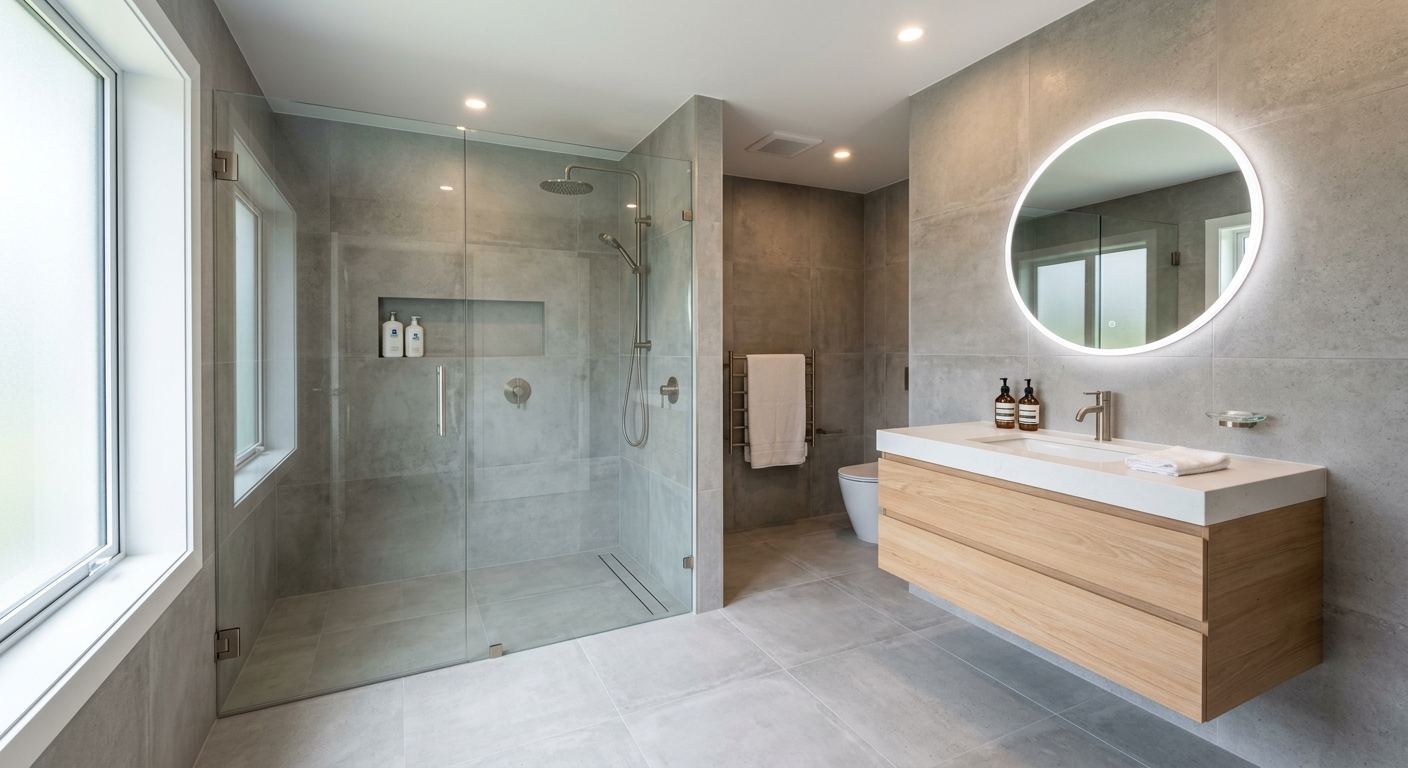
Bathroom renovation options and costs in Westgate
Bathroom renovations in Westgate, Alberta usually start with a choice: a light refresh, a mid-range remodel, or a full high-end upgrade. With Westgate’s population at 3,225 (Statistics Canada, 2021 Census), you’ll typically find fewer large “production” crews and more trades coordinated around Calgary-area demand. That matters because Westgate’s older housing stock (common across Calgary’s ring of communities) often includes dated drain and supply layouts—so even if the project starts as a cosmetic plan, hidden scope can surface once walls and floors come up. In Calgary’s broader housing profile, renovation contractors frequently encounter pre-renovation conditions such as cast-iron or older drainage runs and older electrical setups, and occasionally asbestos-containing materials in flooring or associated finishes in homes built before 1985.
Calgary’s weather doesn’t drive bathroom costs the way it does for outdoor envelope work, but it does affect bathroom durability: the repeated freeze/thaw cycles and winter indoor drying patterns place extra importance on reliable ventilation, correct waterproofing assemblies, and solid subfloor prep. Locally, demand is especially strong around the Calgary corridor—where contractors are booked for work in nearby communities like Haysboro and Somerset (service and scheduling often overlaps with Westgate bookings).
To budget realistically, compare scopes below. A job that looks like a “simple update” can shift into a full remodel if plumbing venting, subfloor repairs, or electrical upgrades are required—so use these bands to anchor your discussions and your contingency planning.
| Renovation Scope |
What's Included |
Typical Duration |
Price Range |
| Cosmetic refresh (paint, fixtures, accessories only) |
New vanity or faucet, toilet/trim swaps, paint, re-caulking, accessory install; retains existing tile/grout and plumbing positions |
3–7 days |
$3,000–$7,500 |
| Mid-range full renovation (new tile, vanity, tub/shower, electrical) |
Demolition, new tile floor + surround, updated vanity and storage, tub or surround upgrade, exhaust fan upgrades, basic electrical allowances |
2–4 weeks |
$15,000–$22,000 |
| High-end full renovation (custom tile, steam shower, heated floors) |
Custom tile design, premium fixtures, steam shower or enhanced shower system, heated floors, upgraded lighting, deeper waterproofing and substrates |
4–7 weeks |
$22,000–$30,000 |
| Shower-only installation (convert tub to walk-in shower) |
Remove tub, new shower pan + waterproofing, walk-in glass or curtain option, new plumbing rough-in to suit, new valve trims |
1.5–3 weeks |
$8,000–$15,000 |
| Bathtub replacement or tub-liner install |
Swap existing tub for a new unit OR liner installation (where suitable), re-seal, minor surround touch-ups |
4–10 days |
$500–$3,000 |
| Tile-only installation (floor + surround, existing layout kept) |
Tile demo as needed, backer prep, waterproofing system per design, tile floor and/or tub surround; retains existing fixtures/rough-in locations |
1.5–3 weeks |
$3,000–$12,000 |
Prices are estimates only and vary by project scope, site access and material selection.
What affects the price of bathroom renovation in Westgate
Across Calgary and Alberta, homeowners can see quotes for the “same” bathroom vary by 30–50%, even when the finish schedule looks similar. The biggest drivers are regional labour rates and how much hidden work appears once demolition begins. In the Calgary economic region, older homes are common and the renovation plan often has to absorb plumbing and venting upgrades, subfloor or wall repairs, and ventilation changes that aren’t visible at the start of pricing. Climate plays a supporting role—winter indoor moisture and airflow mean a weak exhaust fan or incomplete waterproofing becomes a long-term cost—but cost is usually driven more by trade coordination and labour time than by temperature swings.
For example, if your bathroom is in an older home, contractors may discover cast-iron or copper drain stacks that need replacement, galvanized supply lines that require rerouting, or venting that can’t meet the updated performance expectations. Discovery of asbestos in vinyl floor tile or drywall compound (often associated with pre-1985 homes) triggers abatement protocols and typically adds $1,500–$5,000+ to the budget, depending on extent and containment requirements. That’s why a “mid-range full renovation” budget can slide into high-end work when the substrate and rough-in scope expands.
In Westgate specifically, two cost patterns come up often: (1) older slab or patchy subfloor conditions can force extra prep before tile installation, and (2) bathrooms without a properly ducted exhaust fan can require electrical and ducting updates, even if you only expected cosmetic work. If you keep the same layout, many projects start around the low five figures; once you’re moving plumbing and upgrading waterproofing depth, budgets commonly land in the $15,000–$30,000 range for full renovations.
| Price Factor |
Why It Matters |
Cost Impact |
| Layout change — moving drain or supply lines requires rough-in work |
More demolition, new rough-in, possible joist/subfloor modifications, extra inspection steps |
Often adds $3,000–$8,000 depending on distance and accessibility |
| Tile selection — large-format porcelain vs. mosaic vs. ceramic |
Higher material cost plus tighter tolerances, more cutting and labour for complex patterns |
Can shift tile scope by $2,000–$6,000 |
| Fixture tier — builder-grade vs. mid-range vs. designer brands |
Premium trims and valves cost more and may require compatible plumbing/electrical upgrades |
Typically $1,500–$5,000 difference in fixtures alone |
| Subfloor condition — rot or unlevel concrete adds scope |
Repairs, new backer/substrate, extra labour time, and sometimes additional waterproofing system coverage |
Commonly adds $1,000–$4,000 |
| Electrical — adding GFCI outlets, exhaust fan, heated floor circuit |
Licensed electrical work, new circuits, fan ducting coordination, and safety compliance |
Often adds $800–$3,500 |
| Waterproofing method — membrane type and extent |
Better systems reduce failure risk; coverage and detailing around corners/penetrations increase labour |
Typically adds $500–$2,500 |
| Older-home surprises — asbestos tile, cast-iron drains, galvanized pipes |
Abatement, demo time, disposal and potential plumbing replacement drive variability |
Can add $1,500–$10,000+ based on discovery |
| Bathroom size — sq ft drives tile and labour time directly |
More surface area means more tile, more cutting, more substrate and cure time |
Can change total labour/materials by 10–25% |
Permits & regulations in Alberta
In Alberta, the permit picture depends on what you change. In most cases, cosmetic updates—like swapping a vanity, replacing a faucet, painting, or retiling with the same shower/bath footprint and no movement of plumbing—typically don’t require the same level of permitting. However, bathroom renovations that involve relocating plumbing (moving a drain or supply line), adding or replacing exhaust fans connected to electrical circuits, or making structural wall changes generally do require permits and inspections. Electrical work must meet the provincial electrical code and be completed or signed off by a licensed electrician. Plumbing rough-in changes likewise trigger permit/inspection steps because inspectors need to verify rough-in quality before walls are closed.
For a homeowner in Westgate, the practical process is simple: start by asking for the contractor’s Alberta trade licence details (and the licence number they use), then verify liability insurance and coverage. Where to look: (1) the online provincial registry for active licence status, (2) the certificate of insurance provided before work starts, and (3) proof of appropriate workers’ compensation coverage (WCB/WSIB clearance letter) when applicable for the trades involved. If any subcontractor is used, ask for their insurance certificates too.
Step-by-step: request licence + insurance documents in writing, confirm dates match your project window, and ensure the policy covers the scope (general liability for the contractor, and trade coverage for specialty trades). Don’t rely on verbal assurances—get it in your contract package.
Choosing tile, waterproofing and fixtures for your Westgate bathroom
Your budget in Westgate is shaped most by three material decisions: tile choice, waterproofing method, and fixture tier. First, tile. Entry-level ceramic tile can be a budget-friendly way to refresh a bathroom, but it may be less robust for high-moisture areas than porcelain options. Porcelain tile—especially for floors and wet-zone walls—typically costs more, but it handles wear and cleaning better. Natural stone (marble, travertine, slate) looks premium and can elevate resale, yet installation is more demanding because it needs careful selection, sealing (depending on stone type), and extra substrate prep.
Second, waterproofing. In Alberta bathrooms, moisture management is non-negotiable due to daily steam/condensation cycles. A paint-on membrane can work for certain systems, but the best outcomes usually come from a bonded sheet membrane or a properly detailed modular system (e.g., a tile-ready waterproofing approach with proper corner/penetration detailing). The goal is preventing moisture migration behind the tile—mould and tile failure are expensive to remediate after the fact.
Third, fixtures. Builder-grade fixtures keep initial costs down but can limit long-term satisfaction. Mid-range fixtures often justify their cost through better valves, smoother finishes, and longevity in hard-water conditions. Designer brands can raise the budget quickly; that’s where you should confirm the install quality and valve compatibility.
Here’s where dollar choices make sense: if you’re planning a “tile-only” scope around $3,000–$12,000, moving from basic ceramic to porcelain and upgrading waterproofing detailing often costs more upfront but reduces the risk of callbacks. For full projects, that’s one reason mid-range renovations commonly land around $15,000–$22,000—you’re paying for correct assemblies, not just visible surfaces.
| Material / Option |
Pros |
Cons |
Price Range |
| Ceramic tile (floor + walls) |
Lower material cost; many styles and colours; good for budget refreshes |
Typically less durable than porcelain for heavy traffic; may show wear sooner; requires careful layout to avoid uneven lippage |
$3,000–$7,000 |
| Porcelain tile (floor + walls) |
Higher durability; better stain resistance; cleaner look and often better for wet zones |
More expensive tile; heavier pieces may increase labour for cuts and alignment |
$6,000–$11,000 |
| Natural stone (marble, travertine, slate) |
High-end appearance; unique veining; strong curb appeal for resale |
Can require sealing and extra care; higher waste due to slab matching; installation complexity increases labour |
$9,000–$16,000 |
| Frameless glass shower enclosure |
Modern look; makes smaller bathrooms feel larger; easy to keep clean |
Glass is heavier and more expensive; needs proper wall alignment and waterproofing detailing |
$1,500–$5,000 |
| Prefab tub surround (acrylic) |
Fast install; consistent finish; can reduce tile labour time |
Less custom look; seams and cutouts require careful detailing; not ideal if you want premium tile features |
$500–$2,500 |
| Custom shower pan (tile or linear drain) |
Best long-term look and drainage performance; linear drains can modernize the whole bathroom |
More complex waterproofing detailing; requires skilled slope preparation and membrane continuity |
$2,500–$8,000 |
How to choose a bathroom renovation contractor in Westgate
When you’re hiring a contractor for a Westgate bathroom, start by verifying Alberta licensing and insurance—then confirm how they handle the real bathroom risks: plumbing rough-ins, waterproofing responsibility, and trade coordination. First, ask for their Alberta trade licence (and licence number) and confirm it’s active using the appropriate online registry. Next, request a certificate of liability insurance and make sure the coverage dates align with your project timeline. Also ask for proof of workers’ compensation coverage (WCB/WSIB clearance letter where applicable). If a contractor can’t provide documentation promptly, that’s a major signal to pause.
Then get 2–3 itemised written quotes. You want a labour + materials breakdown—not just a lump sum. Ask whether the quote includes permit pull (if required), disposal, dump fees, and any asbestos/abatement allowance if the home is in a higher-risk age range. Read the scope for exclusions: what happens if joists are damaged, or if the drain stack needs replacement after demo?
Warranty matters for both workmanship and products. Ask for the workmanship warranty length (how long the contractor stands behind install defects), plus manufacturer warranty details, and whether the warranty transfers to you if you sell the home. For payment scheduling, I recommend never paying more than 10–15% upfront; hold back a portion until the job is complete and cleaned up. Finally, insist on a written start date and an estimated completion timeline with milestones.
- Request their Alberta trade licence number and verify it online before any work starts.
- Get certificate of liability insurance and confirm it covers renovation activities.
- Ask for a WCB/WSIB clearance letter (or equivalent coverage proof) for the contractor and key subcontractors.
- Use itemised quotes: labour, materials, tile labour, waterproofing system, plumbing fixtures, electrical allowances.
- Confirm whether permits are included or added as a separate line item.
- Verify disposal is included (dump fees, hauling, and waste sorting).
- Ask what’s excluded: subfloor repairs, drywall replacement, venting changes, and plumbing replacement.
- Require the waterproofing method to be specified (membrane type, coverage, and detailing around penetrations).
- Confirm who is responsible for caulking and final sealing (and what product is used).
- Ask for warranty terms in writing: workmanship warranty length and manufacturer warranty transferability.
- Set a payment schedule: maximum 10–15% upfront; holdback until final inspection and cleanup.
- Get the schedule in writing: start date, rough-in dates, tile lead time, and completion estimate.
In Westgate, red flags I’ve seen include contractors who won’t provide licence/insurance paperwork, quotes that don’t specify waterproofing and fixture brands/models, “cash only” payment requests without a contract, and an overly vague scope (“allowances” with no ranges). Another major warning sign is skipping the permit conversation when you’re moving plumbing or adding an exhaust fan.
Frequently asked questions — bathroom renovation in Westgate
What adds the most resale value in a bathroom reno?
In Westgate and the broader Calgary area, buyers tend to pay attention to the “in-use” upgrades: a clean, modern shower/tub surface, good lighting, and reliable moisture control. The highest resale lift usually comes from updating the shower (often a walk-in conversion), upgrading ventilation, and installing contemporary tile work with proper waterproofing. If your layout stays similar, you can often target improvements that look premium without triggering expensive re-plumbing. As a budget anchor, homeowners frequently start with mid-range full renovations around $15,000–$22,000 and then choose durable, water-friendly finishes to maximize satisfaction and buyer confidence. In older Westgate homes, addressing hidden issues (subfloor prep and venting) also helps—buyers may not see it, but they feel the difference in long-term performance.
Can I keep my existing plumbing layout to save money?
Yes—keeping the plumbing layout is one of the most reliable ways to reduce cost in Alberta. If you don’t move the drain or supply lines, you typically avoid the labour-intensive rough-in changes that drive bigger remodel budgets. It also reduces the chance of discovering surprises, like mismatched venting paths or old drain stack conditions, once walls are opened. In practice, this is why a “tile-only” or “mid-range full” plan can stay within the more predictable bands. For example, if you’re replacing finishes and fixtures but keeping the same tub/shower footprint, you might keep costs closer to $15,000–$22,000 instead of escalating into full high-end scope. Your contractor should still inspect the existing valves, shutoffs, and drainage condition before you finalize the plan.
How much does a walk-in shower cost in Westgate?
In Westgate, walk-in showers typically start around the mid four figures and move higher based on tile complexity, glass, and whether plumbing needs to be reworked. For a typical tub-to-shower conversion, the common Calgary-area pricing band is $8,000–$15,000. The biggest swing factors are the shower pan build, the waterproofing system used, and whether you add heated floor or linear drain. If your home is older, add uncertainty for hidden scope—subfloor repair, venting updates, or older pipe replacement can stretch timelines and budgets. The best way to keep the number accurate is to ask for an itemised quote that includes waterproofing details and an allowance for potential substrate repairs.
What's the ROI on a bathroom renovation?
ROI depends on whether your reno solves buyer concerns (condition, moisture control, and layout usability) and how well it’s finished—not just how much you spend. In Calgary’s market, buyers often value bathrooms that look current and function reliably. That’s why proper waterproofing, upgraded exhaust ventilation, and a durable shower surface can return value even when you don’t add “luxury extras” like a steam system. Many homeowners budget the full renovation band of $15,000–$30,000 and aim to keep the work practical: good fixtures, quality tile installation, and any necessary plumbing upgrades. If hidden issues push the project, it’s still worthwhile when the contractor remediates the underlying cause—especially in older Westgate homes where moisture failures can create long-term repair needs.
Do I need waterproofing behind the tile?
Yes—when you’re tiling in a wet zone, waterproofing behind (and into the assembly) is essential. Bathroom tile systems fail most often at corners, penetrations, and transitions where moisture can travel behind the wall if the waterproofing layer isn’t continuous or correctly detailed. In Alberta homes, winter ventilation habits can leave bathrooms with higher condensation periods, so a proper waterproofing system is a key part of preventing mould and grout/tile deterioration. Your contractor should specify the waterproofing method (membrane type), how it’s applied, and how it’s protected at changes in substrate and around plumbing penetrations. In many Westgate projects, waterproofing is the reason a mid-range renovation can land around $15,000–$22,000 rather than sounding cheaper—because the correct system and detailing take labour and material.
How do I compare bathroom renovation quotes?
To compare quotes in Westgate, focus on scope clarity and line-by-line content, not just total price. Ask each contractor for an itemised quote showing labour and materials breakdown (tile labour, waterproofing method, fixture brand/model, electrical and plumbing allowances). Confirm what’s included for permits (when plumbing is moved or exhaust fans added), disposal/dump fees, and whether the contractor has allowances for subfloor repairs or older-home surprises like asbestos tile. Compare payment schedules too—trustworthy contractors won’t demand a large upfront deposit. Finally, check timelines and warranty terms: workmanship warranty length, product warranty details, and whether warranties are transferable. If one quote is significantly lower, ask what it omits—especially around waterproofing and rough-in work—because that’s usually where the gap shows up later in change orders.