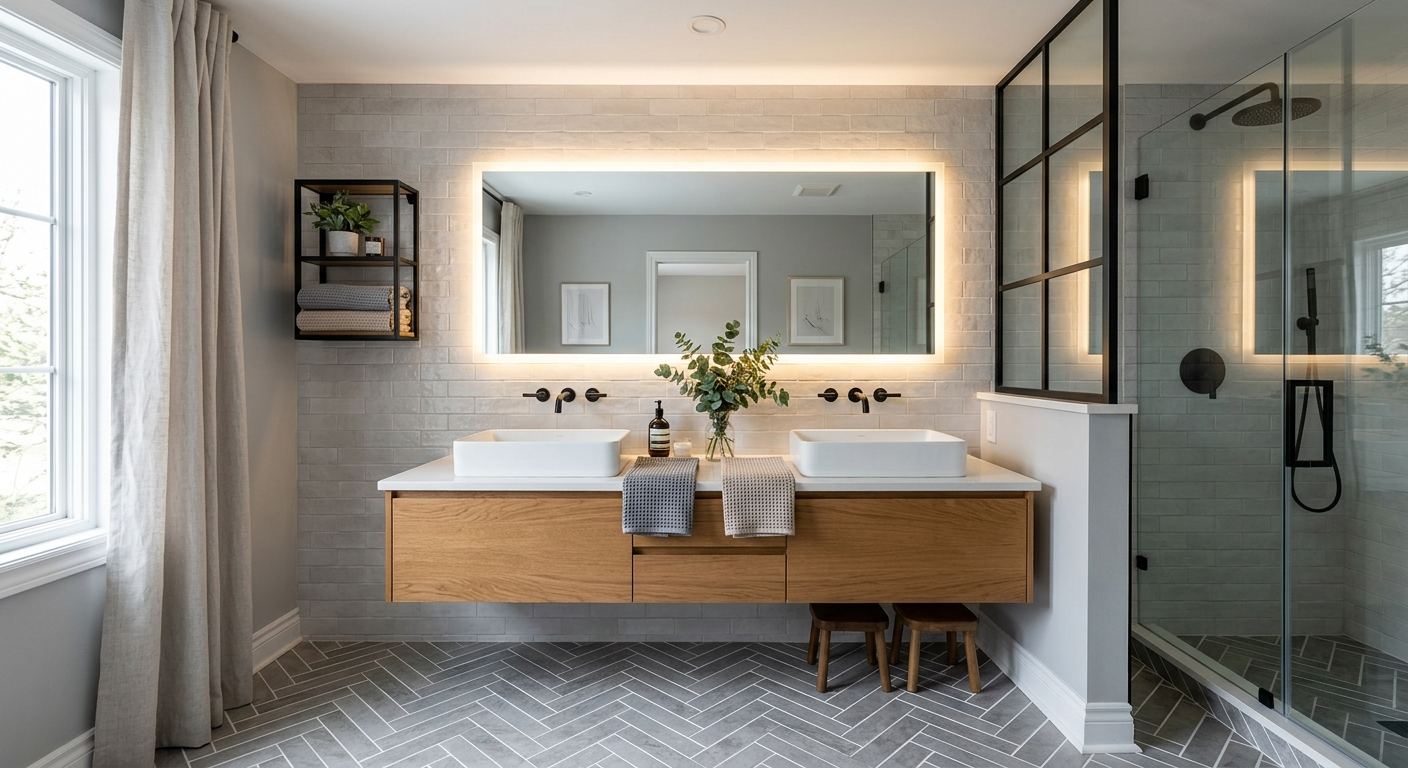
Bathroom renovation options and costs in Crestwood
In Crestwood, bathroom renovation budgets usually come down to the condition of the existing plumbing, venting, and surfaces—not just the style you pick. With a population of 2,063 (Statistics Canada, 2021 Census), the town’s smaller contractor base means scheduling can tighten when multiple trades are booked at once, especially during spring–summer lead times. Just as important is that many older Calgary-area homes are built with dated drain layouts and supply routing; that typically shows up as cast-iron or older copper drain components, and sometimes floor-tile materials that can trigger hidden-scope work once walls are opened. Market conditions in the Calgary economic region also push contractors to be very conservative at quote stage, because “refresh” projects frequently expand into full remodel work after demolition.
Climate plays a supporting role in cost: Alberta bathroom ventilation and drying performance affect moisture damage risk, so good waterproofing and fan sizing aren’t optional. That said, Calgary-area pricing is driven more by local labour rates and the age/condition of housing stock than by weather extremes alone. In well-established pockets like the Crestwood Estates area, demand for tile setters, plumbers, and electricians stays steady because many homes are older and recurring maintenance is needed. Use the comparison below to budget for the most common scopes, then assume a contingency for concealed repairs so you’re not surprised mid-demolition.
| Renovation Scope |
What's Included |
Typical Duration |
Price Range |
| Cosmetic refresh (paint, fixtures, accessories only) |
Paint, caulking refresh, new toilet/vanity faucet, mirror/lighting (no layout changes) |
3–7 days |
$3,000–$7,500 |
| Mid-range full renovation (new tile, vanity, tub/shower, electrical) |
Demolition, improved waterproofing, tile floor & surround, new vanity, tub/shower set, exhaust fan upgrades, basic electrical updates |
2–4 weeks |
$15,000–$22,000 |
| High-end full renovation (custom tile, steam shower, heated floors) |
Higher-end tile layout, custom shower system, steam/feature elements, heated floor wiring and finish work, premium fixtures and lighting |
3–6 weeks |
$22,000–$30,000 |
| Shower-only installation (convert tub to walk-in shower) |
Remove tub, build walk-in shower with tile or pan, new valve trim, updated waterproofing and drain connection |
2–3 weeks |
$9,000–$15,000 |
| Bathtub replacement or tub-liner install |
Swap tub to new unit, or install liner system where feasible; recaulk, connect drains, address minor surround updates |
3–10 days |
$500–$3,000 |
| Tile-only installation (floor + surround, existing layout kept) |
Surface prep, waterproofing, tile floor and shower surround; keeps toilet/vanity where possible |
1–2 weeks |
$3,000–$12,000 |
Prices are estimates only and vary by project scope, site access and material selection.
What affects the price of bathroom renovation in Crestwood
It’s common to see the same bathroom reno quoted 30–50% apart across the Calgary and broader Alberta market. The main reason isn’t the weather—it’s labour rates, trade availability, and what’s hidden behind the walls in older homes. In the Calgary economic region, concealed work can include rough plumbing upgrades, venting fixes, subfloor or wall repairs, and occasionally discovery of asbestos-containing materials (commonly associated with older flooring and some plaster compounds). Once discovery happens, contractors must coordinate abatement and then rebuild to a waterproof-ready substrate, which is why “refresh” scopes often drift into mid-range or even full renovation budgets.
Older Crestwood-area houses also tend to show localized cost multipliers: for example, a drain that needs replacing can add time and disposal even if the visible layout stays the same. A second example is ventilation—if the existing fan ducting can’t be routed efficiently, you may need additional electrical and ducting work to get proper moisture removal. On the flip side, projects can land closer to the low end of the price bands when the plumbing is sound and the framing is level.
As a rule of thumb, if you’re planning something like a mid-range renovation in the $15,000–$22,000 range, allow contingency for hidden-scope repairs. If you’re targeting a full renovation closer to $22,000–$30,000, expect higher finish demands (tile, steam features, heated floors) plus more coordination between trades.
| Price Factor |
Why It Matters |
Cost Impact |
| Layout change — moving drain or supply lines requires rough-in work |
More demolition, plumbing labour, potential framing modifications |
Often adds $2,000–$8,000 depending on distance and access |
| Tile selection — large-format porcelain vs. mosaic vs. ceramic |
Different cutting complexity, waste rate, and installation method |
Can shift tile labour/materials by $500–$4,500 |
| Fixture tier — builder-grade vs. mid-range vs. designer brands |
Parts cost, trim complexity, and sometimes lead times |
Typically $300–$3,500 difference |
| Subfloor condition — rot or unlevel concrete adds scope |
Backer/underlayment changes, patching, and extra waterproof prep |
Often adds $1,000–$6,000 |
| Electrical — adding GFCI outlets, exhaust fan, heated floor circuit |
Licensed wiring, permits when required, safe fan/heating control |
Commonly adds $800–$5,000 |
| Waterproofing method — membrane type and extent |
More complete assemblies cost more but reduce failure risk |
Typically adds $400–$2,000 versus minimal approaches |
| Older-home surprises — asbestos tile, cast-iron drains, galvanized pipes |
Abatement, new stacks, supply replacement, schedule coordination |
Can add $1,500–$5,000+ or more in complex cases |
| Bathroom size — sq ft drives tile and labour time directly |
More surface area for tile, prep, and waterproofing |
Often shifts total costs by $2,000–$8,000 |
Permits & regulations in Alberta
In Alberta, the rule of thumb for permits in bathroom renovations is: cosmetic work usually doesn’t require one, but anything that changes plumbing/electrical systems or structural elements typically does. In a Crestwood home, swapping fixtures—like a vanity top, toilet, shower trim, or retiling within the same footprint—often stays permit-light. However, relocating plumbing (moving a drain or supply line), adding or changing an exhaust fan that requires new electrical work, and any structural wall changes generally need permits and inspections.
Electrical work must comply with provincial code and be done or signed off by a licensed electrician. Plumbing rough-in changes (anything beyond reconnecting existing valves and drains) usually require a permit and inspection so the rough work can be verified before walls are closed. If there’s any demolition of older finishes that suggest asbestos risk (common in some pre-1985 materials), the project may need specialized handling depending on what’s confirmed on site.
Step-by-step for homeowners: (1) Ask for the contractor’s Alberta trade licence information—then verify it through the applicable provincial online registry. (2) Request a certificate of insurance (liability) showing active coverage for the renovation work; confirm the named insured. (3) Ask for proof of coverage for workers (WCB/WSIB clearance letter, where applicable) and keep copies for your records. (4) For any electrical or plumbing scope, confirm the permit pull and inspection plan is included in the contract.
Choosing tile, waterproofing and fixtures for your Crestwood bathroom
In Crestwood, your biggest budget swings usually come from three material decisions: tile type, waterproofing approach, and fixture tier. First is tile choice. Entry-level ceramic can be a cost-saver on smaller surfaces, but it often performs differently under heavy wet-area use; porcelain is denser, typically more forgiving for floors, and comes with a stronger selection of looks. Natural stone (marble, travertine, slate) can elevate the space, but it’s more labour-intensive because of layout, sealing requirements, and careful handling during installation.
Second is waterproofing. Alberta bathrooms need assemblies that control moisture reliably through temperature cycling and daily humidity. A paint-on membrane can work in some circumstances, but for showers and wet walls you’ll usually be comparing bonded sheet membrane and system-based approaches designed for corners, penetrations, and transitions. Proper detailing around the valve, niche edges, and floor/wall junctions is what prevents chronic mould problems after the first winter.
Third is fixture tier. Builder-grade fixtures can look “new” after a refresh, but mid-range or designer lines often justify the spend when you care about smooth operation, better finishes, and long-term valve performance. If you’re choosing between tile-only versus a full renovation, a concrete example helps: bringing a bathroom to $15,000–$22,000 with quality tile and a properly detailed shower system may cost more than basic retiling, but it’s often less expensive than redoing waterproofing later. For a wall-and-floor change with layout kept, tile-only typically falls in the $3,000–$12,000 band depending on tile complexity and area.
| Material / Option |
Pros |
Cons |
Price Range |
| Ceramic tile (floor + walls) |
Budget-friendly, wide style selection, familiar installation methods |
Less robust than porcelain for some floor conditions; more variation between batches |
$3,000–$7,500 |
| Porcelain tile (floor + walls) |
Denser and more durable, improved moisture performance, great for modern large formats |
Can be more expensive per box; larger formats increase labour precision |
$6,000–$12,000 |
| Natural stone (marble, travertine, slate) |
High-end look and unique veining, premium feel for resale |
More labour, sealing/maintenance, higher risk with poor prep or wrong grout |
$10,000–$20,000 |
| Frameless glass shower enclosure |
Cleaner visual line, modern upgrades, good for smaller bathrooms |
Needs precise framing/leveling; glass can be pricier with custom sizes |
$2,000–$6,500 |
| Prefab tub surround (acrylic) |
Fast install, consistent waterproofing system, easier to maintain |
Less “bespoke” than tile; may not match higher-end design goals |
$500–$3,000 |
| Custom shower pan (tile or linear drain) |
Best aesthetics and drainage; supports true waterproofing transitions |
More build time and trade coordination; requires exact slope and detailing |
$8,000–$15,000 |
How to choose a bathroom renovation contractor in Crestwood
When you’re choosing a contractor in Crestwood, verify three things up front: Alberta licensing, liability insurance, and workers coverage (WCB/WSIB clearance). Ask directly for the licence details for the trades involved and check them through the relevant provincial online registry. For insurance, request a current certificate of insurance and confirm the coverage is active for the renovation period. For workers coverage, ask for a clearance letter or proof of coverage—don’t rely on verbal assurances.
Next, get 2–3 itemised written quotes. You want line items that separate labour and materials rather than a single lump sum: tile demo and install, waterproofing system, electrical scope, plumbing rough-in, disposal, and any permit allowances. Read the scope carefully for exclusions: disposal included or not, whether permit pull is handled, and what happens if hidden damage is discovered. Pay attention to warranty terms—workmanship warranty length, who issues the product warranty, and whether it’s transferable if you sell your home.
For payment schedule, never pay more than 10–15% upfront. Use milestones, and hold back until the work is complete and cleaned, with snag items addressed. Finally, insist on a written timeline with a start date and completion estimate, along with a clear plan for lead-time items like glass, fixtures, and tile.
- Provide Alberta trade licence details and verify online before signing.
- Show current liability insurance certificate (active dates and coverage amounts).
- Confirm WCB/WSIB clearance for workers—request proof, keep copies.
- Provide an itemised quote with labour vs. materials separated.
- Specify who pulls permits (if required) and whether inspections are included.
- State exactly what disposal includes (dumpster, haul-away, recycling).
- List the waterproofing system by name and how corners/penetrations are treated.
- Clarify tile prep scope: subfloor leveling, backer board, membrane coverage limits.
- Confirm electrical scope: GFCI outlets, exhaust fan, heated floor circuit (if used).
- Include warranty terms in writing: workmanship and product warranty coverage.
- Set payment milestones; keep at least a 10–15% holdback for completion.
- Request a written schedule: demo start, rough-in days, waterproofing/tile days, trim-out.
Red flags I see in Crestwood: quotes that don’t explain waterproofing methods, “lowest price” bids that omit permits/disposal, lack of licence/insurance paperwork or refusing to share it, vague scopes that only say “replace fixtures” without specifying rough-in and finishing work, and aggressive upfront payments that exceed 10–15%.
Frequently asked questions — bathroom renovation in Crestwood
How do I prevent mold in a Crestwood bathroom?
Preventing mould in Crestwood comes down to controlling moisture at the source and using the right build-up behind finishes. First, confirm your exhaust fan is properly sized and vented to the exterior—then ensure it runs long enough after showers. Second, use a waterproofing system designed for wet-wall and shower areas, with correct detailing at corners, niches, and around plumbing penetrations. If your bathroom has an older layout with dated ventilation, mould risk often rises after tile replacement because the new finish seals in moisture if fan performance is unchanged. In many Calgary-area renovations, homeowners are surprised to find that a “refresh” isn’t complete unless the ventilation plan and waterproofing are addressed together.
What adds the most resale value in a bathroom reno?
In Alberta, the highest resale value typically comes from visible quality upgrades plus the less-visible reliability improvements. On the visible side: modern vanity, lighting with good colour rendering, updated shower/bath fixtures, and clean, consistent tile work. Less visible but very valuable: correctly detailed waterproofing, sound subfloor/freeze-proof framing (no soft spots), and plumbing that drains cleanly without slow backups. If you’re choosing between a cosmetic refresh and a mid-range full renovation, the mid-range renovation is usually where resale impact stacks up because it upgrades both the look and the performance. Many homeowners target work in the $15,000–$22,000 band for a durable shower system and quality finishes, then stop before overspending on ultra-custom features.
Can I keep my existing plumbing layout to save money?
Yes—keeping your plumbing layout is one of the most reliable ways to save money in Crestwood, because it reduces rough-in changes and the demolition required to move drains and supplies. When the toilet, vanity plumbing, and shower valve positions remain where they are, you often avoid additional permit-sensitive work and trade coordination. That said, “keeping the layout” doesn’t mean ignoring condition: older drain stacks, galvanized supply lines, or leaking shutoffs can still require replacement once exposed. A good contractor will inspect during demolition and propose fixes that preserve the layout while protecting the waterproofing assembly. If your current bathroom is older, budget for at least a small contingency even when you’re trying to keep the footprint the same.
How much does a walk-in shower cost in Crestwood?
In Crestwood, a walk-in shower typically costs more than homeowners expect because it involves demolition, proper waterproofing, and drainage connection details. As a practical budgeting range, shower-only installations commonly fall in the $9,000–$15,000 band when converting a tub to a walk-in with tile and a proper shower build. The cost can move higher if you need extensive drain relocation, subfloor repair, an upgraded exhaust plan, or if hidden older materials require additional remediation. If your contractor can reuse most of the existing plumbing rough-in and the framing is solid, you’ll usually stay closer to the mid-to-low end of that range.
What's the ROI on a bathroom renovation?
ROI varies by neighbourhood demand and the quality of the work, but in Crestwood and across the Calgary area, bathrooms with modern, durable finishes tend to sell better because they feel “ready to live with.” What drives ROI most is avoiding future failures: waterproofing that holds up, correct ventilation, and fixtures that don’t require repeat repairs. Renovations that focus only on cosmetic updates may refresh the look, but they won’t solve underlying plumbing or moisture issues—so they can underperform if buyers sense deferred maintenance. If your project is planned as a mid-range full renovation around the $15,000–$22,000 band, you’re generally spending where homeowners feel the value (shower/tile upgrades, better lighting, improved fan performance). Ultra-high-end custom features can deliver lifestyle benefits, but ROI depends on how well those features match local buyer expectations.
Do I need waterproofing behind the tile?
For any shower area or wet-wall application, yes—waterproofing behind the tile is essential, not optional. In Alberta’s bathroom conditions, moisture exposure is routine, and temperature cycling can worsen tiny leaks. The waterproofing layer should be part of a complete system, including treatment of seams, corners, and penetrations around the valve and plumbing. A common mistake in budget scopes is using insufficient protection or assuming “tile grout will do the job.” It won’t. The best contractors specify the waterproofing method and details in the work plan so the shower remains leak-resistant under real use. When you’re planning a tile surround as part of a full renovation, this is one reason costs track higher than a simple refresh—because proper waterproofing takes labour and correct materials.