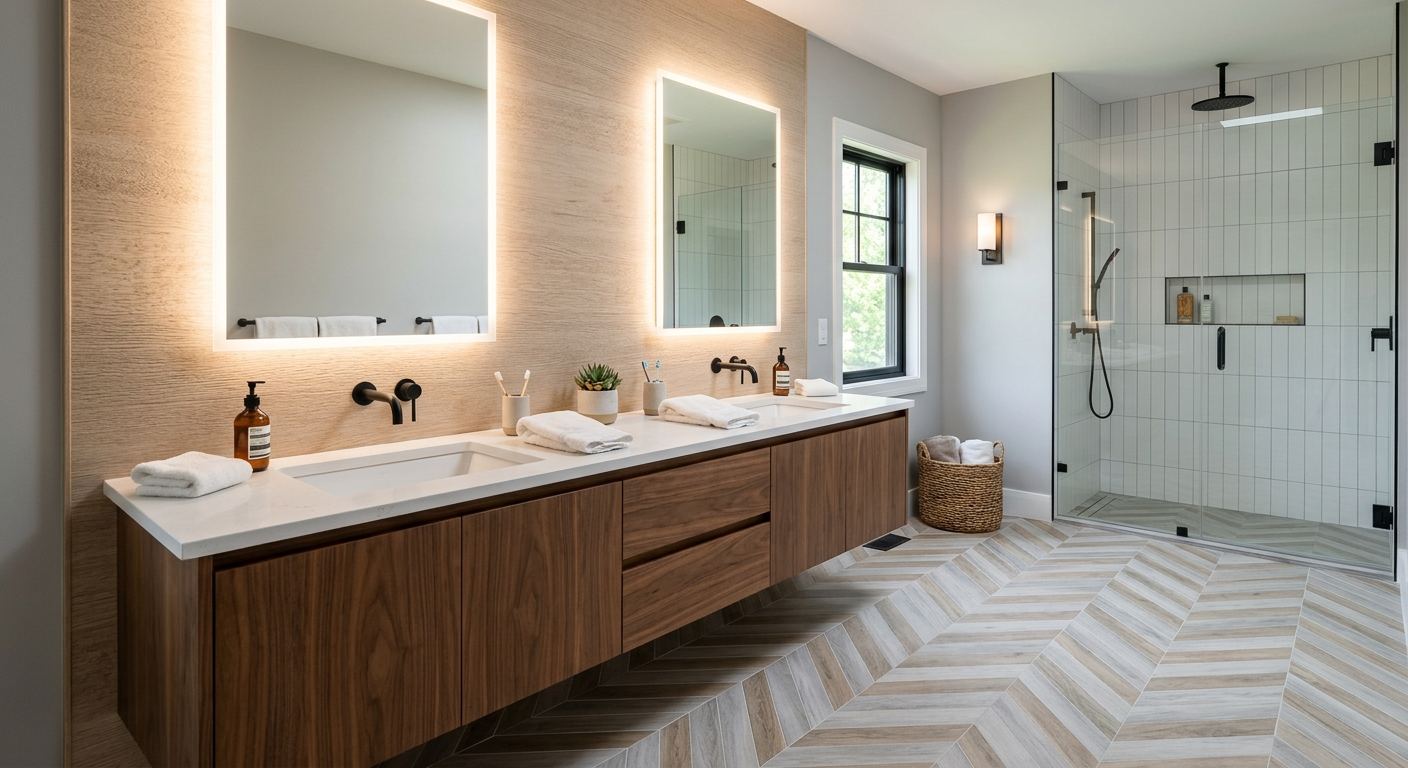
Bathroom renovation options and costs in York
York, Alberta has a small but busy renovation market, and the right bathroom plan depends on how much you want to change versus what you can keep. According to the 2021 Census, York has a population of 3,836, and like many Calgary-area communities, the housing stock often includes older homes where dated layouts mean dated plumbing. In practice, that’s why homeowners here frequently uncover issues that weren’t visible at quote time—think cast-iron or aged copper drain/supply lines behind walls, plus potential asbestos-containing materials in pre-1985 finishes. The Calgary economic region pricing you’ll see is driven less by weather itself and more by local labour rates and how often contractors must correct hidden scope once demolition starts.
Even though Alberta winters are hard on everything, bathroom renovation costs in this region tend to track trade availability and labour complexity rather than “cold weather construction” alone. Calgary-area contractors report that what starts as a refresh can shift into a full remodel once walls are opened and venting, rough-in plumbing, subfloor flatness, or waterproofing details need upgrading. This is especially common in established areas like the Coventry Hills–style older pockets around the Calgary commuting belt, where basements and main-floor bathrooms were built with simpler ventilation and older pipe materials.
Below are realistic starting points for York so you can compare contractor quotes apples-to-apples before you get into details like tile design, fixture tier, or whether you’re moving plumbing. Use the table as your budgeting baseline, then plan contingency for concealed repairs typical of older homes in the Calgary region.
| Renovation Scope |
What's Included |
Typical Duration |
Price Range |
| Cosmetic refresh (paint, fixtures, accessories only) |
Paint, swap vanity or faucet, replace toilet only (existing rough-in stays), accessories, recaulk, deep clean; no plumbing relocation |
3–7 days |
$4,000–$8,000 |
| Mid-range full renovation (new tile, vanity, tub/shower, electrical) |
Remove and replace tile floor/walls (where needed), new vanity + countertop, tub or tub/shower set, new exhaust fan, GFCI outlet additions, basic electrical updates, improved waterproofing |
2–4 weeks |
$15,000–$22,000 |
| High-end full renovation (custom tile, steam shower, heated floors) |
Premium tile layout, custom shower system or steam-ready shower, heated floor wiring and finishes, designer fixtures, upgraded ventilation and waterproofing system, possible niche/linear drain details |
4–7 weeks |
$22,000–$30,000 |
| Shower-only installation (convert tub to walk-in shower) |
Remove tub, install tiled walk-in shower, new valve/trim set, waterproofing, curb or linear drain options, exhaust fan refresh as needed; minor plumbing changes often required |
2–3 weeks |
$8,500–$15,000 |
| Bathtub replacement or tub-liner install |
Replace existing tub with new unit and refinishing/tub-liner option, re-caulk and seal, update surround as required; usually keeps drain/supply locations |
3–10 days |
$1,000–$3,000 |
| Tile-only installation (floor + surround, existing layout kept) |
Remove existing tile, prep surfaces, install floor + surround tile, grout, sealing at wet areas; keeps existing fixtures/rough-in |
1–3 weeks |
$3,500–$12,000 |
Prices are estimates only and vary by project scope, site access and material selection.
What affects the price of bathroom renovation in York
Homeowners in York often see quotes for what sounds like the “same” bathroom come back 30–50% apart across the Calgary economic region. That spread usually isn’t about climate—it’s about local labour rates, scheduling, and how the scope changes once trades open up walls. Calgary-area contractors consistently find that older homes require upgrades you can’t see in photos: rough-in plumbing corrections, venting improvements, subfloor or wall repairs, and sometimes discovery of asbestos-containing materials in older floor tile or drywall compound. That’s why a bathroom refresh can quickly move into a full renovation once concealed scope is confirmed.
Older housing conditions are a big driver here. For example, cast-iron drain stacks or aging copper supply lines may need partial replacement to meet proper slope and connection standards. Galvanized supply lines can also force broader supply work. Ventilation is another common cost inflator: if the bathroom exhaust fan ducting or vent route can’t be reused, contractors may need to reroute ducting for proper moisture control. In pre-1985 homes, asbestos discovery (often in vinyl floor tile or older compounds) can trigger abatement protocols—budget an additional $1,500–$5,000+ depending on extent and packaging requirements.
Two common York examples: (1) keeping the existing layout typically keeps you closer to tile-only pricing of roughly $3,000–$12,000, while (2) moving a vanity or changing the shower location often triggers rough-in work that pushes you toward mid-range full renovation budgets of $15,000–$22,000. If your subfloor is uneven or shows rot, expect more labour for flattening/repairs and more membrane prep before tile goes down.
Even with Alberta’s cold winters, bathroom costs are rarely “driven by weather.” Instead, they’re driven by whether the existing mechanicals (plumbing and venting) can be safely retained, and how much hidden repair must be completed before waterproofing and tile installation can start.
| Price Factor |
Why It Matters |
Cost Impact |
| Layout change — moving drain or supply lines |
Triggers demolition, rough-in plumbing, and re-tiling around new locations |
Often +$3,000–$8,000 |
| Tile selection — large-format porcelain vs. mosaic vs. ceramic |
Harder cuts, more labour time, and stricter subfloor/flatness requirements |
Typically +$1,500–$6,000 |
| Fixture tier — builder-grade vs. mid-range vs. designer brands |
Trim valves, vanity materials, and finish quality change total materials cost |
Often +$1,000–$4,000 |
| Subfloor condition — rot or unlevel concrete adds scope |
Waterproofing relies on sound, flat substrates; repairs must be completed first |
Often +$1,000–$5,000 |
| Electrical — adding GFCI outlets, exhaust fan, heated floor circuit |
New circuits may require permit/inspection and careful integration with finishes |
Often +$800–$3,500 |
| Waterproofing method — membrane type and extent |
Proper wet-area containment reduces mould risk and call-backs |
Often +$600–$2,500 |
| Older-home surprises — asbestos tile, cast-iron drains, galvanized pipes |
Abatement and replacement add time, documentation, and disposal |
Often +$1,500–$8,000+ |
| Bathroom size — sq ft drives tile and labour time directly |
More wall/floor area means more labour, materials, and setting/grout time |
Varies widely; typically +10–40% total |
Permits & regulations in Alberta
In Alberta, many bathroom updates are straightforward from a permitting standpoint, but the moment you move plumbing or add electrical work, the rules tighten. In general, cosmetic updates—like swapping fixtures in the same locations, replacing a vanity where plumbing hookups remain unchanged, painting, and retiling without altering structural elements—typically do not require a permit. However, you should expect permits when you relocate plumbing (moving a drain or supply line), add or relocate a bathtub/shower valve, or make structural wall changes.
Electrical work is another clear trigger. If the project includes adding GFCI outlets, installing a new exhaust fan with a new circuit, or wiring heated floors, that work must meet provincial electrical code requirements and be completed or signed off by a licensed electrician. Plumbing rough-in changes (such as changing drain routes, modifying venting, or altering the supply path) usually require a permit and inspections before walls are closed.
For homeowners in York, the best way to verify a contractor is to check three things before demolition:
1) Confirm their Alberta trade licence (ask for the licence number and verify it online via the appropriate Alberta trade registry). 2) Request a Certificate of Insurance and confirm liability coverage is active for renovation work. 3) Verify they have the right worker protection coverage (WCB/WSIB-type coverage as applicable) and ask for proof—don’t rely on “we’re covered.”
Do this step-by-step and keep copies of the clearance letter or insurance certificate in your file. It protects you if there’s an accident, delay, or concealed-scope change that requires additional trade coordination.
Choosing tile, waterproofing and fixtures for your York bathroom
When you’re budgeting a York bathroom reno, three material decisions usually determine both cost and long-term performance: tile choice, waterproofing method, and fixture tier. First, tile: entry-level ceramic can be cost-effective, but it’s often more prone to chipping under heavier impacts and can be less forgiving for complex layouts. Porcelain tile (especially for showers and floors) is typically stronger and works well with modern waterproofing systems. Natural stone like travertine or slate looks premium, but it increases installation complexity (more careful sealing and layout) and can add risk if the stone type isn’t suitable for wet-zone use.
Second, waterproofing: Alberta’s freeze-thaw cycles aren’t the only issue—bathrooms also face persistent moisture. Paint-on membranes can be fine for certain scenarios, but for most full renovations you’ll usually want a bonded sheet membrane or a proven system that integrates corners, seams, and transitions. The right waterproofing method prevents mould, helps grout stay stable, and reduces the chance you’ll pay to redo waterproofing later (which is far more expensive than upgrading waterproofing upfront).
Third, fixtures: builder-grade toilets, taps, and shower valves are usually cheaper and may be adequate for resale value, but mid-range or designer options often provide better flow control, finish durability, and longevity of internal cartridges.
A real budgeting example: upgrading to porcelain tile and a higher-end waterproofing system can add more upfront labour and materials, but it’s often justified compared with repeating repairs after leaks. If your total bathroom is heading toward the mid-range band around $15,000–$22,000, spending the difference on waterproofing and tile adhesion frequently protects the investment more than moving from a mid-range vanity to an ultra-high-end one.
| Material / Option |
Pros |
Cons |
Price Range |
| Ceramic tile (floor + walls) |
Good entry point, wide style selection, easier sourcing for standard sizes |
Often less durable than porcelain; may require more careful subfloor prep |
$3,000–$8,000 |
| Porcelain tile (floor + walls) |
High durability, suitable for wet areas, consistent finish and lower risk of damage |
Heavier tile can be more demanding on substrate flatness; higher material cost |
$5,000–$12,000 |
| Natural stone (marble, travertine, slate) |
Luxury look, unique variation, strong curb appeal |
Sealing/maintenance requirements; more intricate installation |
$8,000–$18,000 |
| Frameless glass shower enclosure |
Modern look, easier visual cleaning, can make small bathrooms feel larger |
Higher material and fabrication cost; requires precise installation |
$1,800–$4,500 |
| Prefab tub surround (acrylic) |
Fast install, fewer grout joints, lower labour than full tile on walls |
Less “designer” appearance; can limit customization |
$500–$2,500 |
| Custom shower pan (tile or linear drain) |
Great drainage control, premium finish options, can improve long-term waterproofing performance |
More labour and materials; requires skilled waterproofing and slope work |
$1,500–$6,000 |
How to choose a bathroom renovation contractor in York
Choosing the right bathroom contractor in York comes down to proof, process, and clarity. Start with Alberta licensing and coverage: ask for their Alberta trade licence number and verify it through the appropriate Alberta trade registry website. Next, request a Certificate of Insurance showing active general liability for renovation work. For jobsite protection, confirm worker coverage (WCB/WSIB-type clearance as applicable) and ask for the clearance letter or proof of coverage—this matters if something goes wrong and for your risk exposure as the homeowner.
Then get 2–3 itemised written quotes. You want a breakdown that separates labour and materials (demo, framing/repair, waterproofing, tile setting, electrical/plumbing allowances, disposal), not just a single lump sum. Read the scope carefully: does the price include permit pull, inspections, and disposal? Are you paying extra for “hidden damage discovery,” or is contingency clearly explained? Ask what’s excluded—like subfloor rebuilding, asbestos abatement, or replacing obsolete valves—so you don’t get surprised mid-project.
Warranty is another non-negotiable. Confirm the workmanship warranty length, whether it’s in writing, and whether it covers waterproofing/tile failures. Also check manufacturer product warranties for valves, fans, and tile/grout systems, and whether they transfer if you sell your home. Keep payment terms conservative: never pay more than 10–15% upfront, and use a holdback until key milestones are complete (especially waterproofing inspection and final trim). Finally, insist on a start date and an estimated completion timeline in writing, not just “as soon as possible.”
- Confirm Alberta trade licence and match it to the work they’ll perform (plumbing/electrical limits).
- Collect a valid Certificate of Insurance before work begins.
- Verify worker coverage with proof/clearance letter (WCB/WSIB-type coverage as applicable).
- Request 2–3 itemised quotes with labour and material lines.
- Check whether permits and inspections are included or charged separately.
- Confirm disposal is included (demo debris and tile/grout waste).
- Ask who orders materials and how delays are handled.
- Review waterproofing plan: membrane type, coverage areas, and how corners/seams are treated.
- Ask how they protect finished areas and control dust during demo.
- Confirm tile prep requirements: substrate flatness and repair scope.
- Get workmanship and product warranty terms in writing.
- Use a payment schedule with a holdback until completion and punch list.
Concrete red flags I see in York-area bathroom renos: contractors who won’t provide written scope/scope exclusions; quotes that lack permit/disposal/warranty details; “verbal” waterproofing descriptions without specifying the system; requests for large upfront payments (beyond 10–15%); and missing proof of Alberta coverage or licensing before starting demo.
Frequently asked questions — bathroom renovation in York
How do I choose the right contractor for my bathroom in York?
In York, Alberta, I recommend choosing a contractor who can prove Alberta trade licensing for the work they’re doing and who provides clear documentation before demolition. Ask for (1) licence details, (2) a current Certificate of Insurance, and (3) worker coverage proof/clearance letter (WCB/WSIB-type as applicable). Then compare 2–3 itemised quotes that break out labour and materials—especially waterproofing, tile prep, electrical for the exhaust/GFCI, and disposal. A reliable contractor will also discuss older-home realities in the Calgary economic region (like potential hidden plumbing updates and the possibility of asbestos in pre-1985 finishes) and explain how contingency works. If their quote only talks “pretty tile” and avoids the mechanics, you’re missing the real cost drivers.
What's the most common mistake homeowners make in bathroom renovations?
The most common mistake is choosing finishes first and assuming the rest will “fit” later. In York, older homes often hide issues behind walls—subfloor flatness, ventilation routing, and aging drain/supply materials—that can change the budget once demolition starts. Homeowners then try to hold the original price by skipping waterproofing details or reducing substrate repairs, which is a fast path to mould or tile failure. Another frequent mistake is not planning for permits and inspections when electrical circuits or plumbing rough-in changes are involved. If a contractor quotes around a mid-range budget (like $15,000–$22,000) but can’t explain where that number comes from for rough-in and waterproofing, it’s likely missing scope you’ll pay for anyway.
How long does tile installation take in a York bathroom?
Tile timing in York typically depends on the size of the bathroom, the complexity of the layout, and how much substrate repair is needed after demo. In many mid-range renovations, tile work starts after waterproofing prep is complete and can take about 5–10 working days for floor and walls. If you’re going beyond simple straight walls—think niches, linear drains, or complex patterns—expect additional time for precise cuts and setting. Also account for curing and grouting time before final sealing. When you’re comparing contractors, ask how they sequence waterproofing, tile setting, and grout sealing so you can estimate the full “tile-to-completion” window rather than only the active labour days.
How much does a bathroom renovation cost in York?
For York homeowners, pricing commonly aligns with the Calgary economic region’s bathroom renovation bands and depends heavily on whether plumbing moves are required and whether hidden repairs are discovered. A full cosmetic refresh is usually the lowest tier, but once you’re into a proper rebuild—new tile, vanity, tub/shower, and electrical—expect a mid-range full renovation often in the $15,000–$22,000 neighbourhood, with high-end builds reaching up to around $22,000–$30,000. Shower-only conversions can land around $8,500–$15,000 depending on how much rough-in plumbing and waterproofing work is needed. Always plan contingency for older-home surprises like cast-iron drain issues or asbestos-containing materials; those can add significant scope after demolition.
How long does a bathroom renovation take in York?
Typical bathroom timelines in York range from about 3–7 days for a cosmetic refresh to 2–4 weeks for a mid-range full renovation. Higher-end projects with custom tile layouts, steam-ready components, and heated floors often take 4–7 weeks due to material lead times, detailed waterproofing and setting, and electrical/plumbing coordination. Shower-only conversions commonly take around 2–3 weeks. Delays often come from hidden scope discovery (subfloor repairs, ventilation upgrades) or scheduling inspections when permits are required for electrical/plumbing rough-in. A good contractor will provide a start date, a realistic completion estimate, and a clear order of operations (demo → repairs → waterproofing → tile → fixtures → inspections → final trim).
Do I need a permit for a bathroom renovation in Alberta?
In Alberta, you often don’t need a permit for strictly cosmetic work—like replacing a vanity or fixtures in the same location, painting, or retiling without moving plumbing or making structural wall changes. However, permits are typically required when you relocate plumbing (moving drain or supply lines), change rough-in configurations, or make significant electrical changes such as adding GFCI outlets, installing a new exhaust fan circuit, or wiring heated floors. Electrical work must comply with provincial code and be completed or signed off by a licensed electrician. For York homeowners, the safest approach is to ask your contractor to list permit requirements in writing before work begins, and then confirm the trades’ Alberta licensing and insurance so inspections can proceed if they apply.