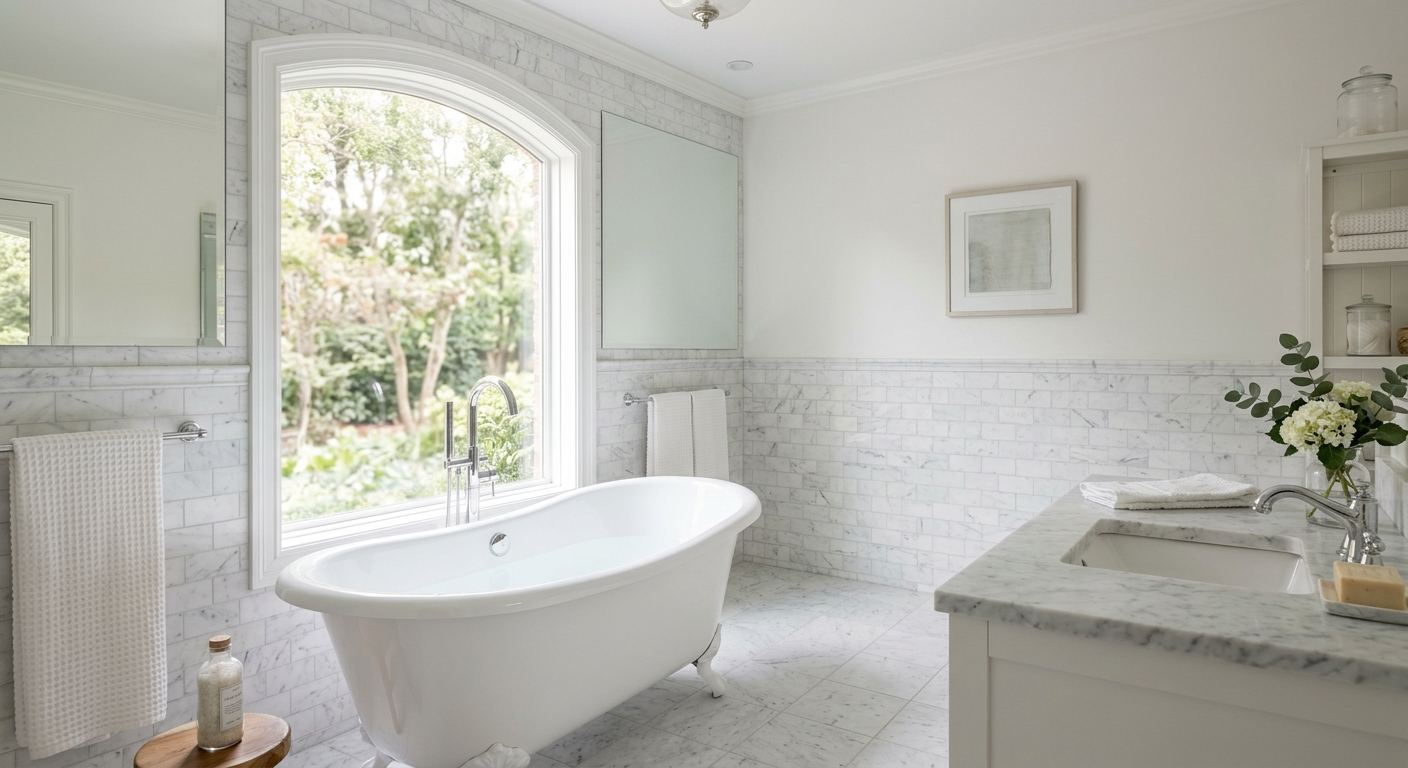
Bathroom renovation options and costs in East Clayton
East Clayton homeowners typically look at bathroom renovations through three lenses: comfort, function, and total installed cost. With a population of about 15,000 in 2021 (Statistics Canada, 2021 Census), the local contractor pool serves ongoing demand from households across the Lower Mainland–Southwest. Cost comes down to more than surface finishes—East Clayton’s housing stock includes many older homes, which often means dated plumbing layouts, heavier drain-line constraints, and a higher chance of finding problematic materials once walls open.
In the Lower Mainland–Southwest region, bathroom budgets are driven primarily by regional labour rates and the age of the home, not day-to-day climate extremes. Metro Vancouver-area pricing is high because skilled trades such as plumbers, tilers, and electricians are in strong demand, and shortages can extend schedules. Once you open up a bathroom, it’s common to discover what was “good enough” in older builds is now due for updates: aging cast-iron drains or galvanized supply lines, ventilation that no longer meets today’s expectations, and wiring that needs to be brought to code. In pre-1980 homes, that hidden scope risk can quickly turn a “refresh” into a full mid-range renovation—especially if asbestos-containing materials are discovered in older floor tile, drywall compound, or insulation.
If you’re located near the busy commercial and service corridors around Surrey/Clayton-adjacent neighbourhood activity, demand for scheduling particular trades (notably tilers and licensed electricians) tends to be especially tight—so planning and scoping early matters. Below is a practical comparison of common renovation paths in East Clayton to help you translate your goals into budget ranges.
| Renovation Scope |
What's Included |
Typical Duration |
Price Range |
| Cosmetic refresh (paint, fixtures, accessories only) |
New vanity top or vanity swap, tap/fixture swaps, fresh paint, re-caulk, towel bars/accessories, replace mirror/lighting (no plumbing relocation) |
3–7 days |
$18,000–$27,000 |
| Mid-range full renovation (new tile, vanity, tub/shower, electrical) |
Remove/replace tub or reglaze tub area, new tile floor + surround, new vanity, lighting/exhaust fan updates, waterproofing system, basic electrical/GFCI where needed, disposal and prep |
2–4 weeks |
$27,000–$38,000 |
| High-end full renovation (custom tile, steam shower, heated floors) |
Custom tiled shower or steam-ready shower, heated floors, premium fixtures, upgraded ventilation/controls, extensive waterproofing, higher-spec trim/stone, detailed tiling |
4–8 weeks |
$38,000–$45,000 |
| Shower-only installation (convert tub to walk-in shower) |
Convert tub space to walk-in shower, new shower base/pan, tile floor + walls, niche(s), new valve trim, ventilation check, plumbing rough-in adjustments as needed |
2–3 weeks |
$8,000–$25,000 |
| Bathtub replacement or tub-liner install |
Tub removal and replacement (or liner system), new drain/overflow fittings, re-caulk, matching surround finishing, leak testing |
5–10 days |
$1,500–$6,000 |
| Tile-only installation (floor + surround, existing layout kept) |
Tile floor + shower/tub surround, underlayment prep, waterproofing to the wet area, grout/caulk, transitions, assumes fixtures stay and no major plumbing relocation |
1–2 weeks |
$2,000–$8,000 |
Prices are estimates only and vary by project scope, site access and material selection.
What affects the price of bathroom renovation in East Clayton
In East Clayton and the wider Lower Mainland–Southwest, you can see the same bathroom renovation quoted 30–50% apart when comparing contractors—more often than homeowners expect. The biggest reasons are regional labour rates and the age of the local housing stock. In this region, skilled trades are booked up due to steady housing turnover and high renovation demand, and that pushes labour into the higher end of the spectrum. At the same time, older homes hide additional work that only shows up once walls and floors come open, such as updating rough plumbing, improving ventilation, or correcting electrical that no longer matches today’s safety expectations.
For example, a “mid-range full renovation” often starts in the $27,000–$38,000 band, but can escalate when a contractor has to replace cast-iron or galvanized components, rework the drain slope, or add proper venting. Conversely, a straightforward “tile-only installation” at $2,000–$8,000 stays near budget when the subfloor is flat, waterproofing layers are intact, and fixtures remain where they are.
Older-home discoveries can be the turning point. If asbestos-containing materials are found in pre-1985 flooring, drywall compound, or insulation during demo, abatement becomes necessary and budgets can jump by roughly $1,500–$5,000+ depending on extent and access. Another common cost driver is ventilation: many bathrooms in older builds lack adequate exhaust or duct routing, so adding a properly ducted fan can require additional electrical work and drywall patching. Finally, layout changes—like moving a drain or toilet—drive rough-in labour and material waste. In East Clayton, those incremental surprises are why tight scopes and early investigation of plumbing/electrical are so important.
| Price Factor |
Why It Matters |
Cost Impact |
| Layout change — moving drain or supply lines requires rough-in work |
New rough plumbing routes add labour, patching, and sometimes structural or joist work |
Often +$3,000–$10,000 versus keeping fixtures in place |
| Tile selection — large-format porcelain vs. mosaic vs. ceramic |
Harder/large tiles need better prep, more careful cutting, and can increase labour time |
Typically +$500–$4,000 depending on material and complexity |
| Fixture tier — builder-grade vs. mid-range vs. designer brands |
Higher tiers cost more and may require different trim, valves, or specialty installation |
Often +$1,000–$6,000 |
| Subfloor condition — rot or unlevel concrete adds scope |
Repairs, self-levelling, or subfloor replacement increases demo and material costs |
Commonly +$800–$5,000 |
| Electrical — adding GFCI outlets, exhaust fan, heated floor circuit |
Bathrooms require safe outlets, proper fan control, and code-compliant wiring |
Often +$800–$3,500+ |
| Waterproofing method — membrane type and extent |
Better membranes and correct coverage reduce failure risk in humid conditions |
Usually +$500–$2,500, but prevents expensive tear-outs |
| Older-home surprises — asbestos tile, cast-iron drains, galvanized pipes |
Remediation and replacement add trades, permits, and schedule time |
Roughly +$1,500–$5,000+ when encountered |
| Bathroom size — sq ft drives tile and labour time directly |
More square footage means more setting, more waterproofing, more backer prep |
Can shift total by +10% to 30% |
Permits & regulations in British Columbia
In British Columbia, the rule of thumb is: cosmetic updates rarely require a permit, but anything involving plumbing relocation, new electrical circuits, or structural changes typically does. For a bathroom in East Clayton, swapping a vanity, replacing fixtures that connect to existing supply points, retiling in the same footprint, and painting are usually handled as renovation work without permits—provided you’re not changing the plumbing routes, moving walls, or altering electrical beyond the existing safe configuration.
Where permits are more likely needed: relocating a drain or toilet, changing supply line routing, adding or modifying venting that ties into the building’s systems, and any work that requires new plumbing rough-in. Electrical also matters. If you’re adding a new exhaust fan, adding heated floors, installing additional lighting, or introducing new circuits (even where it “seems like a like-for-like swap”), you should assume electrical permits/inspection and work by a licensed electrician are required for code compliance.
Step-by-step for homeowners: first, ask for the contractor’s British Columbia trade licence details and verify them using the applicable provincial online registry. Second, request a certificate of insurance and confirm liability coverage is active for renovation work (and that it matches the scope). Third, ask about workers’ coverage (WSIB/WCB or equivalent coverage for the contractor’s workforce) and request the clearance letter or proof they maintain coverage. Finally, insist your permit responsibilities and inspection steps are clearly stated in the contract so there are no gaps when rough-in walls come open.
Choosing tile, waterproofing and fixtures for your East Clayton bathroom
In East Clayton, your biggest material-impact decisions are tile choice, waterproofing approach, and fixture tier. Get these three aligned and your budget usually behaves; mismatch them and you can pay twice—first for materials, then for remedial labour if the waterproofing or install method isn’t right for wet-area realities in the Lower Mainland.
(1) Tile choice: ceramic is often the entry level at $2,000–$8,000 for tile-only projects when layout stays the same. Porcelain costs more per square foot and usually increases tile setting time due to heavier/different cutting and better underlayment needs. Natural stone (marble, travertine, slate) looks premium, but it’s more sensitive to sealing, variation, and flatness requirements, and it often increases labour because of extra layout and finishing.
(2) Waterproofing method: in British Columbia’s high indoor humidity, the right system matters as much as the tile. A paint-on membrane can work in limited applications, but for most tub/shower surrounds you’ll typically want a bonded sheet membrane or a proven system approach with correct overlap and full coverage to wet zones.
(3) Fixture tier: builder-grade fixtures cost less up front, while mid-range and designer brands often improve flow, finishes, and long-term serviceability. A practical example: if you’re comparing tub/shower finishing choices, spending the extra on a properly detailed waterproofing and a quality valve trim often costs more at the front end but reduces the chance of grout failure and leak callbacks. When you’re already planning a shower-only conversion in the $8,000–$25,000 band, those “small” waterproofing and valve upgrades can be the difference between a clean job and one that needs follow-up repairs.
| Material / Option |
Pros |
Cons |
Price Range |
| Ceramic tile (floor + walls) |
Lower material cost, wide style selection, good for budget-conscious renovations |
More limited water/wear performance than porcelain in some settings, higher risk of chipping if substrate prep is poor |
$2,000–$6,500 |
| Porcelain tile (floor + walls) |
Denser, durable in wet areas, better for floors with heavy traffic, clean look with consistent finish |
Costlier material, requires careful cutting and often more precise prep |
$3,500–$8,000 |
| Natural stone (marble, travertine, slate) |
Luxury appearance and unique variation, strong visual impact for feature walls |
Needs sealing/maintenance, can be less forgiving on flatness and installation tolerances |
$5,000–$12,000 |
| Frameless glass shower enclosure |
Modern, bright look; easy to clean compared with framed systems |
Higher cost; requires accurate wall alignment and solid waterproof backing |
$3,000–$7,500 |
| Prefab tub surround (acrylic) |
Fast installation, typically less labour; consistent finish |
Less customization; transitions and sealing need to be done carefully to avoid water intrusion |
$1,000–$3,500 |
| Custom shower pan (tile or linear drain) |
Best slope control and drain elegance; supports full customization with linear drain options |
More labour-intensive waterproofing and tiling; takes longer to get perfect alignment |
$4,000–$12,000 |
How to choose a bathroom renovation contractor in East Clayton
Choosing the right contractor in East Clayton comes down to proof, paperwork, and clarity. Start by verifying British Columbia licensing details for the trades involved, and confirm liability insurance is active for renovation work. For coverage, ask for documentation showing workers’ compensation coverage (WSIB/WCB clearance or equivalent proof) and keep it in your project file. These steps protect you if a subcontractor is injured on-site or if damage occurs during demo, plumbing rough-in, or tile work.
Next, get 2–3 itemised written quotes rather than one lump sum. You want a breakdown that separates labour and materials (demo/disposal, waterproofing, tile setting, rough-in changes, electrical, and finishes) so you can compare apples to apples. Read the scope line-by-line: what’s excluded (e.g., subfloor repairs, drywall patching, permit fees, relocating venting, mortar/backer board upgrades)? Ask whether permit pull and inspections are included in their quoted scope and whether disposal (dumpsters/hauling) is accounted for.
Warranty matters too. Confirm the workmanship warranty length for waterproofing and tile installation, and ask whether it is transferable to future homeowners. Product/manufacturer warranties should be listed separately.
Payment scheduling should stay conservative: never pay more than 10–15% upfront. Use a holdback until completion and final punch-list items are addressed. Finally, request a start date and completion estimate in writing, along with how material delays are handled.
- Verify British Columbia trade licences for any plumbing/electrical work (ask for licence details up front).
- Request certificate of insurance showing active liability coverage for renovation scope.
- Confirm workers’ compensation coverage (WSIB/WCB or equivalent clearance letter).
- Get 2–3 itemised quotes with labour vs. materials separated.
- Ensure waterproofing scope is explicitly described (method and wet-area coverage).
- Confirm permit pull responsibility and list which permits (if any) are included.
- Ask whether disposal/hauling is included, and where debris will be stored.
- Require a start date, timeline, and how delays are communicated.
- Check warranty terms for workmanship (especially tile + waterproofing).
- Use a payment schedule that limits upfront payment to 10–15%.
- Confirm how changes/add-ons are quoted (written change orders).
- Ask for examples/photos of similar East Clayton bathrooms with comparable age and layouts.
Red flags I see in East Clayton include contractors who won’t itemise quotes (they “bundle” everything), vague waterproofing descriptions, promises like “no permits needed” for any plumbing/electrical change, payment requests that exceed 15% upfront, and warranties that only cover materials—not the workmanship behind waterproofing and tile sealing.
Frequently asked questions — bathroom renovation in East Clayton
How do I choose the right contractor for my bathroom in East Clayton?
Choose a contractor by verifying their British Columbia trade licence information for the trades they perform, and confirm they carry active liability insurance. Ask for proof of workers’ compensation coverage (WSIB/WCB or an equivalent clearance letter) and keep it with your contract. Get 2–3 itemised quotes that separate labour and materials, including waterproofing, tile setting, disposal, and any rough-in work. For a realistic budget check, ask whether your scope aligns with the typical East Clayton bands—many full renovations land in the $18,000–$45,000 range depending on how much plumbing/electrical gets updated. Also confirm their workmanship warranty covers waterproofing and tile performance, not just product replacement.
What's the most common mistake homeowners make in bathroom renovations?
The most common mistake is treating a bathroom reno like a purely cosmetic refresh when the home’s plumbing, ventilation, or electrical may not support the upgrade. In East Clayton and the Lower Mainland–Southwest, older housing stock frequently hides issues once walls and floors are opened—think cast-iron or galvanized drains/supplies, outdated electrical safety, or insufficient exhaust ventilation. If you don’t plan for investigation and contingency, you can start with a “mid-range” intention and end up paying for added rough-in and remediation. Another frequent issue is skipping clear waterproofing scope details. With British Columbia’s humidity, the wrong membrane coverage or install method can lead to mould or failures that are far more expensive than the initial savings.
How long does tile installation take in a East Clayton bathroom?
In East Clayton, tile installation time commonly ranges from about 5 to 10 working days for typical floor + tub/shower surround work, depending on substrate readiness, tile size, and layout complexity. If the subfloor needs flattening, if you’re adding niches/linear drain details, or if there’s extensive waterproofing prep, plan for more time. For tile-only projects (floor + surround keeping the same layout), many jobs fit into the $2,000–$8,000 band and are often completed faster, assuming demolition reveals no surprises. If your project includes membrane upgrades and careful curing time, that adds days even when tile setting is quick—so your contractor should show a realistic schedule in writing.
How much does a bathroom renovation cost in East Clayton?
Bathroom renovation cost in East Clayton usually falls into the regional full-reno band of $18,000–$45,000, depending on whether you’re doing a cosmetic refresh, a mid-range full renovation, or a high-end custom build-out. Shower-only conversions often land around $8,000–$25,000 when plumbing adjustments and proper waterproofing are included. Tile-only work, if the layout stays the same and the substrate is sound, is commonly in the $2,000–$8,000 range. The biggest pricing shifts come from labour availability and the age of the home—older systems may require drain, venting, and electrical updates once opened up.
How long does a bathroom renovation take in East Clayton?
Timelines depend on scope and how quickly trades can schedule. Cosmetic refresh work might take about 3–7 days. Mid-range full renovations commonly take 2–4 weeks, while high-end projects can run 4–8 weeks because custom tile, heated floors, and additional waterproofing detailing extend schedules. In East Clayton, expect realistic downtime for waterproofing cure periods and for trade coordination—especially when plumbing rough-in and electrical updates happen in the same small space. If your home is older and requires remediation or plumbing upgrades, schedule can extend beyond the initial estimate. A solid contractor will provide a written start date and completion target, plus an explanation of how material lead times are handled.
Do I need a permit for a bathroom renovation in British Columbia?
Often, cosmetic updates in British Columbia don’t require a permit—such as replacing a vanity, swapping fixtures where plumbing connections stay the same, retiling without moving plumbing, or painting. However, permits are commonly required when you relocate plumbing (moving drains or supply lines), add/modify ventilation involving new exhaust fan wiring or ducting, or make electrical changes that involve new circuits. If structural wall changes are involved, permits and inspections are also much more likely. In East Clayton, the practical step is to ask your contractor to specify what permits they will pull and who is responsible. You should verify their British Columbia licence and ensure inspections are scheduled for plumbing rough-in and relevant electrical work.