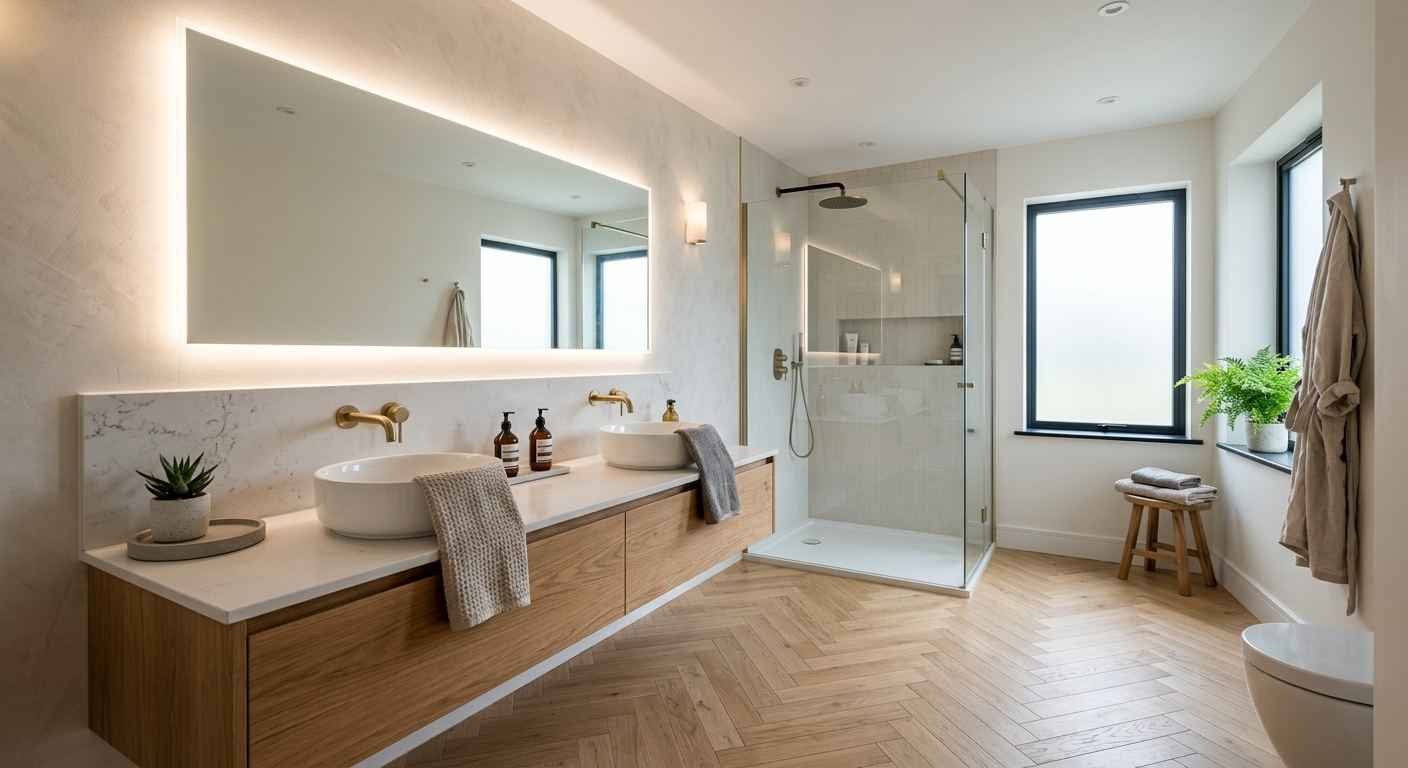
Bathroom renovation options and costs in Little Mountain
Bathroom renovation in Little Mountain is often priced off the condition of older mid-century homes and the complexity of trades in a small space. With Little Mountain’s population recorded at 1,170 people in 2021 (Statistics Canada, 2021 Census), demand can feel steady but the Greater Vancouver–area labour market still drives rates upward. In the Lower Mainland–Southwest, many bathrooms sit in housing stock that predates modern waterproofing standards, so once walls and floors open you may run into issues like dated plumbing layouts, cast-iron or galvanized components, and sometimes asbestos-containing materials in older finishes. Those surprises matter more for your budget than “weather” does day to day—labour rates and construction scope are the main cost drivers in this region.
Because Little Mountain is part of the Lower Mainland–Southwest, construction labour costs are typically higher than in most other parts of British Columbia, and skilled plumbers, tilers, and electricians can be booked out during busy periods. Local projects also frequently expand mid-reno to include plumbing and venting updates to bring the system in line with current BC requirements. That is why even modest bathroom updates can land closer to the full-renovation band than you’d expect.
If you’re comparing options, start with the scope that matches your goals—cosmetic refresh, mid-range full renovation, or a high-end build with heated floors and custom shower work. The table below shows typical durations and realistic price ranges you’ll see from contractors serving Little Mountain and nearby communities.
| Renovation Scope |
What's Included |
Typical Duration |
Price Range |
| Cosmetic refresh (paint, fixtures, accessories only) |
New vanity top or vanity, tap/trim upgrades, toilet refresh (swap-in), paint, accessories, re-caulking; no moving plumbing; existing tile kept |
3–7 days |
$6,000 – $12,000 |
| Mid-range full renovation (new tile, vanity, tub/shower, electrical) |
Demo and disposal, new wall/floor tile, new vanity and lighting, tub/shower replacement or resurfacing, exhaust fan upgrade, GFCI receptacle, basic plumbing updates as needed |
2–4 weeks |
$18,000 – $32,000 |
| High-end full renovation (custom tile, steam shower, heated floors) |
Custom shower/tub layout, premium tile/stone, steam-ready or enhanced shower system, heated floors, upgraded ventilation, higher-tier electrical, fuller plumbing venting/scope upgrades if discovered |
4–7 weeks |
$32,000 – $45,000 |
| Shower-only installation (convert tub to walk-in shower) |
Demo tub, new waterproofing and shower pan, glass enclosure, new valve/trim (as required), tile floor and surround, exhaust/venting checks, electrical for lighting/fan if needed |
1–3 weeks |
$8,000 – $25,000 |
| Bathtub replacement or tub-liner install |
Swap-in tub with new surround/tile patching OR tub-liner installation where permitted by condition; new caulking, inspection of drain/overflow, basic finishes |
5–10 days |
$1,500 – $6,000 |
| Tile-only installation (floor + surround, existing layout kept) |
Tile removal (selective), cement board/underlayment as needed, waterproofing upgrade where required, new floor and wall tile, grout/seal where applicable; no plumbing relocation |
1–2.5 weeks |
$2,000 – $8,000 |
Prices are estimates only and vary by project scope, site access and material selection.
What affects the price of bathroom renovation in Little Mountain
Homeowners often see quote differences of 30–50% for what looks like the “same” bathroom reno when comparing Lower Mainland–Southwest bids to other parts of British Columbia. In our region, labour rates and the age of local housing stock typically drive cost more than climate conditions themselves. That’s because once you open a bathroom, the project becomes multi-trade: plumbing, ventilation, electrical, waterproofing, and tile setting—each with higher labour costs in the Lower Mainland–Southwest and less scheduling flexibility when trades are booked.
Older homes in the Lower Mainland–Southwest region frequently hide problems that expand scope: cast-iron or galvanized drain components, outdated copper supply lines, insufficient venting, and even wiring types that need modernizing to meet today’s safety expectations. If your bathroom is in a pre-1985 build, discovery of asbestos-containing materials in vinyl floor tile, drywall compound, or insulation can trigger abatement requirements. That typically adds $1,500 – $5,000+ (varies widely by extent and access) and usually extends timelines to keep work safe and compliant.
Concrete examples we see in Little Mountain: (1) moving a shower valve or vanity drain often adds rough-in plumbing labour and patching, pushing a “tile-only” job toward a shower-only range near $8,000 – $25,000; (2) converting from a tub to a walk-in shower can require structural checks and new waterproofing layers, which is why some projects slide into the mid-range full renovation band of $18,000 – $32,000. A well-scoped assessment and a contingency plan help keep surprises from turning into budget overruns.
| Price Factor |
Why It Matters |
Cost Impact |
| Layout change — moving drain or supply lines requires rough-in work |
Plumbing relocation means opening walls/ceilings, adding venting considerations, and re-testing connections |
Often +$3,000 to +$10,000 depending on distance to stacks/accessible joists |
| Tile selection — large-format porcelain vs. mosaic vs. ceramic |
Harder materials can need more labour time for cuts, patterning, and flatter substrate prep |
Often +$800 to +$4,000 for materials and installation labour |
| Fixture tier — builder-grade vs. mid-range vs. designer brands |
Higher tiers include better valves, finishes, and warranties; may require more specialized installs |
Often +$500 to +$5,000 across taps, shower trim, vanity, and lighting |
| Subfloor condition — rot or unlevel concrete adds scope |
Bathrooms demand a true plane for tile and waterproofing; repairs add demo, patching, and materials |
Often +$1,000 to +$7,000 depending on extent |
| Electrical — adding GFCI outlets, exhaust fan, heated floor circuit |
Upgrades must meet modern BC electrical safety requirements and may require new circuits |
Often +$800 to +$3,500 |
| Waterproofing method — membrane type and extent |
Quality waterproofing reduces mould and failures; complex details cost more at the “prep and layer” stage |
Often +$400 to +$2,500 |
| Older-home surprises — asbestos tile, cast-iron drains, galvanized pipes |
Remediation and replacement require additional trades, containment, and permit considerations |
Often +$1,500 to +$8,000+ where discovered and confirmed |
| Bathroom size — sq ft drives tile and labour time directly |
More square footage means more setting time, waterproofing materials, and drying/curing steps |
Often +$1,500 to +$10,000 as size and complexity increase |
Permits & regulations in British Columbia
In British Columbia, cosmetic updates in a bathroom—like swapping a vanity, replacing fixtures with like-for-like parts, repainting, and retiling without changing plumbing—often do not require a permit. However, as soon as you relocate plumbing (moving a drain or supply line), add or reconfigure ventilation, or change structural elements (for example, opening walls beyond cosmetic patching), the work can fall into permit-and-inspection territory. Electrical changes must be done by a licensed electrician and must meet the applicable provincial electrical code requirements.
Here’s the practical way to think about it for a homeowner in Little Mountain:
- Typically does NOT need a permit: swapping a faucet/trim, replacing a vanity top, basic accessory upgrades, and retiling where plumbing remains in the same positions.
- Typically DOES require a permit/inspection: relocating drains or supply lines, adding a new exhaust fan with new wiring/circuit work, replacing or modifying electrical circuits (even for a fan or heated floor), and any plumbing rough-in changes that alter the system beyond straightforward replacement.
Step-by-step verification: ask the contractor for (1) their British Columbia trade licence number and confirm the class matches the work being proposed, (2) a current certificate of liability insurance showing the contractor is covered for the project period, and (3) evidence they carry appropriate worker coverage (BC worker protection coverage). A reputable contractor will supply these documents promptly, not after you sign. If a clearance letter is provided by their insurer for job start, keep it in your records alongside the quote and any permit paperwork.
Choosing tile, waterproofing and fixtures for your Little Mountain bathroom
In Little Mountain, your biggest budget “swing” usually comes from three choices: tile type, waterproofing approach, and fixture tier. First, tile choice: ceramic is a dependable entry option, but it demands correct substrate prep and can be more forgiving on budget where complex layouts are minimal. Porcelain is typically denser and handles moisture better, but large-format panels can increase labour due to careful setting and cutting. Natural stone (marble, travertine, slate) looks premium, yet it adds cost through material selection and more exacting installation requirements—especially if you need consistent veining or require sealing routines.
Second, waterproofing method matters for mould control in British Columbia’s humid, rain-heavy stretches and for preventing failures behind finished walls. Paint-on membranes can work in some systems, but bonded sheet membranes and proven shower-specific systems often deliver more robust coverage when installed correctly at transitions (corners, niches, curb/bench details). Third, fixture tier influences both budget and day-to-day performance: builder-grade trims may cost less upfront, while mid-range and designer brands can improve valve smoothness, finish durability, and resale appeal.
One realistic dollar example: upgrading from a standard tub surround tile to a higher-performance porcelain and a more comprehensive shower waterproofing package often costs an additional few thousand dollars—frequently worth it when you’re already doing a full tear-out. In a conversion shower-only project, that improvement can be the difference between a “good looking” job and one that lasts through years of bathroom steam cycles.
| Material / Option |
Pros |
Cons |
Price Range |
| Ceramic tile (floor + walls) |
Good entry-level value, wide style selection, comfortable underfoot when properly installed |
Generally more porous than porcelain; can be tougher on large-area leveling and pattern cuts |
$2,000 – $5,500 |
| Porcelain tile (floor + walls) |
Moisture-friendly, durable finishes, great for modern looks and textured slip-resistant options |
Costs more per square foot; large-format porcelain increases labour for substrate flatness and cuts |
$3,500 – $8,000 |
| Natural stone (marble, travertine, slate) |
High-end aesthetics; distinct character and resale appeal |
Higher material + labour cost; often needs sealing/maintenance; requires careful layout to avoid mismatches |
$6,000 – $14,000 |
| Frameless glass shower enclosure |
Light, clean look; makes smaller bathrooms feel larger; easy to wipe when well sealed |
More expensive; door alignment matters—poor framing/leveling causes leaks and costly rework |
$1,800 – $5,500 |
| Prefab tub surround (acrylic) |
Fast install, fewer grout joints, good water resistance when correctly integrated |
Limited custom design compared to tile; if the base isn’t level, fit-up issues can appear |
$1,200 – $3,000 |
| Custom shower pan (tile or linear drain) |
Modern look, flexible layout, and improved drainage when planned with correct slopes |
More detail work and waterproofing time; requires precise measurements and substrate readiness |
$3,000 – $10,000 |
How to choose a bathroom renovation contractor in Little Mountain
Start by confirming the contractor’s British Columbia credentials. Ask for their trade licence details relevant to the scope (plumbing and electrical should be performed or overseen by properly licensed parties), plus a certificate of liability insurance that includes your address/project description and covers the work during installation and removal. For worker coverage, verify they have the appropriate provincial worker protection coverage for employees and subcontractors—your contractor should provide documentation on request. If you can’t get these items early, it’s a sign the paperwork may not match the project plan.
Next, get 2–3 itemised written quotes. You want a labour + materials breakdown rather than a single lump sum, with clear line items for demo, rough-in adjustments, waterproofing, tile setting, and electrical/plumbing allowances. Read the scope carefully: what’s excluded (for example, asbestos testing/abatement, specialty disposal, extra subfloor repairs)? Confirm whether permit pulling is included, and whether disposal and hauling are handled by the contractor or by you.
Warranty matters for both workmanship and products. Ask for the workmanship warranty length (and what “service call” covers), plus manufacturer warranties for tile work components, shower systems, fixtures, and heated floor elements. Also confirm whether warranties are transferable if you sell your home. For payment scheduling, never pay more than 10–15% upfront; use a reasonable holdback until substantial completion and final walkthrough. Finally, require a written start date and completion estimate so labour scheduling doesn’t drift.
- Ask for BC licence details and confirm the class matches the work type.
- Request certificate of liability insurance (current dates, project coverage).
- Verify worker coverage for the contractor and any subcontractors.
- Get itemised quotes: demo, plumbing/rough-in, waterproofing, tile, electrical.
- Ensure a clear allowance list (tile, vanity, fan, glass, grout/sealer).
- Confirm permit pulling responsibility and inspection handling.
- Check what disposal includes (tiles, drywall, fixtures) and what doesn’t.
- Ask how asbestos risk will be handled if older materials are encountered.
- Review the waterproofing spec: membrane type, how transitions are treated.
- Ask for a tile install method statement (substrate prep, flatness targets).
- Confirm warranty terms in writing (duration and exclusions).
- Use a payment schedule with a small deposit and holdback at completion.
Red flags in Little Mountain bathroom renovations: vague quotes with no breakdown, contractors who won’t provide licence/insurance documentation up front, “fast and cheap” waterproofing claims that skip details at corners and transitions, missing timelines or vague start/finish dates, and proposals that don’t address permit needs when plumbing/electrical scope changes.
Frequently asked questions — bathroom renovation in Little Mountain
Is it worth renovating a bathroom before selling in Little Mountain?
Often, yes—especially if your bathroom shows visible wear (peeling caulk, dated fixtures, recurring moisture staining) or if the layout no longer suits buyers’ expectations. In Little Mountain and the broader Lower Mainland–Southwest, buyers commonly look for clean waterproofing performance, bright ventilation, and modern finishes. A full renovation can align with the local full-bath range of $18,000 – $45,000, but the “worth it” part depends on how far you’re going: cosmetic-only updates may refresh appearance, while a poorly planned full redo can hurt value if it cuts corners on waterproofing and rough-in upgrades. If you’re unsure, prioritize ventilation, new waterproofing, and fixture upgrades first—then consider tile or a shower conversion if the rest of the plumbing is still sound.
How do I plan a bathroom renovation on a tight budget in Little Mountain?
Start by narrowing the scope so you don’t unintentionally trigger full-reno complexity. In Little Mountain, keeping the plumbing in the same locations is one of the biggest budget protectors because layout changes often add rough-in work. A practical approach is to choose either a cosmetic refresh or a tile-focused plan paired with targeted electrical (like a properly vented exhaust fan). If you’re aiming at the bathroom tile-only route, many homeowners land in the $2,000 – $8,000 range when the existing layout and substrate are in decent shape. If the bathroom is older, budget a contingency for subfloor repair or waterproofing upgrades. When you book contractors, ask for an inspection/opening plan so surprises are discovered early rather than mid-install.
What's the difference between a cosmetic and a full bathroom renovation?
A cosmetic renovation updates surfaces and fixtures without changing the plumbing or moving major components. Think paint, accessories, swap-in taps/trim, and replacing items like a vanity or lights while leaving walls and waterproofing systems largely as-is. A full renovation is typically a tear-out and rebuild: you’re redoing waterproofing, tile/finishes, and often upgrading ventilation and electrical. In many Lower Mainland–Southwest bathrooms, once walls are opened, plumbing and venting upgrades are required to meet current BC expectations—so a “simple” project can grow into the full renovation scope. The budget reflects that difference: cosmetic refreshes often start lower, while mid-range full renovations commonly sit around $18,000 – $32,000 depending on tile complexity and whether additional plumbing work is uncovered.
How do I choose the right contractor for my bathroom in Little Mountain?
Choose a contractor who will verify credentials and explain the scope clearly. In British Columbia, confirm the contractor’s trade licensing for the work they’re doing, and ask for a current certificate of liability insurance that covers the project. Also ask about worker coverage documentation for employees and the subcontractors they use. Then request 2–3 itemised written quotes with labour and materials broken out—especially for waterproofing, tile install, disposal, and any permits. Make sure the proposal states what’s excluded (for example, asbestos abatement if older materials are found) and includes whether permit pulling and inspections are handled. If the timeline, payment schedule, and workmanship warranty terms aren’t in writing, that’s a common sign of trouble.
What's the most common mistake homeowners make in bathroom renovations?
The most common mistake I see in Little Mountain is treating “waterproofing” like an optional line item instead of the foundation of a durable bathroom. Homeowners sometimes shop only on tile and fixtures, then assume membrane, substrate prep, and correct installation details will be included without asking. In older homes in the Lower Mainland–Southwest, hidden plumbing and venting issues can also be missed until walls open—so skipping an early assessment can lead to budget shocks. Another frequent issue is paying too much upfront or accepting vague scope language, which makes it harder to resolve change orders. If you’re aiming for a shower-only conversion, a realistic range is often $8,000 – $25,000, but quality waterproofing and proper drainage are what keep that investment from turning into costly repairs later.
How long does tile installation take in a Little Mountain bathroom?
Tile time depends on bathroom size, substrate condition, and the waterproofing system details. In a typical Little Mountain renovation where the shower floor and walls are being tiled, installation commonly takes about 5–10 working days for layout, prep, setting, grouting, and finishing—then there’s additional curing/dry times before you can use the shower normally. If the job is tile-only, and the substrate is flat and ready, you may see faster schedules, but most projects still require extra steps for waterproofing transitions and clean lines around niches/trim. For reference, many tile-focused scopes fall into the $2,000 – $8,000 band, but the schedule can stretch if subfloor repairs or membrane corrections are needed once walls open.