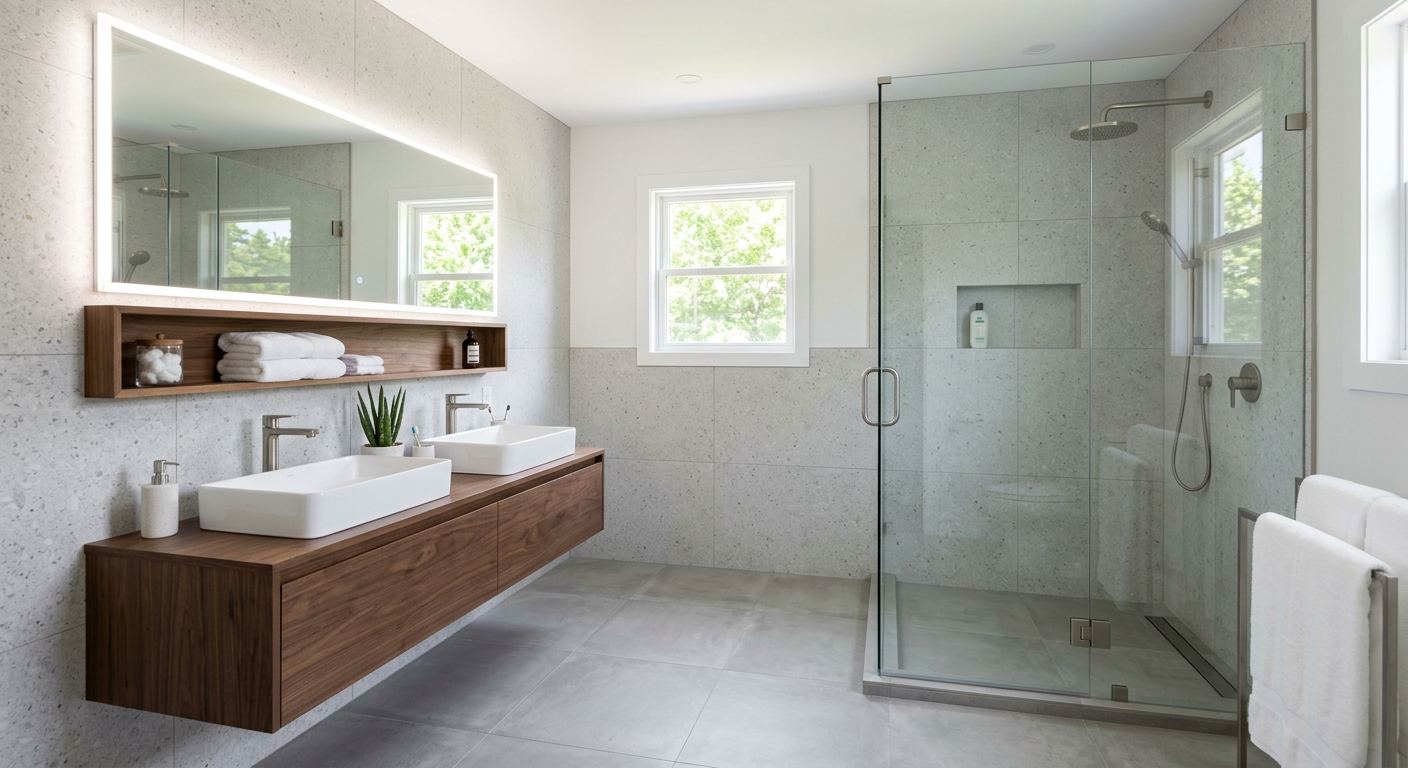
Bathroom renovation options and costs in Mount Currie
In Mount Currie, bathroom renovations usually land in a predictable cost range—but the “same” bathroom can price very differently once contractors open walls and floors. That’s especially true here because a meaningful share of homes were built before 1981, which often means older plumbing layouts and finish materials that don’t match current bathroom build-up expectations. In the 2021 Census, homeowner households make up about 36.7% of all households, and that matters for budgeting: many projects are planned as owner-occupied upgrades rather than full replacements, so homeowners commonly start with a cosmetic refresh and then expand once discoveries are made. (Statistics Canada, 2021 Census)
In the Lower Mainland–Southwest, labour rates and housing age are the main cost drivers, not outdoor weather. Mount Currie still benefits from BC’s relatively mild coastal climate, but the real pressure comes from moisture management inside the bathroom and the availability of skilled plumbers, tilers, and electricians—demand is strong throughout the region, including toward nearby service areas that support trades work for Mount Currie properties. If your bathroom is near the core services area (many homeowners renovate main-floor bathrooms for access and staging), contractors can often schedule efficiently; projects with awkward access, older drain stacks, or dated wiring take longer and cost more.
To help you compare quotes fairly, use the scopes below as a starting point. Then read the cost factors section to understand why a mid-range renovation can be close to the “full” budget bands, or why an older-home surprise can push a job upward quickly.
| Renovation Scope |
What's Included |
Typical Duration |
Price Range |
| Cosmetic refresh (paint, fixtures, accessories only) |
New paint, toilet/vanity fixtures refresh (where plumbing stays in place), towel bars, mirrors, lighting swap (like-for-like), caulking and basic trim touch-ups |
3–7 days |
$4,500 – $10,000 |
| Mid-range full renovation (new tile, vanity, tub/shower, electrical) |
Remove/replace tile floor and walls (standard sizes), vanity and toilet replacement, tub/shower re-surface or replacement, updated exhaust fan/lighting and GFCI upgrades, basic waterproofing, disposal |
2–3 weeks |
$18,000 – $32,000 |
| High-end full renovation (custom tile, steam shower, heated floors) |
Custom layout planning, premium tile (mosaic/large-format with detailed layout), steam shower system, heated floor wiring + controls, upgraded plumbing trim, higher-end lighting and ventilation, enhanced waterproofing and premium finishes |
3–6 weeks |
$32,000 – $45,000 |
| Shower-only installation (convert tub to walk-in shower) |
Demo tub, add shower pan/base, waterproofing, new shower valve trim and glass (if selected), tile or surround up to ceiling, exhaust fan or ventilation tweaks |
1–2 weeks |
$10,000 – $22,000 |
| Bathtub replacement or tub-liner install |
Replace tub or install liner (where suitable), new trim and fixtures, re-seal and re-tile localized areas, basic waterproofing at transitions, disposal |
5–10 days |
$2,500 – $6,000 |
| Tile-only installation (floor + surround, existing layout kept) |
Tile removal and re-tile for floor and shower walls/surround, underlayment/waterproofing prep as required, grout and sealant, matching transitions (existing vanity and fixtures kept) |
5–12 days |
$4,000 – $9,000 |
Prices are estimates only and vary by project scope, site access and material selection.
What affects the price of bathroom renovation in Mount Currie
Homeowners in Mount Currie often see quote differences of 30–50% for what sounds like the same job. The biggest reason is that bathroom renovations in the Lower Mainland–Southwest are driven more by regional labour costs and the age of the local housing stock than by climate extremes. Once walls and floors open, older homes frequently hide cast-iron or aging drain components, older supply piping, inadequate ventilation paths, or wiring that doesn’t meet today’s practical expectations for bathroom circuits. Even before you pick a tile, that “discovery” phase can change the scope of plumbing rough-in, waterproofing detail, and electrical upgrades—pushing budgets toward the mid-range full renovation band of $18,000 – $32,000 or, in complex cases, toward the higher-end range of $32,000 – $45,000.
Asbestos surprises are a real cost variable in pre-1985 materials. If vinyl floor tile, drywall compound, or insulation contains asbestos, remediation is not a simple patch job; it triggers containment and additional labour and oversight, and it can add about $1,500–$5,000+ depending on what’s affected. In Mount Currie, you’ll also see projects expand when ventilation is outdated—upgrading an exhaust fan can require new ducting routes and an updated electrical pathway.
Two common examples that move cost up or down: (1) keeping your drain and toilet locations often avoids rough-in changes, which can reduce labour and permit complexity; (2) choosing standard tile formats and a simpler layout (fewer cuts at niches and floors) helps the tiler’s efficiency. A realistic plan starts with a careful scope and a contingency line item for the first demo days, because that’s when hidden conditions show up.
| Price Factor |
Why It Matters |
Cost Impact |
| Layout change — moving drain or supply lines requires rough-in work |
New runs mean opening walls/floors, patching structure, and re-plumbing to correct grades and code |
Often adds $3,000 – $10,000 |
| Tile selection — large-format porcelain vs. mosaic vs. ceramic |
Complexity increases with patterns, more cuts, and heavier materials that need careful setting and support |
Typically adds $1,000 – $6,000 |
| Fixture tier — builder-grade vs. mid-range vs. designer brands |
Higher tiers cost more, and trims/valves can require specific rough-in parts |
Varies by $800 – $5,500+ |
| Subfloor condition — rot or unlevel concrete adds scope |
Correcting movement, replacing damaged framing, or leveling makes waterproofing and tile last |
Often adds $500 – $4,000 |
| Electrical — adding GFCI outlets, exhaust fan, heated floor circuit |
Bathrooms need safe circuits and appropriate protection; heated floors add wiring and controls |
$600 – $4,500+ |
| Waterproofing method — membrane type and extent |
Proper membrane coverage prevents leaks behind tile; higher-spec systems reduce failure risk |
$800 – $3,500 |
| Older-home surprises — asbestos tile, cast-iron drains, galvanized pipes |
Remediation, pipe replacement, and additional disposal trades widen the project |
Can add $1,500 – $12,000+ |
| Bathroom size — sq ft drives tile and labour time directly |
More surface area means more materials, mixing/grout time, and longer set and cure schedules |
Typically $2,000 – $15,000 |
Permits & regulations in British Columbia
In British Columbia, cosmetic updates are usually straightforward from a permit standpoint. Swapping fixtures in place—like replacing a vanity, toilet, mirror, or like-for-like lighting—typically does not require a permit. Repainting and simple accessory installs are also generally considered cosmetic. However, Mount Currie homeowners should expect permits when you change the bathroom’s systems or structure: relocating plumbing (moving a drain or supply line), installing or modifying a shower valve rough-in, adding ventilation that requires new ducting and a new circuit, or making structural wall changes generally require permits and inspection.
Electrical work must comply with BC code and be performed by (or signed off by) a licensed electrician. Plumbing rough-in changes typically require a permit and inspection before walls close up, because inspectors need to verify rough plumbing and venting where applicable. Waterproofing isn’t usually “permitted” as a discrete item, but it’s tied to inspection timing when you’re opening walls and floors.
To verify a contractor in Mount Currie, do this before they start demo: (1) check their British Columbia trade licence (ask for the licence number and confirm it through the appropriate BC registry entry they provide); (2) request a current certificate of liability insurance showing the contractor is insured for the work scope; and (3) confirm WSIB/WCB coverage. Homeowners should ask for proof documents in writing, ideally before the contract is signed, and keep copies for your records and any financing requirements.
Choosing tile, waterproofing and fixtures for your Mount Currie bathroom
In Mount Currie, your renovation budget is shaped by three decisions that directly influence installation complexity and long-term performance in BC’s damp indoor conditions: tile choice, waterproofing system, and fixture tier. First, tile: ceramic is a good entry option for straightforward layouts, but it can be less forgiving in high-moisture shower zones where the right substrate preparation is critical. Porcelain is denser and more durable for floors and shower walls, and it often costs more in materials and time if you choose large-format pieces. Natural stone (marble, travertine, slate) can look premium, but it usually brings extra labour for sealing and finish quality, and it’s often less forgiving if you want a perfectly consistent look.
Second, waterproofing: paint-on membranes can work when used exactly per manufacturer instructions and when build-up is correct, but bonded sheet membranes and reputable system approaches (including quality board and compatible thinset/membrane combinations) tend to provide greater reliability for shower assemblies. In the Lower Mainland–Southwest, where bathrooms see frequent use and high humidity, the “hidden” waterproofing layer is what prevents mould and delayed leaks—so cutting corners here can be expensive later.
Third, fixtures: builder-grade saves upfront, while mid-range and designer brands usually justify cost through better valves, smoother trims, and more consistent finish quality that holds up to daily use. For example, upgrading from a basic shower valve/trim to a mid-range matching trim set can be an extra $500–$1,800, but if it prevents repeated valve servicing and you’re already redoing walls, that increase is often money well spent rather than padding. Your best combination depends on whether you’re doing a shower conversion, a full renovation, or tile-only work.
| Material / Option |
Pros |
Cons |
Price Range |
| Ceramic tile (floor + walls) |
Lower material cost, good for budget-focused projects, wide style selection |
May be less durable for floors than porcelain in some cases; requires precise subfloor prep |
$2,500 – $6,000 |
| Porcelain tile (floor + walls) |
Better durability and moisture performance, cleaner maintenance, great for modern layouts |
Higher material and sometimes labour cost, especially with large-format and complex patterns |
$4,000 – $9,000 |
| Natural stone (marble, travertine, slate) |
Premium look and unique variation, strong curb appeal for resale |
More labour-intensive finishing, often needs sealing/maintenance planning |
$7,000 – $15,000 |
| Frameless glass shower enclosure |
Modern appearance, easier to keep clean than bulky frames, improves perceived value |
Higher cost; requires precise measurements and installation alignment |
$3,000 – $7,500 |
| Prefab tub surround (acrylic) |
Faster install, fewer tile cut errors, consistent surfaces and easier cleaning |
Less “designer” than tile; limited design flexibility; transitions must be sealed properly |
$1,200 – $3,500 |
| Custom shower pan (tile or linear drain) |
High-end look, proper slope and drainage strategy, works well for curbless styles |
More build-up steps; requires meticulous waterproofing and drain detailing |
$6,500 – $14,000 |
How to choose a bathroom renovation contractor in Mount Currie
Choosing the right bathroom renovation contractor in Mount Currie starts with verification. First, confirm British Columbia licensing: ask for the trade licence number relevant to the work (plumbing, electrical, and any required trade categories) and ask them to provide proof. Next, request liability insurance documentation—make sure the certificate matches the contractor’s business name and covers the scope. Finally, confirm WSIB/WCB coverage (and ask for the clearance-style proof they provide). Don’t rely on verbal assurances; request copies or documents you can keep.
Then get 2–3 itemised quotes (not lump sums). A strong quote breaks labour and materials down—tile, waterproofing, membrane, fixtures, glass, demolition, disposal, rough-in plumbing adjustments, and electrical line items like exhaust fan wiring or heated floor controls. Read the exclusions: ask whether permits are included, whether disposal/haul-away is covered, and what happens if hidden plumbing issues are found after demo. Warranty matters too: confirm the workmanship warranty length, what it covers, whether it’s tied to the property or person, and whether product/manufacturer warranties transfer if you sell your home.
For payment, avoid large upfront deposits—generally keep the initial payment at 10–15% and request a holdback until the job is complete and cleaned. Get a written timeline with a start date and completion estimate, and make sure any long-lead items (glass panels, custom tile, steam systems) have delivery dates in writing.
- Provide BC trade licence numbers relevant to the work, not just business registration
- Show current liability insurance (certificate) matching the contracting entity
- Confirm WSIB/WCB coverage and provide proof documents
- Use itemised quotes: labour vs. materials vs. fixtures vs. permits vs. disposal
- Clarify what’s included in waterproofing (membrane type, coverage areas, and compatible materials)
- List tile scope: floor, walls, niches, waterproofing transitions, and grout/sealant type
- State plumbing scope: confirm if drain/supply rough-in is staying put or changing
- Specify electrical scope: exhaust fan, lighting, GFCI outlets, heated floor circuits
- Confirm schedule: start date, milestones (demo, rough-in, tile, trim), and completion estimate
- Confirm disposal/hauling: how debris is removed and where it’s taken
- Warranty terms in writing: workmanship length, exclusions, and whether transferable
- Payment schedule: no more than 10–15% upfront and a holdback until punch list completion
Red flags in Mount Currie include: (1) quotes that don’t clearly separate waterproofing and permit/inspection expectations; (2) “lump sum” pricing with vague language like “allowance for plumbing” after demo; (3) no proof of liability insurance or inability to provide licence/coverage documentation; (4) warranty stated only as a verbal guarantee; and (5) demanding large upfront payments (more than 15%) or refusing to document milestones and timeline.
Frequently asked questions — bathroom renovation in Mount Currie
Can I keep my existing plumbing layout to save money?
Yes—keeping the plumbing layout is one of the fastest ways to control cost in Mount Currie. When you leave the toilet, drain location, and shower/tub valve position where they are, contractors usually avoid major rough-in work, which reduces labour, drywall opening, and the complexity of inspections. In the Lower Mainland–Southwest, labour costs are a major driver, and minimizing demo/patching helps keep you closer to the mid-range full renovation band rather than the high-end surprises. If you’re converting a tub to a walk-in shower, you may still be able to keep the same drain line footprint, but you’ll need a proper shower base slope and waterproofing. If your home has older galvanized or cast-iron components, a “keep layout” plan should still include a quick inspection during demo for leakage or deterioration.
How much does a walk-in shower cost in Mount Currie?
A walk-in shower conversion in Mount Currie typically fits the shower installation band of $8,000 – $25,000, depending on how much you change. If you’re converting from a tub with the valve roughly staying in place, expect closer to the lower portion of the range (materials and labour moving faster). If you add a linear drain, custom pan, premium glass, or you discover dated plumbing that needs replacement, it can climb toward the upper end. In older homes—especially those built before 1981—hidden drain issues or ventilation problems can also expand scope. A realistic plan is to ask for an allowance for glass and shower valve trims, plus a small contingency line for plumbing verification once the walls come down.
What's the ROI on a bathroom renovation?
ROI in British Columbia varies by home value, how well the work is done, and whether you address functional problems (ventilation, leaks, poor layout) rather than only cosmetics. A well-executed bathroom renovation often improves market appeal and day-to-day comfort, which can help resale confidence—especially for buyer categories that value modern waterproofing, safe electrical upgrades, and efficient ventilation. However, ROI is not guaranteed to be dollar-for-dollar. In Mount Currie, many homes are owner-occupied (36.7% of households are homeowners, Statistics Canada, 2021 Census), so the value is often both lifestyle and resale. If you’re deciding between cosmetic refresh and full renovation, consider your moisture management needs: fixing waterproofing and ventilation is usually higher impact than upgrading accessories alone. Budget-wise, homeowners often weigh staying around $18,000 – $32,000 versus moving toward $32,000 – $45,000 if the layout and systems truly need renewal.
Do I need waterproofing behind the tile?
Yes—proper waterproofing behind the tile is essential for showers and wet zones in Mount Currie bathrooms. British Columbia’s best practice is that tile assemblies should be built to stop water from reaching framing and subfloor. In practice, that means a waterproofing membrane system compatible with your substrate (for example, membrane or sheet systems designed for wet areas) and correct detailing at corners, niches, penetrations, and transitions to drywall and floors. Paint-on membranes can be acceptable in certain systems when used exactly per manufacturer instructions, but many homeowners prefer more robust membrane approaches because they reduce the risk of hidden failures. If your home has older materials, demo can also reveal uneven subfloors or damage that must be corrected before waterproofing goes in.
How do I compare bathroom renovation quotes?
Compare quotes like-for-like, not just by total price. In Mount Currie and the Lower Mainland–Southwest, a cheaper quote can be cheaper because it includes fewer trades, fewer waterproofing details, or allowances that won’t match your final selections. Ask each contractor for an itemised breakdown: labour, tile scope (floor/walls, niches, linear drains), waterproofing method and coverage, electrical scope (GFCI, exhaust fan, heated floors), plumbing scope (especially whether drain/supply rough-in changes), and disposal/hauling. Confirm whether permits are included and who pulls them. Check warranties: workmanship coverage length and exclusions. Finally, make sure the timeline and payment schedule are documented—avoid contractors who want large upfront payments or who can’t show proof of British Columbia licensing and liability coverage.
Can I live at home during a bathroom renovation in Mount Currie?
Often, yes—but it depends on how disruptive your scope is. If you’re doing a cosmetic refresh or tile-only work, you can usually stay in the home with careful scheduling. If you’re doing a full renovation (especially a shower conversion or layout change), you may be without a functional bathroom for several days while demolition, rough-in, waterproofing, and tile set/cure. In Mount Currie, many homeowners plan around main trade hours and arrange temporary bathroom access (a nearby tub/shower in another part of the home, if available, or a portable setup). If permits are required for plumbing or electrical changes, inspections can also affect how quickly you regain use. For full renovations, plan for dust control, restricted access to the work area, and a staged schedule so the bathroom becomes usable as soon as the waterproofing and fixtures are installed.