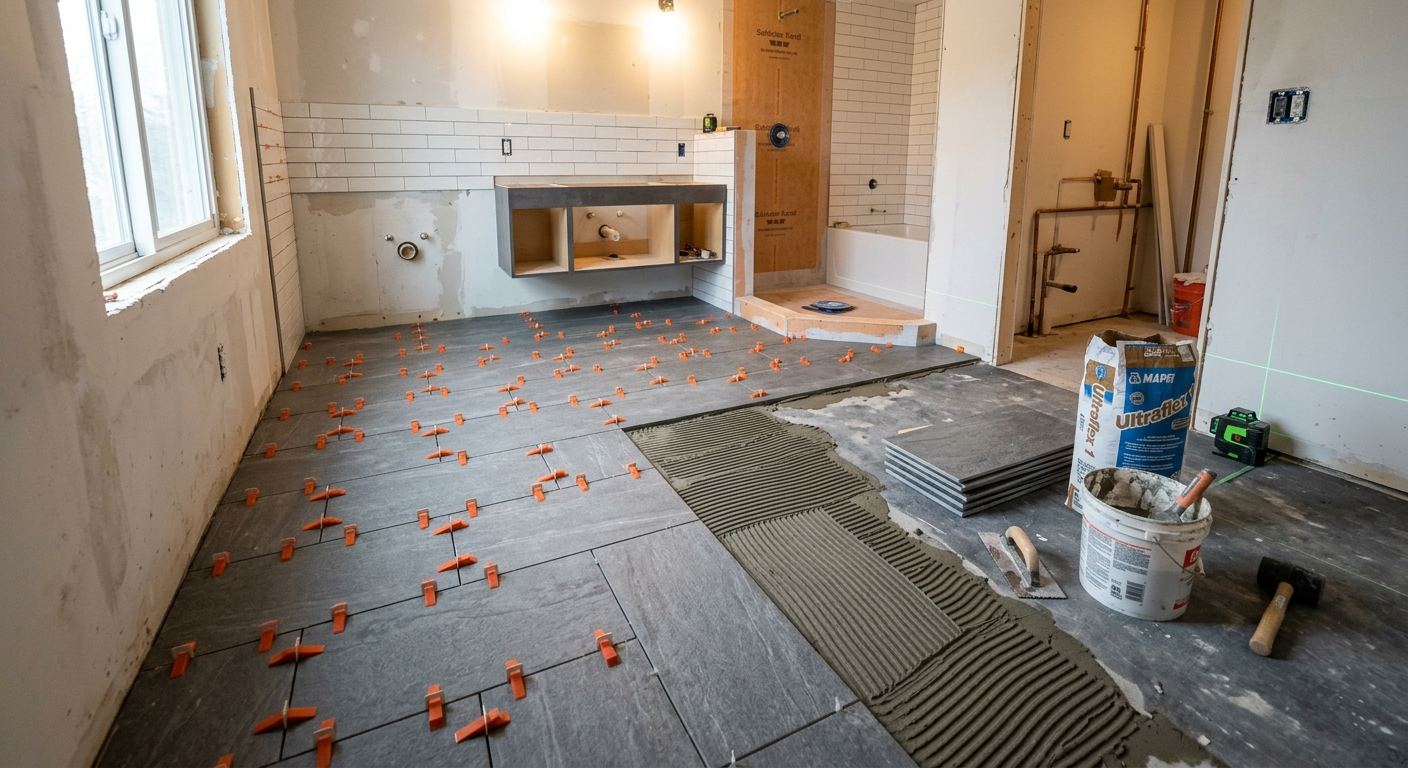
Bathroom renovation options and costs in Centre District
Centre District, Ontario is a great place to renovate, but pricing swings can be real because projects here are often tied to older, denser housing. In fact, Centre District’s population is small (1,656 people, Statistics Canada, 2021 Census), yet it sits within the Toronto economic region where trade demand is constant and skilled labour is booked. Many homes in this broader Toronto area were built before 1980, which frequently means dated plumbing layouts, older venting configurations, and a higher chance of discovering asbestos-containing materials in floor tile or older patching compounds once walls are opened.
Toronto’s market conditions don’t behave like “climate-driven” cost increases the way freeze-thaw regions can. Instead, the drivers are labour rates and housing age. Skilled bathroom trades in the GTA command a premium hourly rate, and the work itself is labour-intensive—especially tiling, custom showers, and plumbing rework. If your bathroom is in a busy pocket like the King–Spadina area or along the Queen Street corridor, contractors tend to prioritize schedules and parking/access planning, which can slightly raise mobilization and labour scheduling costs.
For budgeting, most homeowners choose between a cosmetic refresh, a mid-range full renovation, or a high-end build where waterproofing, tile, and shower systems are upgraded. Use the table below to compare typical scopes and realistic Centre District price ranges before you call for itemised quotes.
| Renovation Scope |
What's Included |
Typical Duration |
Price Range |
| Cosmetic refresh (paint, fixtures, accessories only) |
Paint, new vanity/lighting if existing plumbing remains, toilet/trim swaps where no rough-in changes are needed, accessories (towel bars, mirrors). Usually no tile floor re-lay. |
3–7 days |
$3,000–$8,000 |
| Mid-range full renovation (new tile, vanity, tub/shower, electrical) |
Demo and rebuild, new floor and surround tile, vanity replacement, tub/shower swap or refresh, exhaust fan upgrade, basic electrical (GFCI where required), new fixtures and waterproofing system, disposal. |
2–4 weeks |
$12,000–$20,500 |
| High-end full renovation (custom tile, steam shower, heated floors) |
Extensive waterproofing, custom tiled shower/steam-ready layout, heated floor circuit, premium tile detailing, designer vanity/fixtures, upgraded ventilation, possible drain/vent corrections, enhanced electrical and finishes. |
4–7 weeks |
$21,000–$30,000 |
| Shower-only installation (convert tub to walk-in shower) |
Convert plumbing to a walk-in, new shower pan and membrane, wall tile, niche(s), glass enclosure allowance, exhaust fan check/upgrade, new shut-offs as needed. |
2–3 weeks |
$9,000–$16,000 |
| Bathtub replacement or tub-liner install |
Swap tub for like-for-like replacement, re-seal and re-tile where necessary, plumbing connections, disposal. Liner option is typically limited to sound surfaces. |
5–10 days |
$1,200–$3,500 |
| Tile-only installation (floor + surround, existing layout kept) |
Remove tile, prep subfloor/walls, install waterproofing and new floor/surround tile, grout/seal, return fixtures only if no rough-in changes are needed. |
1–2.5 weeks |
$3,000–$10,000 |
Prices are estimates only and vary by project scope, site access and material selection.
What affects the price of bathroom renovation in Centre District
In Toronto and across Ontario, two contractors can price the “same” bathroom renovation 30–50% apart because the cost stack is driven by labour and hidden conditions—not just the visible finishes. Skilled trades in the GTA often work at premium hourly rates, and bathroom renovations are labour-intensive due to removal, waterproofing, tile layout precision, and detailed plumbing/electrical work. When walls open, the real scope becomes visible: older homes commonly need plumbing and venting adjustments to meet current Ontario requirements, plus new shut-offs and sometimes drain reconfiguration. That’s why a mid-range full reno can land well above national averages, and why high-end upgrades quickly reach the upper local bands.
Older Toronto-area housing stock can hide cast-iron or undersized drain components, galvanized supply lines, and insufficient ventilation. For example, a bathroom that “only needs tile” can turn into a full scope when venting correction or drain slope issues are discovered. Another common surprise is asbestos-containing materials—often discovered in vinyl floor tile or older drywall compound on pre-1985 homes. When abatement is required, budgets can jump by about $1,500–$5,000+ even before you consider additional demo and rebuild time.
Cost can also drop depending on how straightforward your layout is. If you keep the toilet, sink, and tub positions (no drain relocation) and your subfloor is level, you may stay closer to the $12,000–$20,500 mid-range band. But if you’re converting from a tub to a shower, upgrading ventilation and electrical, and reworking rough-in lines, you’ll usually gravitate toward the higher-end $21,000–$30,000 outcomes.
| Price Factor |
Why It Matters |
Cost Impact |
| Layout change — moving drain or supply lines requires rough-in work |
Plumbing rough-in means demolition, new piping, venting review, and inspection coordination. |
Often adds $3,000–$8,000+ |
| Tile selection — large-format porcelain vs. mosaic vs. ceramic |
Heavier tile needs careful substrate prep and more precise cutting; mosaic increases labour hours. |
Often adds $1,000–$6,000 |
| Fixture tier — builder-grade vs. mid-range vs. designer brands |
Premium faucets, toilets, and vanities cost more and may require special installation components. |
Often adds $800–$4,500 |
| Subfloor condition — rot or unlevel concrete adds scope |
Unlevel surfaces require prep/patching; rot may mean full replacement before waterproofing. |
Often adds $1,000–$5,000 |
| Electrical — adding GFCI outlets, exhaust fan, heated floor circuit |
Bathroom electrical upgrades require licensed work, new circuits and proper protection. |
Often adds $600–$3,500 |
| Waterproofing method — membrane type and extent |
Good waterproofing reduces callbacks and mould risk; better systems cost more but save money long-term. |
Often adds $500–$2,500 |
| Older-home surprises — asbestos tile, cast-iron drains, galvanized pipes |
Abatement and pipe upgrades add licensed trades time and additional disposal. |
Often adds $1,500–$7,500+ |
| Bathroom size — sq ft drives tile and labour time directly |
More square footage means more tile, more waterproofing, more setting and grouting time. |
Often changes total by 10–25% |
Permits & regulations in Ontario
In Ontario, cosmetic bathroom updates usually don’t need a permit. Swapping fixtures in place—like replacing a vanity, mirror, toilet (if you’re not changing rough-in positions), or redoing finishes without changing plumbing or structure—is typically considered maintenance. Likewise, retiling over an existing, properly prepared substrate without moving plumbing lines generally falls into the “no permit” bucket for many projects, as long as no electrical rough-in changes are introduced.
Permits tend to be required when you change the plumbing or the building components. Typical permit-triggering work includes relocating a drain or supply line, adding or moving a bathtub/shower position, making changes to the venting strategy, and any structural wall or load-related modifications. For electrical, adding or modifying circuits—like new or relocated exhaust fan wiring, heated-floor circuits, or adding properly protected GFCI outlets—must be performed and signed off by a licensed electrician, and may require permit/inspection depending on the scope.
To verify a contractor in Centre District, take these steps: (1) check their Ontario trade licence details for the relevant work class (and confirm any subcontracted licensed trades are covered), (2) request a certificate of insurance for liability coverage and confirm it’s current, (3) ask about WSIB/WCB coverage for workers—then verify the clearance letter or account status documentation they provide. Start by requesting these documents before the work begins, and ensure the paperwork matches the legal entity name on the contract.
Choosing tile, waterproofing and fixtures for your Centre District bathroom
In Centre District bathrooms, your budget is shaped by three material decisions: tile type, waterproofing system, and fixture tier. First, tile choice impacts both material cost and installation complexity. Ceramic is usually the entry-level option and can suit simple, straightforward layouts. Porcelain typically costs more but performs better for floors and higher-traffic wet areas, often reducing the risk of chipping or uneven wear. Natural stone (marble, travertine, slate) looks premium, but it’s heavier, needs careful selection for moisture behavior, and often costs more to install due to prep, sealing and layout tolerances.
Second, waterproofing is where “cheap systems” can turn into expensive callbacks. For Ontario bathrooms with regular steam, showers and high humidity, the right approach matters. Paint-on membranes can work in limited assemblies, but many homeowners choose bonded sheet membranes or a proven thinset-and-board system (such as a modular waterproofing approach) for showers and steam-ready designs. Third, fixture tier affects both first cost and resale confidence. Builder-grade fixtures can meet function, while mid-range and designer options often have better finishes and smoother part components.
Here’s a practical dollar example: if you’re choosing between standard ceramic and mid-range porcelain, the installation difference is often modest compared with the lifecycle benefit—upgrading tile selection may cost about $1,000–$3,000 more, but it can be worth it if you’re doing full waterproofing and want fewer maintenance headaches. If you’re aiming for a full renovation in the $12,000–$20,500 range, prioritize waterproofing and a solid tile system first. If your goal is $21,000–$30,000 with heated floors and a custom shower, spend on the systems that protect the structure.
| Material / Option |
Pros |
Cons |
Price Range |
| Ceramic tile (floor + walls) |
Entry-level cost, wide style selection, easy to match with standard grout and trim profiles. |
Can be less durable for floors than porcelain; may show wear sooner in high-traffic areas. |
$3,000–$7,500 |
| Porcelain tile (floor + walls) |
Denser and more wear-resistant; good for wet-zone floors; more consistent sizing for large-format looks. |
Higher material and sometimes higher install time for precision cuts. |
$6,000–$10,000 |
| Natural stone (marble, travertine, slate) |
Luxe appearance and unique variation; excellent for statement wall features. |
Requires sealing/maintenance; more labour to install and finish properly. |
$10,000–$18,000 |
| Frameless glass shower enclosure |
Modern look, brightens the bathroom, durable hardware when installed correctly. |
Precise measurements required; added hardware and potential leak testing steps. |
$2,000–$6,000 |
| Prefab tub surround (acrylic) |
Fast install, good water resistance when set and sealed correctly; fewer tile setting hours. |
Less design flexibility than full tile; may require careful fit around fixtures and edges. |
$800–$2,500 |
| Custom shower pan (tile or linear drain) |
Integrated look with slope and drainage control; ideal when converting from tub to shower. |
More labour due to membrane, slope building and drain positioning. |
$4,000–$12,000 |
How to choose a bathroom renovation contractor in Centre District
Start by verifying licensing and coverage before you discuss design. In Ontario, ask for proof the contractor is properly licensed for the work they’re claiming to do, and confirm the coverage details: (1) liability insurance certificate showing they’re insured for property damage and bodily injury, (2) WSIB/WCB coverage—request a clearance letter or documentation of active coverage, and (3) if they use subcontractors (electricians, plumbers, abatement), ask how they ensure those trades are properly licensed and insured.
Then, get 2–3 itemised written quotes. You want a breakdown that separates labour and materials: demo, framing/subfloor prep, waterproofing, tile labour, electrical/exhaust fan work, plumbing rough-in, disposal, and any permit allowance. Avoid “lump sum” quotes with vague scopes. Read exclusions carefully: disposal included or not, protection of floors and walls, supply of installation materials, and whether permit pulling (when required) is handled by the contractor or by you. Warranty matters too—confirm workmanship warranty length, whether it covers water intrusion, and whether manufacturer warranties transfer to you when fixtures are replaced.
On payment, a safe structure is to keep upfront deposits modest: never pay more than about 10–15% at the start for small-to-mid jobs, and hold back a final portion until punch list completion and final closeout documents. Finally, demand a written timeline with a start date target and an estimated completion window, including lead times for glass enclosures, vanity stock, and specialty tile. Bathroom schedules often slip when materials arrive late, so the more specific the plan, the fewer surprises.
- Request the Ontario licence details and confirm they match the contract legal name.
- Verify liability insurance is current and ask for the certificate before work starts.
- Confirm WSIB/WCB clearance (or active coverage documentation) for their workers.
- Get 2–3 itemised quotes with labour/material line items (not just total price).
- Ask what’s included in demo, disposal, and surface protection for condos/nearby units.
- Confirm whether permits are pulled when plumbing/electrical locations change.
- Check waterproofing scope: membrane system type, coverage areas, and test steps.
- Verify tile scope includes substrate prep, leveling, and caulking/grout details.
- Request a written warranty for workmanship and clarify coverage duration.
- Confirm who buys and installs niche(s), heated-floor kits, and shower glass hardware.
- Use a payment schedule with a holdback until the punch list is complete.
- Ask for an estimated start date and completion target in writing.
Common red flags I see in Centre District include: quotes that omit waterproofing specifics, “too good to be true” pricing for full renovations in the $12,000–$20,500 range, no proof of WSIB/WCB or liability insurance, vague scopes that exclude disposal or permits, and contracts that don’t include a warranty for workmanship or don’t define payment milestones.
Frequently asked questions — bathroom renovation in Centre District
How do I choose the right contractor for my bathroom in Centre District?
Choose a Centre District contractor by confirming they’re properly licensed for the work they’ll perform and by checking their liability insurance certificate before signing anything. Next, request 2–3 itemised quotes so you can compare labour and materials separately (demo, waterproofing, tile setting, and electrical/plumbing scope). Pay attention to warranty terms—workmanship coverage should be clearly stated, including what it covers if there’s water intrusion. Finally, compare scope details: is permit pulling included where plumbing or exhaust wiring changes are required? For budget context, reputable full-renovation pricing in the GTA commonly lands in the $12,000–$30,000 range depending on finish tier and whether older-home plumbing/venting issues are discovered (Centre District homeowners often hit these because of the housing stock in the Toronto economic region).
What's the most common mistake homeowners make in bathroom renovations?
The most common mistake is underestimating “hidden condition” risk once walls and floors are opened—especially in older Toronto-area homes. Homeowners often budget for visible work (vanity, paint, tile) but later find cast-iron drain components, galvanized supply lines, insufficient ventilation, or older wiring/abatement needs that expand the scope. Another frequent error is choosing finishes first while keeping waterproofing and ventilation as an afterthought. In Ontario bathrooms, correct waterproofing and exhaust fan installation are critical to prevent mould and recurring seal failures. To reduce risk, insist on an itemised quote that specifies the waterproofing method, the electrical scope (like GFCI and exhaust fan circuit work where applicable), and how the contractor handles permit requirements if plumbing rough-in changes.
How long does tile installation take in a Centre District bathroom?
Tile installation timing depends on bathroom size, tile type, and how much substrate prep is needed. In Centre District, a typical floor-and-wall tiled bathroom often takes about 5–12 working days for the tile work itself, excluding demo and waterproofing setup. If you’re using porcelain with lots of cuts or a more complex layout, expect longer labour time; large-format tile also requires careful levelling. If the subfloor or backer isn’t flat and stable, additional prep can add days before setting begins. If your quote includes waterproofing and membrane work, those stages also affect the calendar. Bottom line: for many full renovations, tile trades fit into a 2–4 week mid-range timeline or longer for custom showers and heated floors.
How much does a bathroom renovation cost in Centre District?
For Centre District homeowners, realistic bathroom renovation pricing is usually driven by labour rates and whether your older housing stock needs plumbing/venting updates to meet current Ontario code. A cosmetic refresh is often the most affordable route, while full renovations sit in the low-to-mid five figures. As a planning reference, reputable full bathroom renovations in the GTA commonly fall within $12,000–$30,000 depending on whether you keep the existing layout and the finish tier. Mid-range full renovations with new tile and a tub/shower often come in around $12,000–$20,500, while high-end builds with custom showers, heated floors, and premium finishes can push toward $21,000–$30,000. If asbestos-containing materials are discovered, abatement can add several thousand dollars and extend timelines.
How long does a bathroom renovation take in Centre District?
Typical timelines in Centre District range from about 3–7 days for a cosmetic refresh to roughly 2–4 weeks for a mid-range full renovation. A high-end full renovation with custom tile work, steam-ready plans, heated floors, and more complex plumbing/electrical can take 4–7 weeks. Shower conversions (tub to walk-in) commonly land around 2–3 weeks. The biggest schedule drivers are demolition-to-waterproofing coordination, tile drying/cure times, and lead times for glass enclosures and specialty materials. If permit-required plumbing/electrical changes are needed, inspection scheduling can also add a few days. Contractors should provide a start date target and completion estimate in writing so you can plan around work, building access, and material delivery.
Do I need a permit for a bathroom renovation in Ontario?
In Ontario, cosmetic updates generally don’t require a permit—for example, replacing a vanity, fixtures, mirror, or retiling without moving plumbing. However, permits are commonly required when you relocate plumbing (moving drain or supply lines), add/relocate plumbing fixtures like changing tub to shower positions, or make structural or wall changes that go beyond simple surface work. Electrical work that involves new circuits—like adding a new exhaust fan circuit, heated-floor wiring, or modifications that affect bathroom electrical—must comply with code and typically involves a licensed electrician and may require permits/inspections depending on scope. For Centre District homeowners, verify the contractor’s process: ask whether they pull permits when required, and request the contractor’s documentation (licence details, insurance certificate, and WSIB/WCB clearance) before work begins.