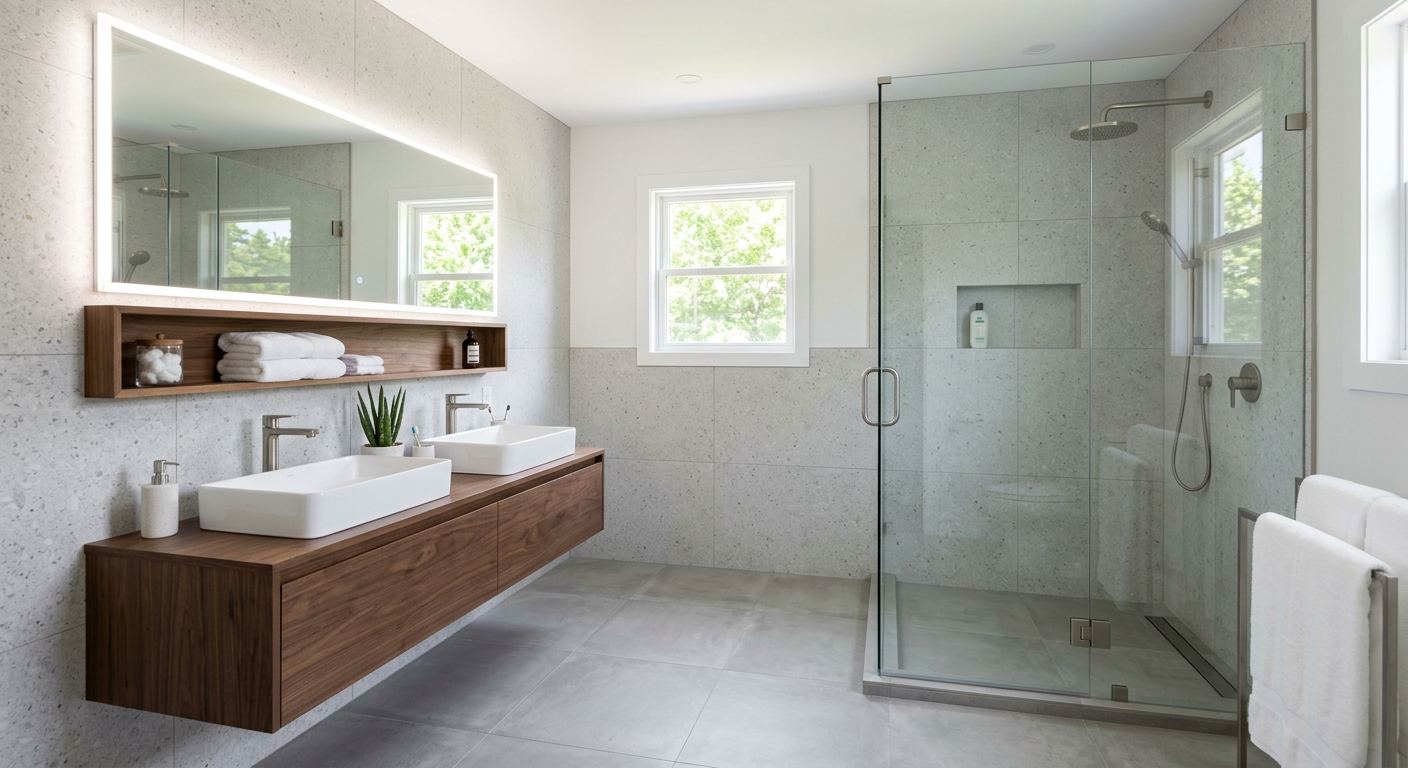
Bathroom renovation options and costs in Lower Doon
Bathroom renovations in Lower Doon can range from a tidy refresh to a full gut-and-rebuild, depending on what you want to change and what gets uncovered once walls and floors come off. With Lower Doon’s population at 1,305 (Statistics Canada, 2021 Census), many homeowners end up coordinating with GTA crews that serve the wider Toronto economic region. That matters because older housing stock is common in the broader area, and dated drain and vent configurations often need upgrades to meet current Ontario requirements—plus you may run into hidden conditions like asbestos-containing floor tile or legacy wiring during demolition. In older post-war and 1960s–1980s homes, it’s not unusual to find galvanized or undersized drains and shower waterproofing that didn’t meet today’s best practices.
In the Toronto market, pricing is shaped more by labour availability and hourly trade rates than by climate extremes. Still, the province’s humid summers and our cold winters drive the need for durable waterproofing and properly vented bathrooms, which increases scope once openings reveal ventilation or substrate issues. If you’re in the part of town where older housing is more prevalent—often near established residential pockets around the Lower Doon community core—contractors tend to be in high demand because multiple nearby renovations overlap.
Below are realistic budget bands to help you compare quotes, then we’ll break down exactly what pushes costs up or down.
| Renovation Scope |
What's Included |
Typical Duration |
Price Range |
| Cosmetic refresh (paint, fixtures, accessories only) |
New vanity or faucet, toilet swap (if staying in place), fresh paint, mirror/accessories, caulking/touch-up, and minor trim repairs; plumbing/electrical is limited to simple fixture swaps |
3–7 days |
$3,000–$7,500 |
| Mid-range full renovation (new tile, vanity, tub/shower, electrical) |
Removal to subfloor/wall surfaces as needed, new tile floor and surround, vanity, tub or combination unit, new exhaust fan, basic electrical upgrades (GFCI where required), waterproofing, plumbing re-seating/shut-offs, disposal |
2–4 weeks |
$12,000–$22,000 |
| High-end full renovation (custom tile, steam shower, heated floors) |
Custom shower/tile system, heated floor circuit, upgraded plumbing fixtures and valves, premium tile (often large format), frameless glass or premium enclosure, enhanced ventilation, deeper subfloor correction, and extensive waterproofing detailing |
4–7 weeks |
$22,000–$30,000 |
| Shower-only installation (convert tub to walk-in shower) |
Demo tub unit, rough-in adjustments (drain/supply as needed), waterproofing system, tile or prefabricated pan, frameless or semi-frameless enclosure, new shower valve trim, and exhaust fan check |
1.5–3.5 weeks |
$8,000–$16,000 |
| Bathtub replacement or tub-liner install |
Replace tub (or install liner where suitable), new surround/caulking, plumbing connections, basic waterproofing updates, and test for leaks |
3–10 days |
$1,200–$5,000 |
| Tile-only installation (floor + surround, existing layout kept) |
Removal of old tile to proper substrate, new floor + wall tile, grout/seal, waterproofing at wet areas, simple prep and flattening, and reinstallation of fixtures if reused |
1.5–3.5 weeks |
$6,000–$13,000 |
Prices are estimates only and vary by project scope, site access and material selection.
What affects the price of bathroom renovation in Lower Doon
Homeowners often see bathroom quotes swing by 30–50% for the “same” reno because the scope isn’t truly identical—especially in the Toronto economic region where bathroom work is labour-intensive. Tile work, custom shower builds, and plumbing reconfiguration drive most of the cost, and GTA labour rates tend to run high. In practice, one contractor may include venting upgrades and drain corrections in the base price, while another only prices what can be confirmed before demolition. That’s why a realistic full bathroom range often sits in the low-to-mid five figures, while add-ons can push projects toward the upper band.
Here in Lower Doon and the surrounding Toronto region, older housing stock is usually the bigger driver than climate itself. Once the walls are open, you can discover cast-iron or undersized drain stacks that need upgrading, galvanized supply lines that should be replaced, and insufficient ventilation that requires updated exhaust routing. If asbestos-containing materials are found in older vinyl floor tile or in older drywall compounds (more commonly pre-1985), abatement is typically required and can add $1,500–$5,000+ depending on extent and access. Those are direct reasons you might start with a mid-range budget around $12,000–$22,000 and end up higher.
Two common cost examples in Lower Doon: (1) if you keep the toilet and drain locations, tile-only pricing stays tighter; moving the shower drain or adding a linear drain usually expands plumbing rough-in labour and waterproofing complexity. (2) choosing large-format porcelain can raise material cost and increase substrate prep time—especially if floors need flattening to avoid lippage. Even if the finish looks similar from the doorway, the underlying labour and risk are what shift your total.
| Price Factor |
Why It Matters |
Cost Impact |
| Layout change — moving drain or supply lines requires rough-in work |
Plumbing rough-in, venting coordination, and wall/floor openings can change the entire schedule |
$2,000–$8,000 |
| Tile selection — large-format porcelain vs. mosaic vs. ceramic |
Harder substrates, more prep, more labour time, and higher breakage rates for complex patterns |
$500–$4,000 |
| Fixture tier — builder-grade vs. mid-range vs. designer brands |
Trim quality, valve compatibility, warranty support, and finish longevity affect total spend |
$800–$6,000 |
| Subfloor condition — rot or unlevel concrete adds scope |
Floor flattening, board replacement, and moisture correction can be needed before tiling |
$1,000–$5,500 |
| Electrical — adding GFCI outlets, exhaust fan, heated floor circuit |
New circuits, fan routing, and waterproof-rated components increase labour and inspection steps |
$600–$4,500 |
| Waterproofing method — membrane type and extent |
Proper detailing at corners, niches, and transitions prevents leaks and mould in Ontario humidity |
$400–$2,500 |
| Older-home surprises — asbestos tile, cast-iron drains, galvanized pipes |
Abatement, drain replacement, and plumbing upgrades increase cost and timelines |
$1,500–$10,000+ |
| Bathroom size — sq ft drives tile and labour time directly |
More area equals more tile, more waterproofing, longer install hours, and higher waste |
$1,500–$6,000 |
Permits & regulations in Ontario
In Ontario, many bathroom updates are considered cosmetic and typically do not require a permit. For Lower Doon homeowners, swapping a vanity or toilet in the same location, changing a faucet/trim set, repainting, replacing accessories, and retiling (without changing plumbing or moving structural walls) are usually “no permit” style work—provided nothing is being moved in a way that changes rough-in plumbing, electrical circuits, or load-bearing structure.
Where permits do come in is when you’re changing systems or building elements: relocating plumbing fixtures (moving a drain or supply lines), adding or relocating an exhaust fan with new wiring/circuit work, replacing a plumbing valve with changes to rough-in access, or making structural wall changes. Electrical work must be completed by a licensed electrician and must meet Ontario electrical code requirements. Plumbing rough-in changes typically require a permit and inspections, especially where drain/vent connections are altered.
Before you sign a contract, verify the contractor’s Ontario trade licence (where applicable), liability insurance, and coverage through WSIB/WCB equivalents. Step-by-step: (1) Ask for their certificate of insurance and confirm the expiry date and that they name you as additional insured if offered; (2) Request their WSIB clearance letter or coverage proof; (3) For licensing, check the appropriate provincial registry through official online tools, then confirm the licence class matches the work described; (4) Ensure permits—if needed—are pulled by the contractor or clearly stated in writing.
Choosing tile, waterproofing and fixtures for your Lower Doon bathroom
In Lower Doon and the broader Toronto region, your biggest budget levers are tile choice, waterproofing method, and fixture tier—and the “right” combination depends on how much structural or plumbing change you’re doing. (1) Tile choice: ceramic is a solid entry option for floors and walls, but it can chip if the substrate isn’t perfectly prepared. Porcelain typically costs more but is denser and more forgiving in wet areas, and it handles repeated cleaning better. Natural stone (marble, travertine, slate) can look luxurious, yet it demands careful sealing and more labour due to variation and layout planning.
(2) Waterproofing method: in Ontario’s humid bathroom environment, you can’t rely on paint and grout alone. Paint-on membranes can work for certain situations when applied correctly, but many successful renovations use bonded sheet membranes or a well-detailed system (including proper corner/transition treatment). The goal is to stop moisture at the source behind tile, especially around niches, shower pans, and transitions.
(3) Fixture tier: builder-grade fixtures often save upfront, but valve quality, finish durability, and parts availability affect long-term reliability and resale. For example, upgrading from a mid-range shower valve trim to a designer trim might add a few hundred to over $1,000 depending on brand, which can be worth it when paired with the correct waterproofing and a pressure-balanced valve—otherwise the extra money won’t prevent leaks or early failure.
For a realistic plan, match your budget: if you’re aiming near the $12,000–$22,000 mid-range band, consider porcelain with a proven waterproofing system and a dependable mid-range vanity. If you’re targeting the upper $22,000–$30,000 end, heated floors and custom tile details are where the spend is most justified.
| Material / Option |
Pros |
Cons |
Price Range |
| Ceramic tile (floor + walls) |
Lower material cost, good variety of looks, straightforward for standard installs |
Can be more prone to chipping; may require careful layout for wet-area performance |
$3,000–$7,500 |
| Porcelain tile (floor + walls) |
Durable in wet areas, better stain resistance, often fewer issues with repeated cleaning |
More expensive; large formats may require extra substrate prep to avoid lippage |
$5,000–$11,000 |
| Natural stone (marble, travertine, slate) |
High-end look and unique veining; strong curb appeal |
Sealing/maintenance required; labour and cutting/layout complexity increase costs |
$8,000–$18,000 |
| Frameless glass shower enclosure |
Modern appearance, easier to clean, excellent for custom shower openings |
Higher material cost; installation needs to be precisely aligned on waterproofed surfaces |
$2,500–$6,500 |
| Prefab tub surround (acrylic) |
Faster installation, fewer tile labour hours, good water resistance when installed correctly |
Less “bespoke” look; seam transitions may be visible depending on product |
$800–$2,800 |
| Custom shower pan (tile or linear drain) |
Best design flexibility; linear drains improve flow and visual lines |
More labour; requires meticulous waterproofing detailing and slope accuracy |
$2,000–$8,500 |
How to choose a bathroom renovation contractor in Lower Doon
Choosing the right contractor in Lower Doon comes down to proof and process. Start by verifying Ontario licensing for the relevant trades (especially if you’re changing plumbing/electrical), and confirm liability insurance so you’re protected if something is damaged during demo or installation. Ask specifically about WSIB/WCB coverage for their workers—then request the clearance letter or coverage proof. Don’t accept “we’re covered” without documentation you can review.
Next, get 2–3 itemised written quotes. You want a breakdown that separates labour and materials (tile, waterproofing, fixtures, glass, electrical and plumbing line items), not one lump sum that hides scope risk. Read the scope carefully: what’s excluded (old fan duct replacement, subfloor correction, grout sealing, permit fees, disposal, or asbestos testing)? Is permit pulling included if plumbing/electrical changes trigger one? Disposal and dumpster fees can materially change a budget in the GTA.
For warranty, ask for workmanship warranty length in writing and whether it’s transferable if you sell your home. For products, confirm manufacturer warranty coverage and who handles claims. For payment schedule, never pay more than about 10–15% upfront; hold back a portion until key milestones are complete and verified. Finally, ensure the timeline includes a start date and a realistic completion estimate that accounts for material lead times.
- Ask for their Ontario trade licence details and licence class, and cross-check through the provincial registry.
- Request certificate of liability insurance and confirm active coverage.
- Get WSIB/WCB clearance proof for workers.
- Ensure quotes are itemised: labour vs materials, and separate tile, waterproofing, plumbing, electrical.
- Confirm whether permits are included and who pulls them.
- Clarify what’s included in disposal and dumpster/dump fees.
- Ask how they protect floors/vanities during demo and installation.
- Require a waterproofing plan: membrane type, overlap, corner treatment, and flood test if used.
- Check if they include subfloor assessment and how they handle unlevel or rotted sections.
- Get the exhaust fan specs (CFM rating) and confirm ducting considerations.
- Confirm fixture and valve compatibility (especially shower valves and trims).
- Put warranty terms in writing, including transferability and claim process.
Red flags I commonly see with bathroom contractors in and around Lower Doon: they refuse to itemise labour/materials, they quote a low price without mentioning waterproofing details, they won’t provide insurance/WSIB proof, they demand large upfront payments, or they gloss over what happens if asbestos/old drainage issues are discovered after demo.
Frequently asked questions — bathroom renovation in Lower Doon
Do I need waterproofing behind the tile?
In most Lower Doon/Ontario bathrooms, yes—you should assume waterproofing is required behind shower/tub surround tile and on shower floors. Ontario humidity and repeated wet/dry cycles mean that grout alone is not a waterproof layer. A reputable contractor will plan for a proper waterproofing system (often membrane-based) with correct detailing at corners, niches, seams, and transitions. If you’re converting a tub to a walk-in shower, waterproofing becomes even more critical because the pan area and linear drain/slope details are where leaks can start. Even if your project is in the mid-range band (for example $12,000–$22,000), spending on waterproofing is usually cheaper than repairing hidden moisture damage later.
How do I compare bathroom renovation quotes?
Compare quotes in a way that removes “apples to oranges.” Ask each contractor for an itemised breakdown: labour vs materials, and separate line items for tile, waterproofing, plumbing rough-in changes, electrical work (including exhaust fan/GFCI), and disposal/permits. Confirm scope inclusions such as subfloor prep and whether they’ll test/flood the shower pan if applicable. In the Toronto region, quotes can vary by 30–50% because one contractor may include drain/vent corrections and older-home surprises, while another lists only what they can see before demo. Use the local price bands as a sanity check: a full renovation often lands in the low-to-mid five figures (commonly $12,000–$30,000 depending on finish and complexity), with shower-only typically lower than a full gut. If one quote is dramatically lower, look for exclusions rather than “better value.”
Can I live at home during a bathroom renovation in Lower Doon?
Often you can, but it depends on how disruptive the scope is. If you’re doing a cosmetic refresh, paint and fixture swaps, many homeowners stay in the home because plumbing access is limited and the bathroom can remain usable with careful scheduling. For a mid-range or high-end full renovation, you may temporarily lose shower/tub access while the waterproofing and tile set, which can make daily routines difficult. A common compromise is to use a secondary bathroom or a temporary setup (like a portable wash solution) while work progresses. Timing matters: if demolition and plumbing rough-in happen early, the bathroom might be unusable for a stretch. In Lower Doon and the GTA, contractors usually schedule trade overlap to reduce downtime—yet materials lead times can extend the period where the bathroom is partially complete.
What's the best bathtub material for a Lower Doon home?
The “best” tub depends on what you’re replacing and your renovation goals. Acrylic tubs are common because they’re lighter (easier transport and install), resist chipping better than some older finishes, and typically cost less—often aligning with the lower end of replacement budgets (for example $1,200–$3,500 depending on surround and access). Cast-iron tubs are durable but heavy and may increase install labour when plumbing or floor modifications are needed. For older homes in the Toronto region, the practical choice is often the one that fits your plumbing layout and allows proper waterproofing at the tub surround. If you’re keeping the existing footprint and can prep correctly, a quality acrylic tub with a well-detailed waterproof surround is usually the most cost-effective route.
Is it worth renovating a bathroom before selling in Lower Doon?
Usually, yes—if the renovation solves functional issues and updates the space in a way buyers will notice immediately. Bathrooms are high-influence rooms for showings, and a clean, modern layout with reliable fixtures and proper ventilation can improve buyer confidence. That said, ROI varies with finish level, and overspending on ultra-luxury upgrades may not pay back dollar-for-dollar in smaller markets. A smart strategy is to focus on waterproofing quality, layout practicality, and neutral, durable finishes. If you’re aiming for value, consider a renovation that lands in the mid-range full-reno band (often $12,000–$22,000) and avoid unnecessary drain reconfiguration unless it’s required for code compliance or to fix hidden issues. Always factor in timelines and whether the home’s current plumbing/venting condition will cause delays once walls open.
How do I plan a bathroom renovation on a tight budget in Lower Doon?
On a tight budget, plan in stages and protect the parts that prevent expensive failures. First, prioritize waterproofing and ventilation: even in budget projects, proper membrane detailing and an adequately sized exhaust fan are non-negotiable. Next, keep the layout stable if possible—moving drains/supplies is where labour and permit complexity can spike. Choose porcelain tile selectively (for example, floor and wet-area walls) rather than extending premium finishes everywhere, and consider maintaining a tub if your goal is cosmetic improvement rather than a full conversion. Build a budget around realistic tiers: you might target a refresh or tile-heavy upgrade rather than a full rebuild, or you might aim for a mid-range full renovation around $12,000–$22,000 and choose builder/mid-range fixtures that look updated without designer pricing. Get itemised quotes and include a contingency for older-home surprises, since hidden drainage, subfloor prep, or asbestos abatement can appear after demo.