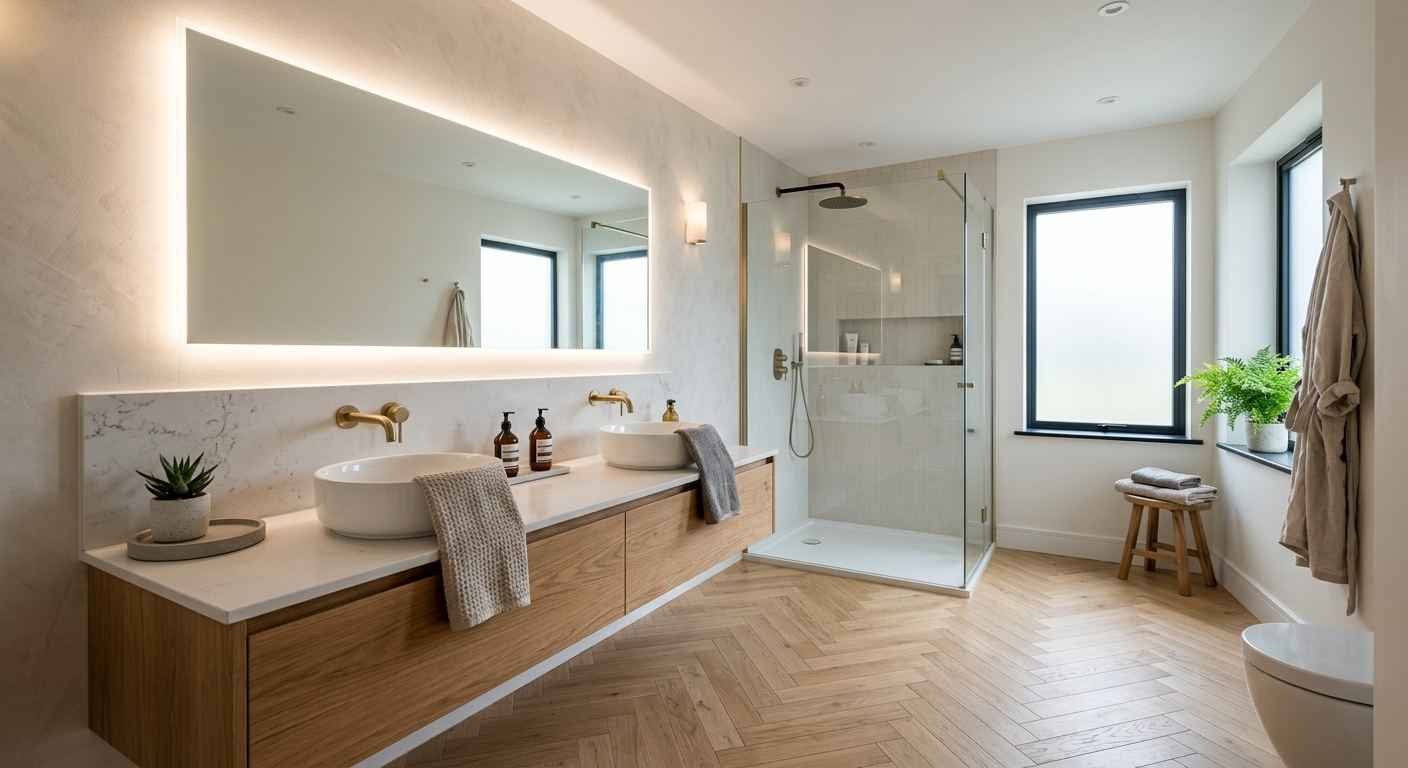
Bathroom renovation options and costs in Markstay-Warren
In Markstay-Warren, bathroom renovations typically follow three clear budget tracks: cosmetic refresh, mid-range full reno, and high-end upgrades. With 66.2% of homes built before 1981, many bathrooms start with older plumbing and drainage layouts, and it’s not uncommon to find dated subfloor assemblies that can complicate tile prep and waterproofing. That older housing stock also increases the chance of hidden problems behind finishes, including potential asbestos-containing materials in older floor tile or drywall compound in some homes.
In the Northeast economic context, cost is shaped more by regional trade availability and labour rates than by direct weather impacts inside the bathroom envelope. When contractors are booked, scheduling and labour costs trend higher; and once walls are opened, discovery work (venting updates, drain corrosion, supply-line type changes) can add labour hours and materials. This is especially noticeable in busy trade pockets around the Markstay-Warren township area, where electricians and plumbers get pulled into multiple occupied-home upgrades. For homeowners, that’s why two quotes for “the same bathroom” can still land far apart.
Below are practical price ranges you can use to compare proposals before you ask your contractor for an itemised breakdown.
| Renovation Scope |
What's Included |
Typical Duration |
Price Range |
| Cosmetic refresh (paint, fixtures, accessories only) |
Paint, vanity or mirror swap (no relocation), toilet/vanity hardware refresh, lighting accessory change (like-for-like), re-seal tub where needed, new towel bars/accessories |
3–7 days |
$2,000 – $6,500 |
| Mid-range full renovation (new tile, vanity, tub/shower, electrical) |
Demo and rebuild, floor + surround tile, new vanity and toilet, tub/shower conversion-ready prep, exhaust fan upgrade, GFCI outlet updates, new trim and caulking, basic waterproofing system |
2–4 weeks |
$15,000 – $25,000 |
| High-end full renovation (custom tile, steam shower, heated floors) |
Custom layout and tile detailing, premium valve/trim, heated floor circuit, upgraded waterproofing, frameless glass, niche/linear drain options, higher-spec lighting, steam-ready package where applicable |
4–7 weeks |
$25,000 – $35,000 |
| Shower-only installation (convert tub to walk-in shower) |
Remove tub, build shower base, tile shower walls/floor, new valve trim, frameless or standard glass enclosure, waterproofing and leak testing, exhaust/fan and waterproofing attention |
1.5–3 weeks |
$6,000 – $16,000 |
| Bathtub replacement or tub-liner install |
Replace tub with similar size unit and reglaze/replace surrounds as needed OR install tub liner with proper prep and seals (typically avoids full wall tile removal) |
3–10 days |
$2,000 – $6,000 |
| Tile-only installation (floor + surround, existing layout kept) |
Demo limited to tile removal, new waterproofing layer, floor + wall tile install, re-grout/re-seal, reinstallation of trim/fixtures where possible (no plumbing relocation) |
1–2.5 weeks |
$3,500 – $12,000 |
Prices are estimates only and vary by project scope, site access and material selection.
What affects the price of bathroom renovation in Markstay-Warren
It’s common to see quotes for the “same” bathroom vary by 30–50% across the Northeast and Ontario because the hidden work counts: site access, how quickly trades can schedule, and how much of the existing system can truly be reused. Labour availability plays a big role here, so when plumbing, electrical and tile crews are tight on dates, the labour portion of your budget carries more weight than in lower-demand areas. At the same time, Markstay-Warren’s older housing stock means more bathrooms start with dated drainage and ventilation details, and those surprises are what push projects upward.
For example, in homes built before the early 1980s (66.2% in the local profile), it’s more likely you’ll encounter cast-iron or deteriorating drain sections that need upgrading, galvanized supply lines that require changes, and ventilation that no longer meets modern expectations. Those upgrades can quickly move a job from the $15,000–$25,000 mid-range track toward the $25,000–$35,000 high-end band—especially when multiple trades must coordinate once walls are open.
Another cost driver is asbestos-related risk. If pre-1985 materials test positive (for instance, some vinyl floor tile or older drywall compound), abatement becomes a separate scope with additional labour and disposal handling, and it can add roughly $1,500–$5,000+ depending on the extent. Two everyday examples that change costs in Markstay-Warren: (1) whether the exhaust fan ducting can connect cleanly to existing runs (sometimes it can’t, requiring rerouting); and (2) whether your subfloor is level enough for tile (rot or unlevel concrete typically means added prep and labour).
| Price Factor |
Why It Matters |
Cost Impact |
| Layout change — moving drain or supply lines requires rough-in work |
Relocating plumbing means opening walls, new rough-in, possible joist interference, and more inspection steps |
$1,500 – $6,000 |
| Tile selection — large-format porcelain vs. mosaic vs. ceramic |
Material cost and install complexity increase with format size, cuts, and setting requirements |
$800 – $5,000 |
| Fixture tier — builder-grade vs. mid-range vs. designer brands |
Higher tiers cost more and often pair with upgraded valves, finishes, and trim |
$400 – $4,500 |
| Subfloor condition — rot or unlevel concrete adds scope |
Tile demands flat, stable substrates; repair or re-pour increases demo and labour time |
$1,000 – $7,000 |
| Electrical — adding GFCI outlets, exhaust fan, heated floor circuit |
New circuits or additional devices require licensed electrical work and permit/inspection steps where applicable |
$600 – $4,000 |
| Waterproofing method — membrane type and extent |
Better systems improve durability; poor prep leads to failures that cost more to fix |
$400 – $3,000 |
| Older-home surprises — asbestos tile, cast-iron drains, galvanized pipes |
Testing/abatement, drain replacement, and pipe conversion increase labour and disposal requirements |
$1,500 – $10,000+ |
| Bathroom size — sq ft drives tile and labour time directly |
More area means more tile, more setting time, more waterproofing and more finishing |
$2,000 – $12,000 |
Permits & regulations in Ontario
In Ontario, cosmetic updates in a Markstay-Warren bathroom—like swapping a vanity, changing lighting fixtures, painting, replacing a toilet, or retiling with the same layout—typically do not require a permit because you’re not changing the plumbing’s location, altering structural walls, or adding major new electrical work. However, once you relocate plumbing (moving a drain or supply lines), install or move an exhaust fan that requires new wiring, or make structural changes, permits and inspections often come into play.
Electrical work must meet provincial code requirements and be completed by a licensed electrician (or signed off as required). Plumbing rough-in changes—such as replacing sections of drain piping, changing valve locations, or moving fixtures—commonly require a permit and inspection before the wall finishes close in. Your contractor should tell you exactly what is permitted before demo begins.
Here’s how to verify a contractor step-by-step in Markstay-Warren:
- Ask for their Ontario trade licence number and confirm it through the appropriate online trade licence registry for their trade class.
- Request a current certificate of insurance (liability) and ensure it matches your project address and dates.
- Confirm WSIB/WCB coverage for workers (and ask how they handle any subcontractors).
- Have them list which parts of the job they will permit (plumbing rough-in, electrical additions, structural changes).
- Get written confirmation of disposal and dust control practices—especially for older materials.
- Ensure permits (if required) are pulled before inspections are needed, not after finishes.
Choosing tile, waterproofing and fixtures for your Markstay-Warren bathroom
In Markstay-Warren, the three material decisions that most strongly determine both budget and long-term performance are tile choice, waterproofing method, and fixture tier. Start with tile: ceramic is usually the entry-level path, while porcelain offers better water resistance and durability in wet-area floors and shower surrounds. Natural stone (marble, travertine, slate) can look premium, but it often demands more careful sealing and more time on layout and finishing.
Next is waterproofing—this is where Ontario bathrooms win or lose against moisture. Even when humidity isn’t the “headline” driver like in coastal climates, bathroom envelopes still face repeated wetting and drying cycles. A proper system matters more than brand hype: paint-on membranes can work for certain applications, but bonded sheet membranes or a robust tile backer approach is often chosen for showers where water exposure is constant. In practical terms, getting the right system helps prevent mouldy grout lines and concealed failures that show up months later.
Finally, fixture tier impacts both cost and resale. Builder-grade fixtures keep your plumbing costs predictable, while mid-range and designer brands often pair with better valves, smoother finishes, and more consistent performance. If your bathroom is older (66.2% pre-1981 locally), you’ll often benefit more from putting money into waterproofing and valve quality than into overspending on stone.
Example: upgrading to porcelain tile and a higher-spec waterproofing system can be justified even if you choose a mid-range vanity. Chasing natural stone for every surface may not add proportionate value compared with spending on heated-floor preparation or premium shower waterproofing—particularly when you’re already working within mid-range bathroom renovation pricing bands.
| Material / Option |
Pros |
Cons |
Price Range |
| Ceramic tile (floor + walls) |
Lower material cost, good appearance variety, straightforward installation for standard layouts |
Can be less durable in heavy wet areas than porcelain; may chip with impact; more grout lines depending on size |
$35 – $70 per sq ft equivalent |
| Porcelain tile (floor + walls) |
Higher water resistance and durability, better for floors and shower surrounds, consistent sizing for clean lines |
Often higher material cost; larger-format tiles increase cutting and layout sensitivity |
$60 – $90 per sq ft equivalent |
| Natural stone (marble, travertine, slate) |
Luxury look, unique veining and character, strong “statement” value when installed well |
Requires sealing/maintenance, can be porous and more labour-intensive; not as forgiving on uneven substrates |
$90 – $140 per sq ft equivalent |
| Frameless glass shower enclosure |
Modern appearance, easier cleaning than framed units, improves perceived value |
More costly than framed options; requires precise installation and strong waterproofing at edges |
$1,200 – $3,500 |
| Prefab tub surround (acrylic) |
Fast install, consistent finish, easier to maintain, good choice when you want to reduce demo time |
Limited design choices; may not suit every layout or niche detail |
$600 – $2,000 |
| Custom shower pan (tile or linear drain) |
High-performance surface design, cleaner look with linear drain options, tailored slope for drainage |
More labour and waterproofing detailing; custom prep can uncover hidden substrate issues |
$1,500 – $5,500 |
How to choose a bathroom renovation contractor in Markstay-Warren
Choosing a contractor in Markstay-Warren is about verification and clarity, not just price. Start by confirming Ontario licensing: ask for their trade licence number for the work they’ll do (plumbing/electrical/tile/general coordination as applicable). Request proof of liability insurance with your project address listed, and confirm WSIB/WCB coverage for their workers and any subcontractors. If they can’t provide documents quickly, treat that as a warning sign.
Next, get 2–3 itemised written quotes that break out labour and materials. Avoid lump sums where tile, waterproofing, electrical add-ons, and disposal aren’t specified—bathroom renos can “expand” once walls are open, but good contractors price the unknowns responsibly (by identifying assumptions and what triggers change orders).
Read the scope carefully for exclusions and inclusions: is the permit pull included or billed separately? Is drywall and dust control included? Is disposal/dumpster time included? Are waterproofing materials listed (and which system)? Also ask about warranty details: workmanship warranty length, manufacturer product warranty, and whether warranties are transferable if you sell the home.
On payment terms, never accept more than 10–15% upfront. A fair holdback is typically released after key completion milestones, especially after waterproofing and final inspection steps. Ask for a start date and completion estimate in writing, and confirm what happens if materials arrive late.
- Licence and insurance documents provided before the contract is signed
- Itemised breakdown: labour, tile setting materials, waterproofing system, trim, glass enclosure details
- Explicit inclusions: disposal, drywall patching, caulking, silicone seals, and final cleaning
- Permit responsibility clearly stated (who pulls it, what inspections are scheduled)
- Change-order process explained in writing (what triggers extra charges)
- Workmanship warranty stated in years and what it covers
- Product warranties documented (brand/model and how to register)
- Timeline with milestone dates (demo, rough-in, waterproofing inspection, tile install, trim)
- Proof they can coordinate trades (plumber/electrician/tile) with realistic scheduling
- Site protection plan (dust control, floor protection, masking, ventilation)
- No large upfront deposits beyond 10–15%
- Communication plan: who you contact daily during construction
Red flags I commonly see in bathroom renovation bids in Markstay-Warren include: vague scopes with no waterproofing specification, no permit/inspection discussion when plumbing/electrical changes are mentioned, quoting “cheap tile” without listing the exact tile type and grade, refusing to provide itemised labour/material breakdowns, and pushing large deposits upfront instead of holding back until key stages are finished.
Frequently asked questions — bathroom renovation in Markstay-Warren
How do I prevent mold in a Markstay-Warren bathroom?
Mold prevention in Markstay-Warren comes down to moisture control and proper installation details. First, ensure you have a correctly sized exhaust fan and that it vents outdoors (not into an attic or concealed space). Second, waterproofing must be continuous: seams, corners, niche corners, and around plumbing penetrations need careful membrane integration and leak testing before tile goes on. Third, use water-resistant materials in wet zones and choose good grout practices (and avoid “skipping” the sealant where the spec requires it). In older homes built before 1981, I also recommend checking hidden subfloor and venting conditions before you close walls—fixing what’s already damp costs far less than replacing failed tile later.
What adds the most resale value in a bathroom reno?
Resale value is usually driven by “functional upgrades” that buyers can see and trust: a clean, modern layout, reliable waterproofing, updated fixtures, and good lighting/ventilation. In Markstay-Warren, that often means upgrading the shower area and making sure the exhaust fan is efficient and properly ducted, because moisture problems are a common worry for buyers. Tile quality and consistency also matter—porcelain floors and a well-finished shower surround typically read as higher value than patchwork repairs. If you’re deciding between big visual changes and performance upgrades, performance often wins: within the $15,000 – $25,000 mid-range band, homeowners tend to get better long-term results when they invest in waterproofing and valve/trim quality rather than only upgrading finishes. (Statistics Canada, 2021 Census)
Can I keep my existing plumbing layout to save money?
Yes, keeping your existing plumbing layout is one of the most reliable ways to control costs in Markstay-Warren. When you don’t move the drain or supply lines, you reduce rough-in work, wall opening, and coordination across trades. That usually helps keep the project closer to mid-range full renovation pricing like $15,000 – $25,000, rather than pushing toward higher renovation budgets. Even with the layout stayed the same, you may still need updates—older drain materials, venting changes, or replacing galvanized supply lines are common discoveries in homes built before 1981 (Statistics Canada, 2021 Census). Ask your contractor to include an “as-is layout” line item and identify what plumbing upgrades are assumed in the quote.
How much does a walk-in shower cost in Markstay-Warren?
A walk-in shower price typically depends on whether you’re converting from a tub and how much tile and electrical work is required. For many Markstay-Warren projects, converting a tub to a walk-in shower lands in the $6,000 – $16,000 range when plumbing stays near the same location and the scope is contained to the shower area. If you also upgrade the exhaust fan wiring, add heated-floor prep, or change the shower footprint significantly, costs can move upward toward the top end of that band. In older bathrooms, you may also see added cost if the subfloor needs flattening or if waterproofing detailing requires extra membrane and backer work. Always request an itemised shower conversion quote so you can compare glass, valve trim, and waterproofing system differences.
What's the ROI on a bathroom renovation?
ROI varies by neighbourhood, finish level, and whether the renovation addresses reliability issues (waterproofing and ventilation) versus purely cosmetic changes. In Ontario, a bathroom that looks updated but has questionable moisture protection can hurt resale perception, while a properly built shower and ventilation system tends to support buyer confidence. For homeowners in Markstay-Warren—where the local housing stock skews older—buyers often value “no surprises” performance improvements because older homes more frequently have hidden drainage or venting concerns once walls are opened. Practically, cosmetic refreshes generally cost less (for example, within the $2,000–$6,500 range), while full renos often track to mid-range or high-end bands such as $15,000 – $35,000. The best ROI usually comes from spending enough to make the bathroom dependable and visually cohesive, not from overshooting into ultra-luxury finishes if the rest of the home is average.
Do I need waterproofing behind the tile?
In almost all shower and tub-surround areas, yes—you should waterproof behind the tile. Ontario bathroom performance expectations are based on preventing water from reaching framing and subfloor. A proper waterproofing system should cover the entire wet area, including walls, floors, corners, niches, and around penetrations, then be protected through tile setting and grouting details. In Markstay-Warren’s older homes (66.2% pre-1981), I also see instances where prior waterproofing attempts were incomplete or where subfloor prep wasn’t adequate, which increases the risk of mould and failures. If your contractor is vague about waterproofing (membrane type, seams, corners, and how they seal transitions), ask for specifics in the written scope. Skipping waterproofing behind tile is one of the fastest ways to end up with a costly tear-out later.