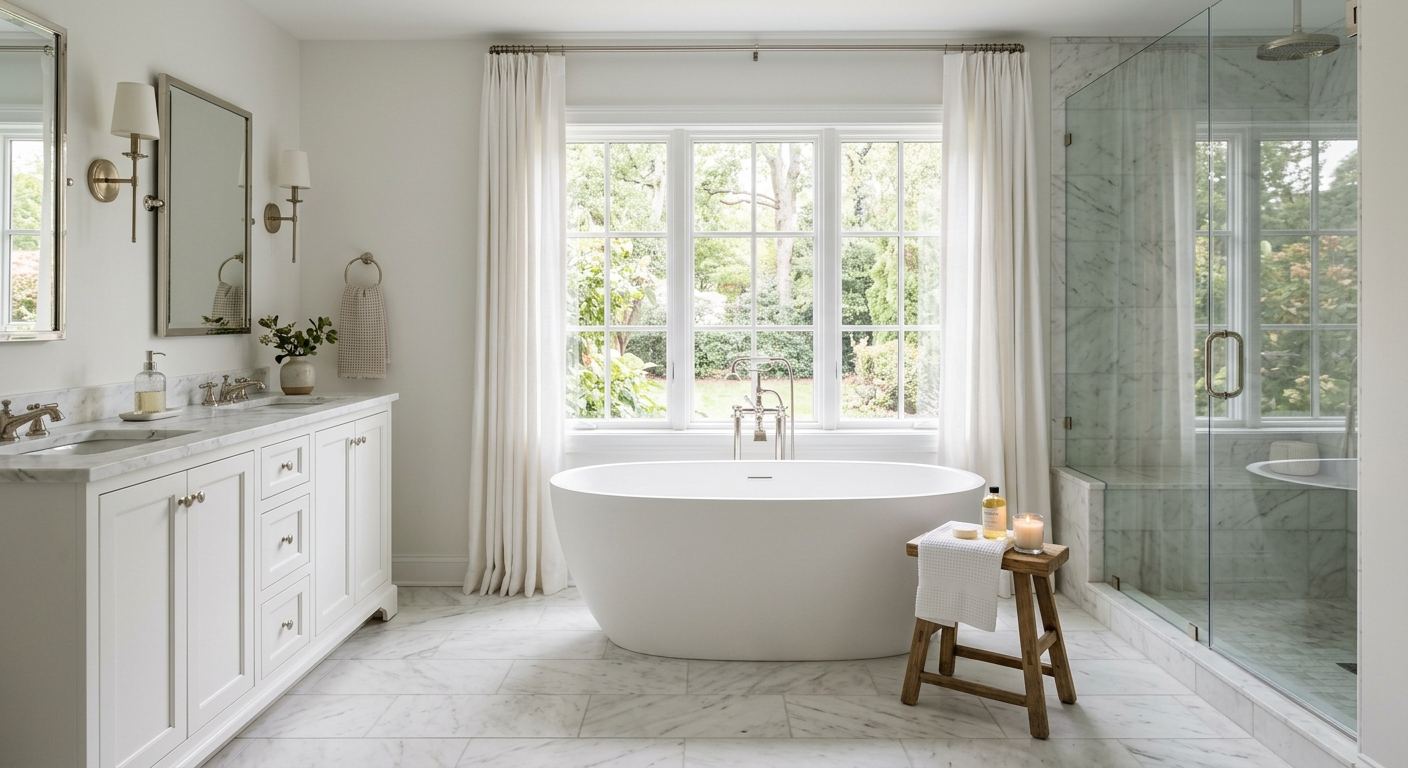
Bathroom renovation options and costs in Paisley
Paisley homeowners usually start with a simple question—“what will it cost?”—but the real answer depends on how much you change. With about 1,045 residents in Paisley (Statistics Canada, 2021 Census), you’ll generally book trades through the broader Toronto market, so availability and scheduling can affect turnaround. Just as importantly, many homes in the Toronto economic region were built across post-war and mid-century decades; that older housing stock is where you most often see dated plumbing runs, out-of-level subfloors, and a higher chance of asbestos-containing materials in older finishes. Once walls or floors come off, hidden conditions can add scope quickly, pushing labour-heavy work like tiling, custom showers, and rough-in plumbing higher than national averages.
Toronto-area pricing is shaped more by labour rates and renovation complexity than by local climate. The big cost drivers are what the renovation uncovers: cast-iron or undersized drains, galvanized supply lines, ventilation that doesn’t meet today’s moisture control needs, and electrical that needs GFCI protection. Contractors in high-demand areas—such as near downtown Toronto and along the broader GTA renovation corridor—tend to schedule bathroom work tightly, so long lead times can raise the contractor’s risk premium (and your cost) if demolition happens before trades are lined up.
Below are realistic budget bands you can use to compare options and quotes for a typical 3-piece bathroom in Paisley, Ontario, before you decide whether you’re staying cosmetic or going full renovation.
| Renovation Scope |
What's Included |
Typical Duration |
Price Range |
| Cosmetic refresh (paint, fixtures, accessories only) |
Paint, fan cover swaps (if existing wiring is usable), vanity/lighting/trim accessories, re-caulk and minor touch-ups; no plumbing relocation |
2–5 days |
$3,000–$7,000 |
| Mid-range full renovation (new tile, vanity, tub/shower, electrical) |
Demo and disposal, subfloor prep, tile floor + tub surround, new vanity and fixtures, tub refinishing or replacement, upgraded exhaust fan, GFCI receptacles, updated waterproofing |
2–3 weeks |
$12,000–$20,000 |
| High-end full renovation (custom tile, steam shower, heated floors) |
Full demo, designer tile package, custom shower (glass + linear drain or premium valve), steam-ready planning, heated floor circuit, premium vanity and hardware, extensive electrical/plumbing upgrades |
3–5 weeks |
$20,000–$30,000 |
| Shower-only installation (convert tub to walk-in shower) |
Tub removal, new shower pan, tile surround, glass enclosure, new valve trims, ventilation upgrade as needed; plumbing rough-in if you change drain/valve position |
1–2.5 weeks |
$8,500–$15,000 |
| Bathtub replacement or tub-liner install |
Remove old unit (or apply liner where appropriate), seal and waterproof tie-ins, new trim kit/fixtures; limited tile replacement if required |
3–7 days |
$1,200–$3,500 |
| Tile-only installation (floor + surround, existing layout kept) |
Prep and leveling, tile floor plus wall surround, grout/caulk, waterproofing/membrane installation; keeps existing plumbing locations |
5–12 days |
$6,000–$14,000 |
Prices are estimates only and vary by project scope, site access and material selection.
What affects the price of bathroom renovation in Paisley
In Ontario, two quotes for the “same” bathroom can differ by 30–50% because contractors price risk differently. The Toronto economic region’s skilled trades command premium hourly rates, and bathroom renovations are labour-intensive—especially for tiling, membrane waterproofing, and any plumbing reconfiguration. Climate doesn’t usually drive the biggest swings here; the more common reason is what’s behind the walls and under the subfloor. Older housing stock in the Toronto region often hides cast-iron or undersized drain stacks, galvanized or ageing supply lines, and ventilation that no longer performs. When drains or venting must be corrected to Ontario requirements, you can see several thousand dollars added for drain reconfiguration, vent corrections, and new shut-offs.
Hidden conditions are also where budgets expand. For example, discovery of asbestos in older vinyl floor tile or in certain drywall compounds can trigger abatement protocols, and it commonly adds $1,500–$5,000+ depending on containment and removal scope. If you’re keeping your layout and staying in the $12,000–$20,000 mid-range renovation band, costs are usually easier to control because rough-in work is limited. On the other hand, if you’re pushing toward a full replacement closer to $20,000–$30,000, expect more electrical planning, membrane detail work at change-of-plane locations, and a higher likelihood that plumbing needs upgrading once walls are opened.
In Paisley specifically, I commonly see two cost outcomes: (1) budgets go up when the existing subfloor is unlevel and requires mortar bed or re-framing before tile (more labour, more materials), and (2) budgets stabilize when homeowners choose a standard-size vanity and keep the toilet and shower drain positions—fewer rough-ins, fewer surprises. If you want an accurate comparison, make sure each quote describes what’s happening behind the walls, not just what you’ll see.
| Price Factor |
Why It Matters |
Cost Impact |
| Layout change — moving drain or supply lines requires rough-in work |
Plumbing rough-in, venting checks, and sometimes subfloor cut-outs are labour-heavy and inspection-dependent |
$2,000–$8,000 |
| Tile selection — large-format porcelain vs. mosaic vs. ceramic |
Harder materials and larger panels increase installation precision and waste planning |
$1,000–$4,500 |
| Fixture tier — builder-grade vs. mid-range vs. designer brands |
Pricing differences show up in trims, valves, hardware, and sometimes warranty coverage |
$500–$5,000 |
| Subfloor condition — rot or unlevel concrete adds scope |
Repairs, underlayment prep, and leveling affect waterproofing longevity and tile flatness |
$800–$6,000 |
| Electrical — adding GFCI outlets, exhaust fan, heated floor circuit |
Electrical labour and licensed sign-off can increase cost, especially with routing changes |
$700–$3,500 |
| Waterproofing method — membrane type and extent |
Better systems cost more but reduce mould risk and protect behind-wall substrates |
$500–$3,000 |
| Older-home surprises — asbestos tile, cast-iron drains, galvanized pipes |
Abatement, pipe upgrades, and additional labour for demolition/reconnect work |
$1,500–$12,000+ |
| Bathroom size — sq ft drives tile and labour time directly |
More square footage increases tile purchases, layout time, and waterproofing area |
$1,000–$6,000 |
Permits & regulations in Ontario
In Ontario, many bathroom updates are considered “cosmetic” and typically do not require permits. Swapping fixtures such as faucets, toilets that stay in the same location, bathroom vanities (without moving plumbing), retiling an existing shower/tub surround without changing drain location, repainting, and replacing accessories usually fall under work that can proceed without a separate permit—assuming no structural changes and no new electrical or plumbing rough-ins.
Where permits commonly are required is when you change systems. This includes relocating plumbing (moving the drain or supply lines for a shower, toilet, or tub), adding or relocating electrical components such as exhaust fans that require new circuit routing, installing heated floors (with new electrical work), and any structural wall changes that alter framing. Electrical and plumbing work must meet provincial code and be done/inspected appropriately. An exhaust fan installation that ties into wiring or changes the circuit will generally be treated as electrical work requiring an electrician to complete it; likewise, plumbing rough-in changes often require permits and inspections.
For Paisley homeowners, verify before signing: (1) confirm the contractor’s Ontario trade licence (request the licence number and proof), (2) ask for a certificate of insurance showing liability coverage, and (3) request WSIB/WCB clearance—if applicable—to confirm they’re registered for worker coverage. Where to look: ask for documentation directly, then use the relevant online registry pages and/or the contractor’s posted clearance letter to confirm it’s current. Keep copies with your contract and ensure the scope clearly states who pulls permits and who attends inspections.
Choosing tile, waterproofing and fixtures for your Paisley bathroom
In Paisley and across Ontario’s humid seasons, the three biggest “budget levers” are tile choice, waterproofing method, and fixture tier—because these directly affect installation complexity, call-backs, and how long your surfaces hold up. First, tile: ceramic is an entry-level option, typically easier to match to standard layouts, while porcelain offers higher durability for floors and wet zones. If you’re considering natural stone (marble, travertine, slate), understand that installation is more demanding—cuts, sealing, and substrate prep require extra care, and it can push budgets toward the upper end of local tile ranges.
Second, waterproofing: paint-on membrane systems can work for certain applications, but in a full shower/tub conversion I usually recommend a more robust approach like a bonded sheet membrane or a well-detailed system tied to corners, seams, and change-of-plane transitions. Ontario bathroom humidity makes air-tightness and ventilation important, but waterproofing is what prevents moisture migration behind tile.
Third, fixtures: builder-grade products can keep you in the lower bands, while mid-range and designer brands add cost through trims, valves, and performance. A practical example: upgrading from a basic tub/shower valve and standard surround to a quality valve package plus a better membrane detail might add a few thousand dollars, and that spend is usually justified. However, paying heavily for premium tile when the layout forces extensive rework (new drain positioning, more demolition) is often not the best value—get the waterproofing and rough-ins right first, then “upgrade what you’ll see.”
| Material / Option |
Pros |
Cons |
Price Range |
| Ceramic tile (floor + walls) |
Entry-level cost, wide design options, generally easier to source locally |
Less impact resistance than porcelain; careful selection needed for wet areas and slip rating |
$3,000–$7,000 |
| Porcelain tile (floor + walls) |
Better durability for floors, more consistent sizing, strong stain resistance |
Can be harder to cut; requires good installer technique for flatness and alignment |
$5,000–$10,000 |
| Natural stone (marble, travertine, slate) |
Luxury look, unique pattern variation, premium feel for feature walls and floors |
More preparation and sealing; higher risk with incorrect cleaning or poor substrate |
$8,000–$16,000 |
| Frameless glass shower enclosure |
Modern appearance, visual lightness, easier to clean than heavy frames (when installed correctly) |
Premium hardware and precise installation; potential cost increases if walls are out of square |
$2,000–$6,500 |
| Prefab tub surround (acrylic) |
Faster installation, less tile labour, consistent waterproofing in the product system |
Fewer design options; can look less high-end than full tile; may require tie-in detailing |
$1,200–$3,500 |
| Custom shower pan (tile or linear drain) |
Improved accessibility and drainage design; linear drains can reduce pooling |
Labour-intensive waterproofing and slope setting; higher material and trade time |
$4,000–$12,000 |
How to choose a bathroom renovation contractor in Paisley
Choosing the right contractor in Paisley comes down to proof, clarity, and accountability. Start with Ontario licensing and insurance: ask for the contractor’s Ontario trade licence number (and whether it matches the work you’re hiring them for), then request a certificate of liability insurance that names you as the interested party where available. For worker protection, ask for WSIB/WCB coverage documentation or clearance—this matters for jobsite safety and liability. How to check: verify the licence and insurance dates on the documents they provide, and if they won’t share them, that’s a red flag. If the clearance letter shows an expiry, confirm they’ll still be covered through completion.
Next, get 2–3 itemised written quotes—not a lump sum. A solid quote breaks out labour and materials line by line (demo, waterproofing, tile installation, fixtures, electrical/plumbing allowances), specifies disposal, and states whether permits are included. Carefully read exclusions: for example, asbestos discovery protocol, subfloor replacement limits, and whether “tile allowance” covers your chosen grade and thickness.
Warranty should be written: ask for the workmanship warranty length, whether it’s transferable if you sell, and how manufacturer product warranties are handled. For payment, never pay more than 10–15% upfront; use progressive payments tied to milestones, and hold back until punch-list items are complete. Finally, insist on a written start date and completion estimate—bathroom projects in the Toronto region can slip if materials or licensed trades aren’t reserved early.
- Ask for Ontario trade licence number and confirm it covers the exact bathroom trades you need.
- Request certificate of liability insurance and confirm it’s current.
- Provide WSIB/WCB clearance (or equivalent documentation) and verify dates.
- Get 2–3 quotes that are itemised (labour + materials) and not just “best price.”
- Confirm whether permits are included and who pulls them.
- Clarify disposal and dump fees: is demolition debris removal included?
- Ask for waterproofing details: membrane type, coverage, and how corners/seams are treated.
- Ensure tile prep and subfloor leveling are explicitly described (especially for older homes).
- Confirm electrical scope: GFCI, exhaust fan, and heated floor circuit if applicable.
- Ask what happens if asbestos or other hazardous materials are discovered during demo.
- Review warranty in writing for both workmanship and products; ask if it transfers to new owners.
- Use a milestone payment schedule; avoid large upfront payments and protect yourself with a holdback.
Common red flags I see with bathroom renovation contractors in Paisley: they won’t provide licence/insurance/WSIB paperwork; they quote a low number but omit waterproofing or disposal; their “tile allowance” is vague and inconsistent; they ask for heavy upfront payment; or they won’t put the start date, timeline, and exclusions in writing. If you feel pressured or details are missing, keep looking.
Frequently asked questions — bathroom renovation in Paisley
What's the ROI on a bathroom renovation?
In Paisley and across Ontario, bathrooms are one of the rooms buyers look at first, but ROI depends on whether the renovation improves function and durability—not just finishes. A well-executed mid-range renovation (often within the $12,000–$20,000 band) usually offers the strongest practical return because you modernize layout, improve waterproofing and ventilation, and replace worn plumbing/fixtures. ROI can be reduced if you overspend on high-end tile upgrades without fixing underlying issues like subfloor flatness or older drainage. Also, if your home is older, dealing with hidden plumbing/venting or asbestos-related scope (if encountered) is critical for long-term value and fewer issues during inspections. (Statistics Canada, 2021 Census) shows Paisley is a small community; fewer comparable sales can make value assessment more subjective, so “buyer-ready and trouble-free” matters.
Do I need waterproofing behind the tile?
Yes—if you’re tiling a shower, tub surround, or any wet wall area, waterproofing behind the tile is essential. Ontario moisture levels and seasonal indoor humidity can stress grout lines and grout joints, so the waterproofing system must protect the substrate behind the tile. In practice, contractors should install an appropriate membrane (paint-on where suitable, or better bonded sheet/membrane systems in full wet zones) and detail it at corners, seams, and transitions around valves and niches. Without proper waterproofing, you can get trapped moisture and eventual mould or substrate deterioration. Even in a mid-range renovation around $12,000–$20,000, I treat waterproofing as a non-negotiable line item, because repairs later are typically more expensive than doing it right up front.
How do I compare bathroom renovation quotes?
Compare like-for-like. Ask each contractor to itemise the quote: demo/disposal, subfloor prep, waterproofing method, tile installation scope, fixture allowances, and exactly what electrical/plumbing work is included. Watch for differences in allowances (tile, vanity, glass) because one quote may look cheaper simply by using lower-grade materials. Confirm whether permits are included and who pulls them, especially if you’re relocating drains or adding exhaust fans with new wiring. Also ask about contingency: what happens if they discover asbestos-containing materials or older drain issues during demolition. If one quote lands in the lower $12,000–$20,000 band but skips waterproofing details, it’s not truly comparable to a quote that’s explicit. The best comparisons include timelines and start dates written into the contract.
Can I live at home during a bathroom renovation in Paisley?
Often, yes—but it depends on whether you’re doing a cosmetic refresh or a full renovation. With cosmetic work (paint, vanity swaps without moving plumbing), you can usually remain in the home. For a full renovation—especially when we’re doing tile and waterproofing, upgrading electrical and possibly reworking plumbing—you may want to plan to limit bathroom use for parts of the project. During shower/tub conversion, there’s typically a dry time for waterproofing and tile setting, so you may be without functional shower access temporarily. If you’re converting a tub to a walk-in shower, some homeowners set up an alternative shower in the basement or use a temporary portable setup for a week. If you’re budgeting at the higher end (often $20,000–$30,000), the longer schedule increases the chance you’ll need alternate bathroom access. Plan meals and routines around the “no-use” windows and confirm the contractor’s staging plan in writing.
What's the best bathtub material for a Paisley home?
The “best” bathtub material depends on your existing rough-in, how you use the space, and what surrounds it. Acrylic tubs and modern tubs are usually a practical choice in Ontario because they’re relatively lightweight, quick to install, and pair well with proper waterproofing and sealing details. Acrylic also tends to be an efficient option when budgets are tighter, often aligning with the $1,200–$3,500 band for replacement or a tub-liner approach (if the base and preparation are suitable). Cast iron can be durable but is heavier and may complicate installation or require more subfloor verification. For older homes, the key is not only the tub material—it’s whether the substrate is level, the plumbing connections are sound, and the waterproofing tie-ins are correct so you don’t get leaks around the perimeter.
Is it worth renovating a bathroom before selling in Paisley?
Usually it’s worth it when your bathroom is clearly outdated, has wear issues (cracked caulk, weak ventilation, stained grout), or has functional problems buyers notice quickly. In a smaller market like Paisley, buyers may have fewer choices, so a clean, waterproofed, modern bathroom can reduce concerns and improve showings. A mid-range refresh or full renovation within the $12,000–$20,000 range is often the best balance: replace fixtures, upgrade the exhaust fan, re-tile with a proper waterproofing system, and address any older drain/venting or electrical safety needs. If your renovation uncovers asbestos or requires significant plumbing upgrades, the value proposition depends on how severe the issues are and whether the scope is done thoroughly. If the bathroom is structurally sound and only looks dated, cosmetic upgrades may be enough; if it’s actively failing (moisture-related problems), delaying can cost more during pre-sale inspection or negotiations.