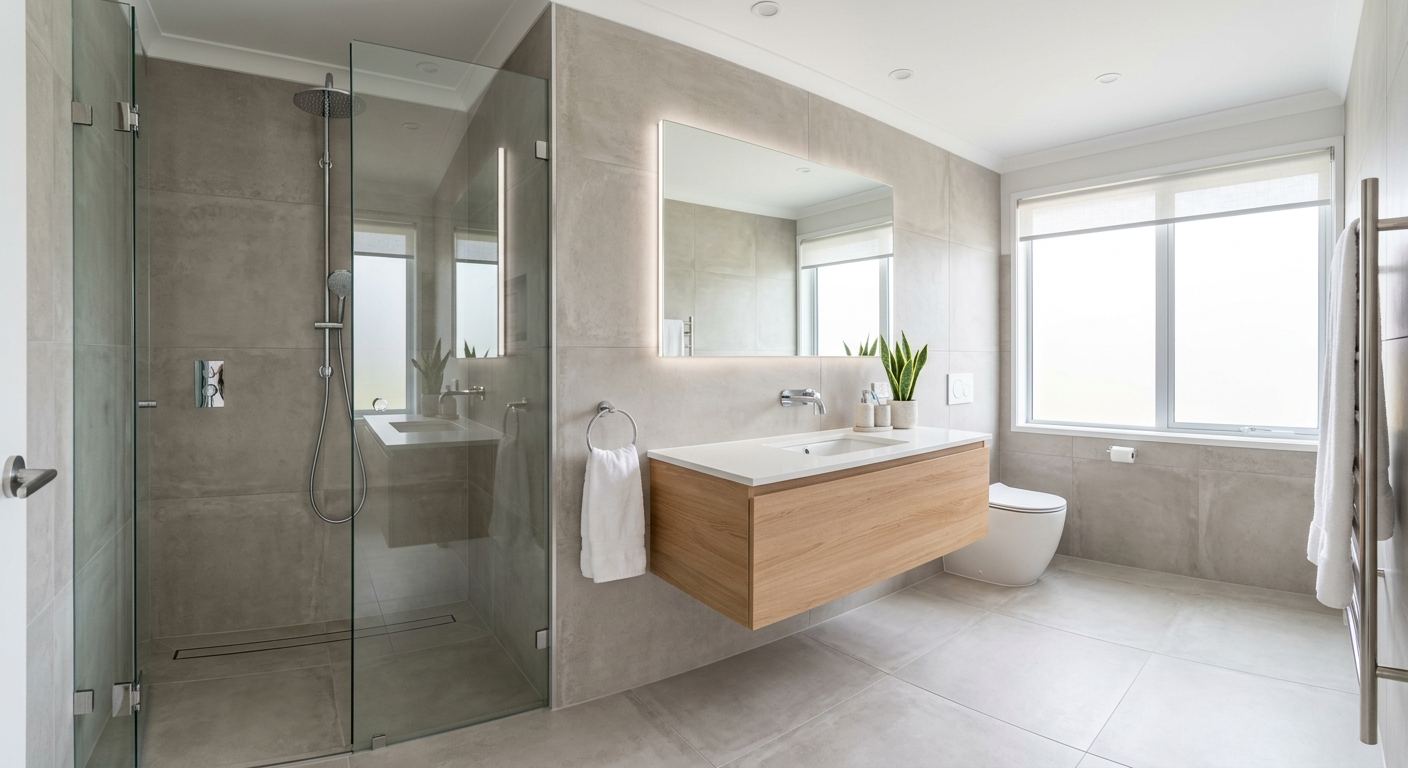
Bathroom renovation options and costs in Vermilion Bay
Bathroom renovations in Vermilion Bay are shaped as much by local housing age and Toronto-market labour premiums as they are by finishes. With a population of 1,200 (Statistics Canada, 2021 Census), the work is done by a smaller pool of tradespeople who still price to the broader Toronto economic region. In many Ontario towns around the Toronto market, the housing stock leans older than newer suburban builds, which often means dated drain configurations, limited venting, and potential asbestos-containing materials hiding in older floor tile or drywall compounds. Even though Vermilion Bay isn’t a high-cost coastal market, the labour-intensive nature of bathroom work in the Greater Toronto area keeps baseline budgets higher than national averages.
Skilled trades in the Toronto economic region command premium hourly rates, and bathroom projects are time-consuming once walls are opened—especially when you’re installing new tile, converting to a custom shower, or correcting plumbing to current Ontario code. For homeowners, the “surprise costs” usually come from what’s uncovered: undersized drains, galvanized supply lines, or older wiring that needs safe upgrades before a new exhaust fan or heated floor circuit can go in.
If you’re in or near a busier service corridor like the downtown core area of Vermilion Bay, bathroom contractors often see more demand for accessibility upgrades (walk-in showers, grab-bar blocking, and lower-threshold entries). That demand can also tighten scheduling, so planning materials and approvals early matters. Use the table below to compare renovation paths—from cosmetic refresh to full custom builds—along with realistic timelines.
| Renovation Scope |
What's Included |
Typical Duration |
Price Range |
| Cosmetic refresh (paint, fixtures, accessories only) |
Paint (walls/ceiling), replace vanity or faucets, swap lighting, new mirror/accessories, re-caulk, clean/repair grout where possible |
3–7 days |
$2,500–$6,000 |
| Mid-range full renovation (new tile, vanity, tub/shower, electrical) |
Demo, new vanity + toilet, tub or surround replacement, tile floor and partial surround, waterproofing, exhaust fan upgrade, GFCI outlet as needed, basic plumbing refresh (no major layout changes) |
2–4 weeks |
$12,000–$20,000 |
| High-end full renovation (custom tile, steam shower, heated floors) |
Custom shower/tile build, premium fixtures, heated floor system, upgraded plumbing + vent corrections as required, higher-end tile/stone, more extensive electrical (fan + lighting zones), premium waterproofing system |
4–7 weeks |
$20,000–$30,000 |
| Shower-only installation (convert tub to walk-in shower) |
Remove tub, rough-in adjustments if needed, new shower pan + waterproofing, tile walls + floor, frameless or semi-frameless glass, updated drain assembly |
2–3 weeks |
$7,500–$14,500 |
| Bathtub replacement or tub-liner install |
Remove and replace tub with new unit and updated trim; recaulk and re-seal; liner option includes surface prep and bonding (where eligible) |
5–10 days |
$1,200–$4,200 |
| Tile-only installation (floor + surround, existing layout kept) |
Remove existing tile (as required), prep substrate, install waterproofing and new tile floor/surround, replace caulking at transitions, grout + seal as specified |
1–3 weeks |
$3,000–$10,000 |
Prices are estimates only and vary by project scope, site access and material selection.
What affects the price of bathroom renovation in Vermilion Bay
In the Vermilion Bay and Ontario market, the same bathroom can land 30–50% apart because pricing is driven more by labour rates and “unknowns” once walls are opened than by climate alone. In the Toronto economic region, skilled trades price the time they spend on demolition, tiling, plumbing corrections, and electrical rough-in—work that can’t be shortcut without creating risk for leaks or failed waterproofing. That’s why a mid-range full renovation often clusters around the lower band (for example, roughly $12,000–$20,000), while upgrades like custom showers or heated floors push budgets into the upper band (up to $20,000–$30,000).
Older housing stock (common across the broader GTA profile) tends to hide the costs that make quotes diverge: cast-iron or undersized drain stacks may need upgrading, galvanized supply lines can require replacement, and ventilation might not meet current expectations. If asbestos-containing materials are discovered—such as in certain vinyl floor tile, or older drywall compounds—abatement triggers added scheduling, licensed handling, and disposal. As a planning figure, asbestos-related work can add about $1,500–$5,000+ depending on what’s found and how extensive the affected areas are.
Two common cost raisers specific to bathrooms in the Toronto price ecosystem are: (1) drain relocation when you want a different shower head location or linear drain slope, and (2) electrical upgrades when you add a more powerful exhaust fan and want reliable GFCI protection. Conversely, costs drop when you keep the plumbing layout, choose standard-size tile that reduces cutting, and start with a subfloor that’s already flat and solid. In practice, the line item that swings most is waterproofing scope—once you open the walls, the quality of the membrane and the prep you need can add or reduce overall labour.
| Price Factor |
Why It Matters |
Cost Impact |
| Layout change — moving drain or supply lines |
Requires rough-in work, new piping runs, and often venting checks |
$2,000–$8,000+ |
| Tile selection — large-format porcelain vs. mosaic vs. ceramic |
Material cost and labour complexity (cutting, pattern matching, more careful setting) |
$500–$4,000+ |
| Fixture tier — builder-grade vs. mid-range vs. designer brands |
Varies supply cost and sometimes valve/trim compatibility and lead times |
$400–$3,500+ |
| Subfloor condition — rot or unlevel concrete adds scope |
Needs removal, patching, and re-leveling before waterproofing and tile |
$800–$4,000+ |
| Electrical — adding GFCI outlets, exhaust fan, heated floor circuit |
GFCI and wet-area wiring plus fan ducting and circuit allocation |
$600–$3,500+ |
| Waterproofing method — membrane type and extent |
Correct system and full coverage reduce mould and leak risk |
$600–$3,000+ |
| Older-home surprises — asbestos tile, cast-iron drains, galvanized pipes |
Abatement, disposal, and plumbing corrections expand labour and materials |
$1,500–$10,000+ |
| Bathroom size — sq ft drives tile and labour time directly |
More area equals more setting time, more waterproofing, more trim/cuts |
$700–$5,000+ |
Permits & regulations in Ontario
In Ontario, many bathroom updates are considered “cosmetic” and typically don’t require permits—things like swapping fixtures (faucets, shower heads), replacing a vanity, installing a new toilet with existing connections, painting, and retiling with the same layout. However, permits become relevant when you change the plumbing or electrical scope. For example, relocating plumbing (moving a drain or supply line), adding or modifying vents, installing a new exhaust fan that requires new ducting or a new circuit, or making structural wall changes generally needs a permit and inspections.
Electrical work must meet Ontario electrical code requirements and be completed by a licensed electrician (or performed under the electrician’s permit/coverage). Plumbing rough-in changes that alter drain/supply routing also typically require inspection readiness. For homeowners in Vermilion Bay, the easiest way to reduce risk is to verify credentials up front—before demo.
Step-by-step: (1) Ask the contractor for their Ontario trade licence number for the relevant trade(s), and confirm the listing on the appropriate online registry; (2) request a certificate of insurance showing liability coverage and confirm it’s current for the dates of your project; (3) verify WSIB/WCB coverage if they employ workers (ask for clearance documentation/letters and date it); (4) keep copies of every document and require that permit responsibility (who pulls it, who pays, and when) is clearly stated in the written contract.
Choosing tile, waterproofing and fixtures for your Vermilion Bay bathroom
Your bathroom budget in Vermilion Bay is usually decided by three material decisions: tile type, waterproofing system, and fixture tier. First, tile choice affects both price and installation complexity. Entry-level ceramic is the most budget-friendly, but it can chip or show wear sooner in heavy-use zones. Porcelain tile costs more, yet it’s denser and typically performs better with moisture and cleaning—often a better “value per year” choice for bathrooms. Natural stone (marble, travertine, slate) can look exceptional, but it usually needs careful finishing, sealing, and more labour because it’s heavier and more demanding to cut and set.
Second is waterproofing. Ontario’s indoor humidity and the way bathrooms get steam-cycled means your waterproofing has to be correct at every transition (floor-to-wall, niches, valve penetrations). A paint-on membrane may be acceptable in limited assemblies, but for many full renovations we recommend a bonded sheet membrane or a proven system that includes proper overlap, thinset compatibility, and curing time. This is where mould prevention starts.
Third is fixture tier. Builder-grade fixtures can hit your budget goals, but mid-range valves, quieter toilet mechanisms, and better trim alignment can reduce callbacks and improve day-to-day comfort—plus buyers notice finish consistency at resale. For example, spending more on porcelain and a robust waterproofing method can be justified: if ceramic plus basic prep costs less upfront, the same project can still end up more expensive if you need rework due to poor substrate prep or questionable membrane coverage. In contrast, a well-executed mid-range full renovation often lands in the $12,000–$20,000 range, while adding heated floors and a premium custom shower build can realistically move you toward $20,000–$30,000.
| Material / Option |
Pros |
Cons |
Price Range |
| Ceramic tile (floor + walls) |
Budget-friendly, good variety of colours/patterns, straightforward installation |
More prone to chipping; may show wear faster in high-traffic areas; requires good prep to avoid lippage |
$3,000–$7,000 |
| Porcelain tile (floor + walls) |
Highly moisture-resistant, durable for Ontario bathroom use, cleanable, consistent performance |
Higher material cost; heavier tile can require better substrate flatness |
$5,500–$10,000 |
| Natural stone (marble, travertine, slate) |
Luxury look, unique veining, strong aesthetic value |
Needs sealing/maintenance; cutting and fitting are more labour-intensive; higher risk of staining if not maintained |
$8,000–$16,000 |
| Frameless glass shower enclosure |
Modern, bright look; easier to keep visually clean; excellent for custom shower styling |
More expensive; accurate measurements required; hinges/handles add hardware cost |
$2,500–$6,500 |
| Prefab tub surround (acrylic) |
Fast install; good water resistance when seams are done correctly; less labour than full tile |
Less “designer” look; limited pattern/customization; can be harder to match if you replace only parts later |
$1,200–$3,500 |
| Custom shower pan (tile or linear drain) |
Integrated drainage and layout flexibility; clean lines; high-end finish potential |
Requires precise waterproofing and slope; higher labour and materials; more inspection attention |
$4,000–$12,000 |
How to choose a bathroom renovation contractor in Vermilion Bay
Choosing the right contractor in Vermilion Bay comes down to verification, clarity, and risk control—especially because bathroom work in the Toronto economic region can uncover hidden scope (plumbing, venting, and sometimes asbestos). Start by verifying Ontario licensing: ask for the contractor’s Ontario trade licence details for the trades involved. Next, confirm liability insurance with a certificate of insurance showing current coverage and project dates. Finally, verify WSIB/WCB coverage (if applicable) by requesting clearance documentation or a dated letter showing the status of coverage for their workers. Don’t accept verbal assurances; insist on copies.
Then get 2–3 itemised written quotes (labour + materials breakdown). A good quote separates demo, framing/repairs, waterproofing, tile labour, plumbing rough-in, electrical work, and disposal. Read scope carefully: what’s excluded (for example, subfloor rebuild, drywall replacement beyond a set height, glass enclosure upgrades), whether a permit pull is included, and if demolition and disposal fees are included.
Warranty matters. Ask for a workmanship warranty length, confirm what’s covered for leaks/waterproofing, and find out whether it’s transferable if you sell the home. Payment schedule should be conservative—never pay more than 10–15% upfront, and keep a holdback until the job is complete and tested. Demand a written start date and completion estimate so you’re not guessing during material lead times.
- Confirm Ontario trade licence(s) match the work scope (plumbing/electrical/tiling as applicable).
- Request certificate of liability insurance and verify policy dates cover your project.
- Verify WSIB/WCB coverage with a current clearance letter or documentation.
- Get 2–3 itemised quotes (no “all-in” totals only); labour and materials separated.
- Ensure waterproofing method and system brand are listed in writing.
- Ask how the contractor will handle plumbing/venting corrections if discovered.
- Confirm permit responsibilities: who pulls it, what it costs, and what inspections are expected.
- Clarify disposal: demo debris removal and hauling included or not.
- Set expectations for lead times (glass enclosure, heated floors, specialty tile).
- Confirm who does caulking/grout sealing and how long it cures before use.
- Review warranty terms: workmanship length, product warranties, and transferability.
- Use a payment schedule with 10–15% max deposit and a holdback until completion.
Red flags to watch in Vermilion Bay: (1) quotes that won’t specify waterproofing details or rely on “we’ll just seal it”; (2) refusing to provide insurance/licence numbers in writing; (3) asking for large upfront payments (beyond 10–15%); (4) no clear plan for permits/inspections; and (5) vague scope language that leaves asbestos/old-plumbing discoveries as “extra later” without a written allowance and process.
Frequently asked questions — bathroom renovation in Vermilion Bay
Should I do a tub-to-shower conversion?
In Ontario, tub-to-shower conversions are popular in Vermilion Bay because they improve accessibility and make cleaning easier—especially if you’re planning for longer-term mobility needs. If your existing plumbing layout already supports a shower drain position, you can often control costs and stay closer to the “shower-only” band; in the Toronto economic region, walk-in conversion projects commonly land around $7,500–$14,500, depending on whether the drain needs re-routing and how complex the tile and glass work become. Conversions also reduce the risk of tub-to-wall leak points that can develop over time. The main caveat is discovery: older drains or venting may need corrections once walls are open, which can expand scope. A contractor who does a pre-demo walkthrough and explains your exact rough-in plan will be the safest choice.
How do I prevent mold in a Vermilion Bay bathroom?
Mould prevention starts before the first tile goes down. In Vermilion Bay and across Ontario, the biggest drivers are good waterproofing at the membrane level and proper ventilation. Ask for a complete waterproofing system (not just “paint and caulk”) that covers floors, shower walls, and all penetrations (valves, niches, and any linear drain area). Next, ensure the exhaust fan is correctly sized, vented to the exterior, and wired with proper GFCI protection—this helps remove steam during showers and reduces the humidity that mould needs. Grout and sealers help cosmetically, but they don’t replace waterproofing. Finally, make sure substrate prep is solid: unlevel floors or rot undertile can lead to micro-movements and cracked grout. If your home is older, be alert to possible moisture damage behind existing finishes during demo.
What adds the most resale value in a bathroom reno?
Resale value in Ontario tends to correlate with functional upgrades and finish consistency. Buyers usually value a clean, modern layout, durable waterproofing, and fixtures that look coordinated and work reliably. In many full-reno budgets, the highest perceived value comes from a well-executed shower (often a tiled walk-in), updated lighting and ventilation, and better storage like a new vanity or built-in niches. Heated floors can be a “wow” factor, but they’re best paired with a premium tile and waterproofing execution so the entire bathroom feels cohesive. In practical terms, homeowners who invest in a mid-range full renovation typically target around $12,000–$20,000, while higher-end builds with heated floors and custom shower details more often land in $20,000–$30,000. The best ROI usually comes from fixing functional risks first (waterproofing and ventilation), then upgrading finishes.
Can I keep my existing plumbing layout to save money?
Yes—keeping the plumbing layout is one of the most effective ways to control cost in a Vermilion Bay bathroom renovation. When drain and supply locations stay the same, contractors typically don’t need extensive rough-in work, which reduces labour and the chances of uncovering major hidden issues. This is especially important in the Toronto economic region where quotes can rise due to labour intensity and older system corrections (venting, drain diameter, supply line condition). If you’re doing a tub-to-shower conversion, you may still be able to save by choosing a shower position that matches the existing tub drain and valve locations. A realistic approach is: plan your fixtures around what’s already there, then upgrade waterproofing, tile, and ventilation. If a contractor tells you the layout must change to “make it look right,” ask for options that keep the same plumbing routing.
How much does a walk-in shower cost in Vermilion Bay?
A walk-in shower cost depends on whether you’re converting from a tub, how custom the tile pan is, and whether glass and electrical upgrades are included. For many Vermilion Bay homeowners working within the Toronto economic region pricing, shower-only installations (like converting a tub to a walk-in) commonly fall around $7,500–$14,500. If you’re upgrading to a more complex build—linear drain, premium tile, frameless glass enclosure, and possible plumbing/vent corrections—the project can move higher, especially if the subfloor needs rebuilding for waterproofing performance. If you’re starting from an existing shower, costs can be lower because the plumbing rough-in is already in place. Get an itemised quote that clearly states the waterproofing system, drain type, and glass package so you can compare contractors fairly.
What's the ROI on a bathroom renovation?
ROI varies because buyers weigh bathrooms differently by the home type and local market demand, but the most reliable driver is preventing future problems while improving day-to-day usability. In Ontario, a bathroom renovation that upgrades waterproofing, ventilation, and core finishes tends to protect resale value better than purely cosmetic refreshes—especially in older homes where hidden drain, venting, or moisture issues can show up later. Budget-wise, homeowners aiming for functional improvements often sit in the mid-range full renovation band around $12,000–$20,000, while higher-end projects with custom shower details and heated floors can reach $20,000–$30,000. For ROI, choose upgrades that buyers can immediately see (clean, modern shower, good lighting) but also that reduce risk (correct waterproofing and properly vented exhaust). Your best “ROI strategy” is matching scope to your home’s condition rather than overbuilding beyond what the rest of the house supports.