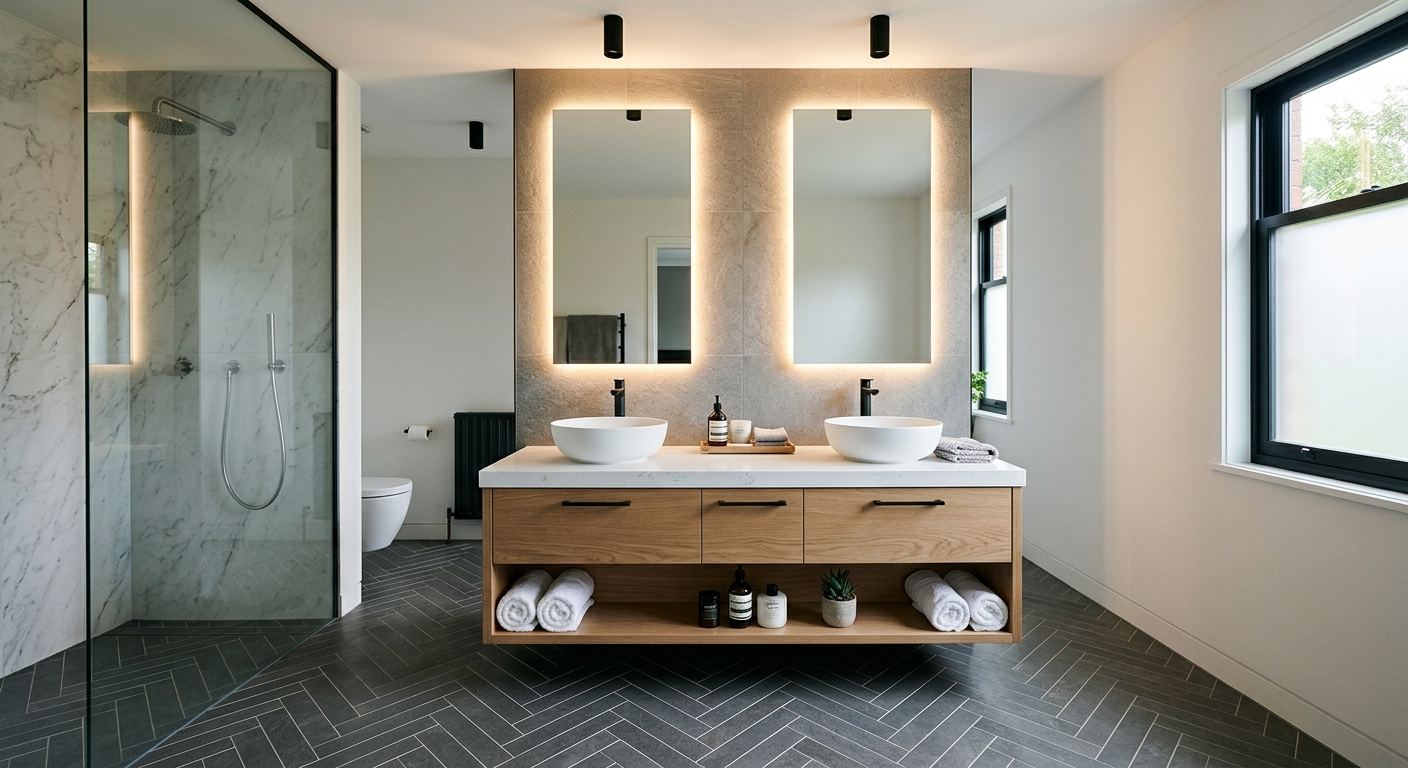
Bathroom renovation options and costs in Mission
Mission, Alberta has a small population (4,505 residents as of the 2021 Census), but the bathrooms get renovated at a steady pace because older homes tend to need updates before finishes can truly look “new.” In the Calgary economic region, that often means dealing with dated plumbing layouts, older drains, and—depending on age—possible asbestos-containing materials hiding behind flooring or wall finishes. In many Calgary-area neighbourhoods, pre-1985 construction commonly brings the risk of asbestos in vinyl floor tile or older drywall compounds, and once walls come off, scope can expand quickly. That’s why a renovation that looks like a “refresh” at the start can shift toward a mid-range remodel once we uncover subfloor damage, blocked venting, or supply-line corrosion.
Cost is also shaped more by local labour availability and trade coordination than by climate extremes. Edmonton and northern Alberta get different freeze-thaw stress, but the Calgary region still needs careful moisture control and well-planned ventilation for year-round comfort. Contractors in the Mission area are busy with full rebuild-style bathroom projects because supply lines, venting tie-ins, and waterproofing details must be done to spec—especially when tile is involved. If you’re shopping around, it’s smart to compare quotes using the same scope assumptions.
In Mission, the demand is especially high around the Downtown / Mission Crossing corridor where many homeowners are updating aging interiors in occupied homes, requiring clean work practices and tighter scheduling. Use the options below to budget realistically, then review the scope table to match your expectations.
| Renovation Scope |
What's Included |
Typical Duration |
Price Range |
| Cosmetic refresh (paint, fixtures, accessories only) |
Paint, caulking, swap vanity or faucet, replace toilet/lighting if in same locations, accessories (towel bars, mirrors), basic deep clean, no tile removal |
2–5 days |
$3,000–$8,500 |
| Mid-range full renovation (new tile, vanity, tub/shower, electrical) |
Remove finishes, rework waterproofing, new tile floor/surround, new vanity, tub-to-tap connections as needed, exhaust fan upgrade, GFCI where required, disposal and cleanup |
2–4 weeks |
$15,000–$24,000 |
| High-end full renovation (custom tile, steam shower, heated floors) |
Custom tile work (layout and trim), heated floor system, steam-ready shower plumbing, upgraded ventilation, designer fixtures, upgraded waterproofing system, premium hardware |
4–7 weeks |
$25,000–$40,000 |
| Shower-only installation (convert tub to walk-in shower) |
Demo tub surround, new walk-in shower pan/liner or membrane system, glass or curtain-ready enclosure, tile surround, valve and drain adjustments as needed |
2–4 weeks |
$16,000–$28,000 |
| Bathtub replacement or tub-liner install |
Replace tub (or install tub-liner system), reglaze/finish transitions, new sealing, minor plumbing changes, surround touch-ups if plumbing stays put |
1–3 weeks |
$2,500–$7,000 |
| Tile-only installation (floor + surround, existing layout kept) |
Tile removal and install, waterproofing and membrane system, grout/trim, replace rotted subfloor areas if discovered during demo |
1–3 weeks |
$3,500–$14,000 |
Prices are estimates only and vary by project scope, site access and material selection.
What affects the price of bathroom renovation in Mission
In Mission, you can see the same bathroom remodel quoted 30–50% apart, even when the visible finish schedule looks similar. The reason is that Calgary-area labour rates and the age/condition of the housing stock drive hidden work. Here in the Calgary economic region, older homes often have older drain stacks (sometimes cast-iron), older supply lines (including galvanized), and ventilation that doesn’t meet today’s moisture control expectations. Those issues don’t show up until walls or floors are opened, so pricing swings based on what’s uncovered and how extensive the repairs become.
Waterproofing and tile installation are also labour-intensive, and the cost of skilled waterproofing increases when layouts require more cutting, niche builds, or re-tiling around changes. If discovery happens during demolition—like asbestos-containing floor tile or drywall compound in older bathrooms—abatement protocols add time and cost. As a planning number, that can add $1,500–$5,000+ to a budget depending on what’s impacted and how much material must be removed and disposed of safely.
Two concrete examples we commonly run into in Mission: (1) moving a drain location by even a small amount can require additional rough-in work and re-building subfloor layers to maintain proper slope; (2) swapping from standard ceramic tile to larger-format porcelain often raises labour because of substrate prep and layout. If your goal is a mid-range refresh-to-remodel transition, typical projects often sit in the $15,000–$24,000 band; if you add heated floors and premium enclosures, you quickly move toward the high-end $25,000–$40,000 range.
| Price Factor |
Why It Matters |
Cost Impact |
| Layout change — moving drain or supply lines requires rough-in work |
New framing and piping runs, additional labour for rough-in, potential ceiling/wall access |
$1,500–$8,000 |
| Tile selection — large-format porcelain vs. mosaic vs. ceramic |
More challenging cuts, substrate prep, and premium tile increases material and install time |
$1,000–$6,000 |
| Fixture tier — builder-grade vs. mid-range vs. designer brands |
Higher cost fixtures + sometimes more specialized trim/valve requirements |
$500–$4,500 |
| Subfloor condition — rot or unlevel concrete adds scope |
Repairs, leveling, cement board adjustments, and moisture-safe underlayment |
$1,000–$7,500 |
| Electrical — adding GFCI outlets, exhaust fan, heated floor circuit |
Licensed work, new wiring runs, panel capacity checks, and fan ducting |
$700–$6,500 |
| Waterproofing method — membrane type and extent |
Better systems cost more but reduce failures; complexity rises with niches and benches |
$800–$5,000 |
| Older-home surprises — asbestos tile, cast-iron drains, galvanized pipes |
Abatement, additional demo/disposal, and possible pipe replacement to prevent future leaks |
$1,500–$5,000+ |
| Bathroom size — sq ft drives tile and labour time directly |
More coverage area increases materials, tiling labour, and setting time |
$500–$6,000 |
Permits & regulations in Alberta
In Alberta, cosmetic updates in a bathroom—like swapping fixtures, changing a vanity, repainting, or retiling without moving plumbing—typically do not require a permit. However, permits often come into play when you change the “systems” portion of the bathroom: relocating plumbing (moving a drain or supply line), adding or upgrading an exhaust fan tied into new wiring, or making structural wall changes. Electrical work must meet Canadian electrical code requirements and be performed by a licensed electrician; any new circuits (for example, a heated floor) generally require proper installation and documentation.
Plumbing rough-in changes—meaning anything that alters drain routing, supply locations, or pipe size—often require a permit and inspection. The exact process can vary by scope, but the practical approach in Mission is to assume a permit is required if plumbing and venting are being modified, or if new electrical circuits are being added. Before signing a contract, ask the contractor how permits will be handled and whether they are pulling them or subcontracting a licensed trade.
Step-by-step homeowner checks you can do:
- Request the contractor’s Alberta trade licence details and confirm they match the business name on your invoice.
- Get proof of liability insurance (certificate of insurance) showing coverage for renovations.
- Ask for WSIB/WCB coverage confirmation for workers (or proof they’re registered/covered as required).
- Ask whether permits and inspections are included in the quote or priced separately.
- Confirm who will dispose of demo waste (and whether that includes regulated materials).
- Keep copies of all certificates and permit numbers for your records.
Choosing tile, waterproofing and fixtures for your Mission bathroom
For a Mission bathroom renovation, your biggest budget decisions usually come down to three material choices: (1) tile type, (2) waterproofing system, and (3) fixture tier. These aren’t just aesthetics—your choices affect labour time, substrate prep, and how reliably your bathroom stays mould-resistant in Alberta’s indoor humidity swings.
Tile choice changes both material cost and installation complexity. Ceramic tile is usually the entry-level pick—fine for many homeowners—but porcelain is more forgiving for floors and frequently handles heavy traffic and cleaning better. Natural stone can look premium, yet it needs extra care and a more meticulous installation approach. In the Calgary market, the labour component often dominates, so choosing a “simpler tile” format (less cutting and fewer trims) can reduce cost even if the tile itself is mid-range.
Waterproofing method is where failures are prevented, not where they are fixed. Paint-on products can work for certain small applications, but in a shower area most remodels perform better with a bonded sheet membrane or a fully detailed system (including sealing corners, seams, and penetrations). In Alberta homes, the indoor humidity from showers means the barrier must be continuous.
Fixture tier impacts both budget and resale. Builder-grade fixtures can keep you in the comfortable $15,000–$24,000 mid-range band; upgrading to designer shower valves and glass in a full remodel pushes you toward the upper $25,000–$40,000 range—when you’re making a long-term durability and usability upgrade (not just a cosmetic one).
Example: If you spend an extra $2,000–$4,000 for higher-end porcelain tile and better waterproofing detailing, that difference is often justified because it reduces the likelihood of rework and improves the final look consistency. But paying for premium marble in an area with limited natural light may not deliver the payback you expect if the waterproofing and ventilation plan aren’t equally strong.
| Material / Option |
Pros |
Cons |
Price Range |
| Ceramic tile (floor + walls) |
Often best value, wide design options, easier to source |
Less durable than porcelain for some floors; may require more careful slip/maintenance planning |
$3,500–$8,500 |
| Porcelain tile (floor + walls) |
Hard-wearing, better for floors, good stain resistance, cleaner look with larger formats |
More expensive material; larger tiles can increase labour for layout and prep |
$6,500–$12,000 |
| Natural stone (marble, travertine, slate) |
High-end appearance, unique veining, great for feature walls |
Sealing/maintenance, material and install complexity, more risk with uneven substrates |
$10,000–$18,000 |
| Frameless glass shower enclosure |
Modern look, easier to clean than curtain systems, resale appeal |
Higher hardware cost; requires precise framing and sealing |
$2,000–$6,500 |
| Prefab tub surround (acrylic) |
Fast install, smooth surfaces, reduced tile labour |
Limited design flexibility; transitions must be sealed carefully |
$1,000–$3,000 |
| Custom shower pan (tile or linear drain) |
Premium drainage and layout freedom, accessibility-friendly if designed right |
More waterproofing detail and labour; requires accurate slope and detailing |
$4,000–$12,000 |
How to choose a bathroom renovation contractor in Mission
Choosing the right contractor in Mission starts with verifying credentials and protecting yourself from scope creep. First, confirm the contractor’s Alberta trade licence information and request proof of liability insurance (certificate of insurance). Next, verify WSIB/WCB coverage for their workers; ask for documentation showing the account status/coverage that matches your jobsite. If a contractor can’t provide clear documentation, move on—bathrooms are a high-risk area for water damage, and you want the right people insured and accountable.
Then, get 2–3 itemised written quotes. You want labour and materials separated (tile, membrane system, backer board, disposal, electrical/plumbing allowances, and any glass/enclosure scope). Avoid lump sums with vague exclusions. Read the scope line by line: is permit pull included, are inspections covered, what’s excluded for unforeseen subfloor rot, and does disposal include regulated materials if asbestos is discovered? Finally, confirm warranties: workmanship warranty length, product/manufacturer warranties, and whether warranties are transferable to you if you sell.
Payment schedule matters. Never pay more than about 10–15% upfront. Use a holdback until the job is complete and deficiencies are corrected. Also ask for a written timeline with a realistic start date and completion estimate. Bathroom renovations run on sequencing; you don’t want surprises caused by missing materials, delayed trade coordination, or unclear demarcation of responsibilities.
- Alberta licence details match the contractor name on your contract and invoice.
- Certificate of liability insurance provided before work starts.
- WSIB/WCB clearance or coverage confirmation provided in writing.
- Quote is itemised: labour vs materials vs allowances.
- Scope clearly states what’s included for demo, disposal, and site protection.
- Permit pull responsibility is spelled out (who applies, what’s included).
- Waterproofing method and area of coverage are explicitly listed.
- Electrical scope is specific (exhaust fan, GFCI, heated floor circuit if any).
- Plumbing scope is specific (valve change, rough-in moves, drain tie-in).
- Warranty terms are in the contract, including start date and coverage length.
- Payment schedule aligns with milestones; holdback is clearly defined.
- Timeline includes trade dependencies (glass, tile lead times, inspections).
Red flags: contractors who won’t show insurance/coverage, quotes that omit waterproofing details, vague exclusions like “repairs if needed” without allowances, no written timeline, or requests for large upfront payments without a signed schedule of milestones.
Frequently asked questions — bathroom renovation in Mission
Should I do a tub-to-shower conversion?
In many Mission homes, a tub-to-shower conversion makes sense because it can improve accessibility and simplify daily use, especially for households that don’t need a bathtub. Cost-wise, it’s often priced like a mid-range shower scope, typically landing in the $16,000–$28,000 range depending on whether the drain and valve locations need changes, and what waterproofing + tile system you choose. The key is planning: if your current plumbing layout is awkward, moving rough-ins can add time and cost. Also, older homes in the Calgary region may hide drainage or venting issues behind the tub surround, so your contractor should include contingency for discovery work during demo. If you’re replacing aging fixtures and improving ventilation alongside the conversion, the practical payoff is usually strong.
How do I prevent mold in a Mission bathroom?
Mould prevention is mostly about moisture control and a continuous waterproofing barrier. In Mission and the wider Calgary region, bathroom humidity rises quickly after showers, so the exhaust fan performance and ducting matter as much as the tile. Ensure the contractor installs proper waterproofing at wet areas (corners, seams, and penetrations), uses a grout/membrane approach that matches the shower system, and seals transitions where plumbing penetrates walls. Ventilation should be sized correctly and ducted to the exterior where possible. Also, schedule the fan timer or humidity control correctly—fans that run too briefly can let moisture linger. If your home has older finishes, be aware that pre-1985 materials can raise regulated abatement needs if damaged; your contractor should know how to handle discovery safely.
What adds the most resale value in a bathroom reno?
For resale in Mission and across the Calgary economic region, buyers typically pay for durability, sensible layout updates, and “done right” waterproofing—not just trendy finishes. Upgrading the shower system (pan + waterproofing + properly detailed glass), improving ventilation, and selecting tile and fixtures that look consistent with the home’s style tend to deliver the strongest value. Electrical improvements like safe GFCI protection and modern lighting also help. If you’re budgeting, a mid-range full renovation often sits around $15,000–$24,000, and that’s where many homeowners find the best balance of cost and return. Going ultra-premium (heated floors, steam, high-end stone) can increase appeal, but it usually takes the $25,000–$40,000 territory to fully reflect that level of finish and system work.
Can I keep my existing plumbing layout to save money?
Yes—keeping the plumbing layout aligned with the existing drain and supply locations is one of the most reliable ways to control costs in Alberta. When you don’t move drain lines or valve locations, you reduce rough-in complexity, framing changes, and the chance of hidden surprises expanding your scope. Many “mid-range” projects stay closer to $15,000–$24,000 when the vanity and shower/tub footprints stay roughly where they are. That said, older housing stock in the Calgary region can still require repairs even if the layout stays put—like replacing corroded supply lines or addressing venting and drain performance. A good contractor will inspect and confirm what’s feasible during demolition rather than assuming everything is perfect behind the walls.
How much does a walk-in shower cost in Mission?
A walk-in shower in Mission is usually priced as a shower conversion or a full shower installation depending on what’s being removed and whether plumbing changes are required. For many homeowners converting from a tub, a realistic budget lands in the $16,000–$28,000 range. If you already have a walk-in rough-in and you’re only installing tile, glass, and the pan details, the numbers can be lower, especially if the layout is already correct. The biggest drivers are the shower pan type (linear drain vs standard), waterproofing system quality, enclosure style, and whether the drain and valve positions need to be adjusted. If the home is older, discovery of hidden damage or older drainage components can also shift the final total.
What's the ROI on a bathroom renovation?
ROI in Mission depends on what you improve and whether your renovation solves common homeowner pain points: water management, ventilation, safety, and modern functionality. While exact ROI varies by buyer and market timing, the projects that most consistently “hold value” are the ones that prevent future problems—proper waterproofing, reliable ventilation, and updates to fixtures and electrical. A mid-range full renovation (often $15,000–$24,000) generally makes sense if you want a strong balance of usability and durability, especially in older homes where concealed work may surface. If you spend toward the high-end band ($25,000–$40,000), ensure your upgrades align with the rest of the home; premium finishes pay off most when the shower system and waterproofing are also top-tier. For the best outcome, prioritize system upgrades first, then finishes.