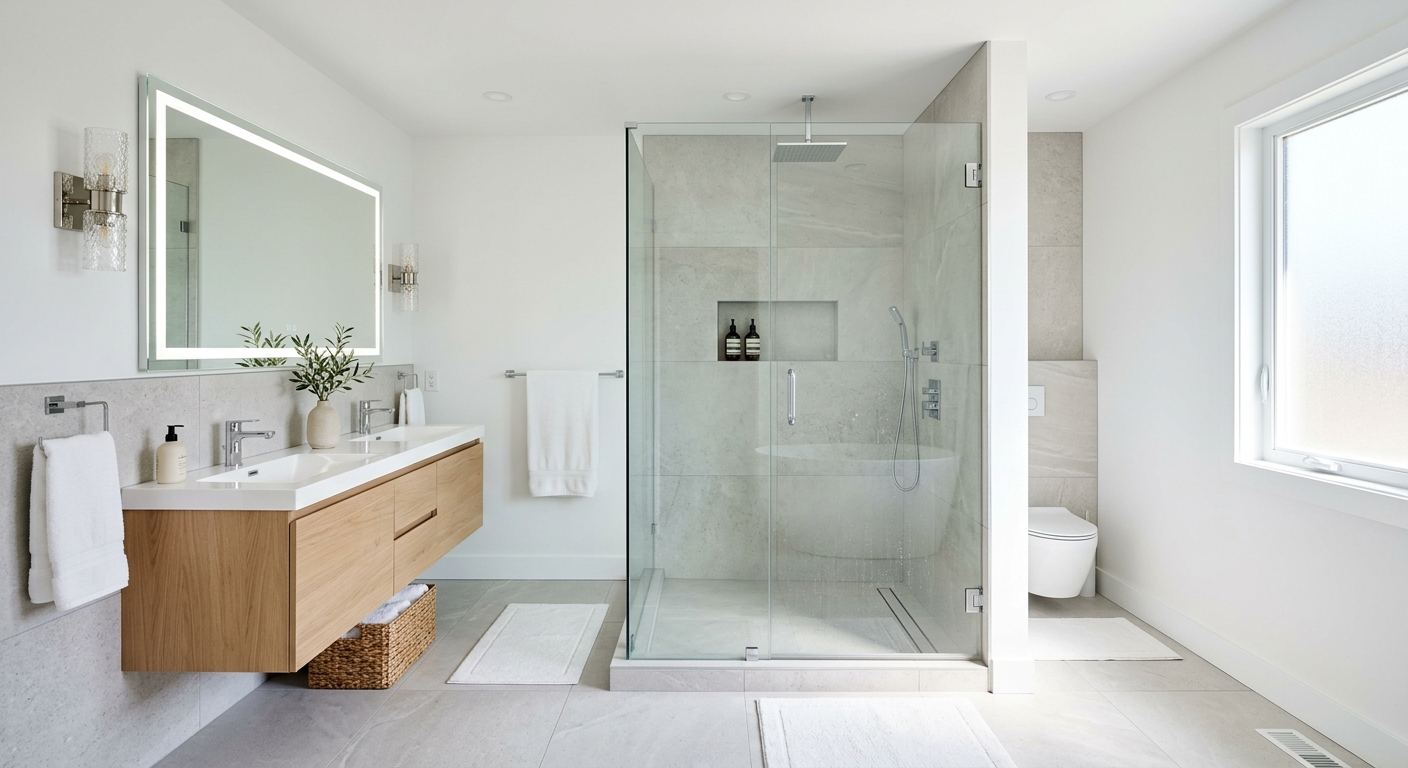
Bathroom renovation options and costs in Chippawa
Chippawa homeowners usually start with one question: “What will this cost?” The answer depends on how much you change—cosmetic updates versus a full gut renovation. In Chippawa, the local housing base is shaped by age; as a reference point, the City’s population is 6,077 (Statistics Canada, 2021 Census). In older pockets of the Toronto economic region—where post-war and 1960s–1980s homes are common—bathrooms often have dated plumbing layouts, older venting, and finishes that weren’t built for today’s waterproofing standards. That’s why you can see big budget differences even when two bathrooms look similar at the surface.
Even though this area isn’t driven by extreme bathroom-specific climate the way northern communities can be, Ontario’s winter freeze-thaw and indoor humidity still matter. The Toronto-market reality is that skilled trades command premium hourly rates, and bathroom work is labour-intensive once walls and floors are opened—especially for tiling, custom showers, and complex plumbing layouts. Also, hidden conditions can expand scope quickly: older drain stacks may need reconfiguration, and discovery of asbestos-containing materials in floor tile or drywall compound can trigger licensed abatement.
Demand is especially strong in established neighbourhoods like the Chippawa area along the Niagara Escarpment corridor, where many homes are older and renovations are a regular part of home maintenance. Next, compare the common renovation paths and typical timelines using the price bands that contractors in the Toronto economic region work from.
| Renovation Scope |
What's Included |
Typical Duration |
Price Range |
| Cosmetic refresh (paint, fixtures, accessories only) |
Paint, new vanity or taps, swap toilet/lighting where plumbing stays put, accessory upgrades, basic caulking |
3–7 days |
$2,000–$6,000 |
| Mid-range full renovation (new tile, vanity, tub/shower, electrical) |
Remove existing finishes, new waterproofing, tub/shower refresh or replacement, tile floor + walls, new vanity, exhaust fan upgrade, GFCI-safe electrical updates, disposal |
2–3 weeks |
$12,000–$22,000 |
| High-end full renovation (custom tile, steam shower, heated floors) |
Custom shower system, premium tile and trim, heated floors, upgraded electrical plan, niche/cove detailing, higher-end fixtures, steam-ready components, enhanced waterproofing |
3–5 weeks |
$22,000–$30,000 |
| Shower-only installation (convert tub to walk-in shower) |
Demo, convert plumbing tie-ins, new shower pan/waterproofing, curb or curbless design, glass enclosure allowance, tile floor + shower walls |
1.5–3 weeks |
$8,000–$18,000 |
| Bathtub replacement or tub-liner install |
Replace tub and re-seal properly, new surround where required, waterproofing at transitions, plumbing reconnection, or liner system install |
5–10 days |
$3,000–$6,500 |
| Tile-only installation (floor + surround, existing layout kept) |
Tile removal and prep, new tile floor and/or surround, grout/seal, waterproofing renewal (as required), fixtures protected or reinstalled |
1–2.5 weeks |
$6,000–$14,000 |
Prices are estimates only and vary by project scope, site access and material selection.
What affects the price of bathroom renovation in Chippawa
In Chippawa and across the Toronto economic region, it’s common to see quotes for the “same” bathroom that differ by 30–50%. The biggest drivers aren’t the temperature outdoors—they’re the cost of labour and what the contractor discovers once the walls and floors are opened. Bathroom renovations are labour-intensive in the GTA, and tiling plus plumbing rough-in time adds up fast. That labour premium, combined with older housing stock, is why realistic full renovation budgets often land above national averages, even when finishes look mid-level.
Older homes in the region can hide issues like cast-iron or undersized drain stacks that must be upgraded for proper flow and venting. If supply lines are galvanized (or simply aged), they may need replacement during the same wall-open phase. Venting and drainage corrections are not “nice to have”—they affect odours, slow drains and long-term performance. Another common budget swing: asbestos-containing materials. If asbestos is found in vinyl floor tile or older drywall compound (often pre-1985), abatement protocols kick in and can add about $1,500–$5,000+ to the budget depending on the extent and containment required.
Two concrete examples from Chippawa homeowners: (1) keeping the existing toilet location and keeping plumbing in place can keep you closer to mid-range pricing (for instance, around the $12,000–$22,000 band for a typical full renovation), while moving the drain line for a new shower layout often pushes the job higher due to rough-in work. (2) Selecting large-format porcelain can raise material costs, but it may reduce overall grout lines; meanwhile, it requires more precise subfloor prep—if your subfloor is unlevel, the labour to flatten it can erase the savings. Next, see the key price factors that drive these differences.
| Price Factor |
Why It Matters |
Cost Impact |
| Layout change — moving drain or supply lines requires rough-in work |
More demo, new rough-in, testing and inspection coordination |
Often +$2,000–$8,000 |
| Tile selection — large-format porcelain vs. mosaic vs. ceramic |
Material cost and installation difficulty rise with harder tile and smaller tolerances |
Often +$1,000–$4,500 |
| Fixture tier — builder-grade vs. mid-range vs. designer brands |
Supply cost difference and sometimes valve/trim compatibility impacts labour |
Often +$800–$5,000 |
| Subfloor condition — rot or unlevel concrete adds scope |
Extra prep, backer board changes, flattening and moisture corrections |
Often +$1,000–$6,000 |
| Electrical — adding GFCI outlets, exhaust fan, heated floor circuit |
Licensed electrical work and coordination for wiring and permits |
Often +$700–$4,500 |
| Waterproofing method — membrane type and extent |
Proper system coverage prevents mould and repeat work |
Often +$600–$3,000 |
| Older-home surprises — asbestos tile, cast-iron drains, galvanized pipes |
Abatement, demolition changes, and pipe replacements expand labour and materials |
Often +$1,500–$10,000+ |
| Bathroom size — sq ft drives tile and labour time directly |
More surface area means more tile, more thinset, more waterproofing and time |
Often +$2,000–$8,000 |
Permits & regulations in Ontario
In Ontario, many bathroom updates are considered cosmetic and typically do not require a permit. Swapping a vanity, replacing a toilet with like-for-like plumbing connections, repainting, and retiling without changing plumbing or moving walls usually fall into the “no permit” category. However, if you relocate plumbing—such as moving a drain line or shifting a shower valve location—or if you add a new exhaust fan that requires new wiring/circuit work, you generally need permits and inspections. Structural wall changes (even partial framing changes) also move the project into permit territory.
Electrical work must meet Ontario electrical code requirements and must be performed by a licensed electrician (or signed off by one). Plumbing rough-in changes—new drain/supply connections and significant valve relocations—typically require permit/inspection because they must be pressure-tested and verified behind the walls. Before you start, confirm the contractor’s Ontario trade licence where applicable and verify liability coverage; these are practical safety and accountability items for homeowners.
How to verify a contractor in Chippawa step-by-step: (1) Ask for their certificate of insurance (liability) and confirm the policy is active; (2) request their WSIB/WCB status or clearance letter and keep a copy for your records; (3) check their Ontario trade licence using the appropriate provincial online registry; (4) review the permit plan in the written quote—who pulls permits, who schedules inspections, and whether that cost is included; (5) confirm disposal responsibilities and asbestos/abatement handling if older materials are suspected.
Choosing tile, waterproofing and fixtures for your Chippawa bathroom
In a Chippawa bathroom renovation, three material decisions usually determine both your final price and your long-term maintenance: (1) tile choice, (2) waterproofing method, and (3) fixture tier. First, tile. Ceramic is your entry-level option and works well for straightforward, consistent layouts, but it’s generally less forgiving in high-traffic shower applications and may wear faster in certain scenarios. Porcelain is often the best balance—denser, more water-resistant, and ideal for floors and shower walls when properly installed. Natural stone (marble, travertine, slate) looks premium but adds complexity: it often needs careful sealing, stricter substrate prep and specialized detailing. Second, waterproofing. In Ontario bathrooms, humidity and temperature swings mean waterproofing must be continuous and correctly tied into corners, niches and transitions. Paint-on membranes can be acceptable in specific systems but are usually less robust than bonded sheet membranes or engineered systems installed to manufacturer specs. Third, fixtures. Builder-grade fixtures can lower upfront cost, but mid-range or designer brands often deliver better valve control, smoother finishes, and better long-term performance—helpful for resale value in the Toronto market.
Here’s a practical dollar example. If your full renovation budget is around $12,000–$22,000, upgrading from entry porcelain to higher-end porcelain might add roughly $1,000–$2,500 in materials and slightly more labour for fine detailing. That upgrade is often worth it because it reduces the “repeat work” risk associated with poor tile selection and tightening tolerances on an older subfloor. But if you’re trying to stay under budget, it’s usually better to spend on waterproofing quality first and choose a simpler tile pattern to control labour.
Match the right combination to your bathroom’s layout and how much you’re changing. Next, compare the material options that drive the most budget variation.
| Material / Option |
Pros |
Cons |
Price Range |
| Ceramic tile (floor + walls) |
Cost-effective, good look options, easier to source matching trims |
More prone to wear in some floor use; requires careful handling and consistent substrate |
$3,500–$7,500 |
| Porcelain tile (floor + walls) |
Low water absorption, durable for floors and showers, cleaner look with modern formats |
Higher material cost; large-format installs demand flatter subfloors |
$5,000–$10,500 |
| Natural stone (marble, travertine, slate) |
Luxury appearance, unique veining and premium curb appeal |
Sealing/maintenance, higher breakage risk, more labour for finishing and fit |
$8,000–$16,000 |
| Frameless glass shower enclosure |
Light, modern look; durable hardware when installed correctly |
More expensive; needs accurate tile geometry and strong waterproofing at edges |
$3,000–$7,500 |
| Prefab tub surround (acrylic) |
Fast install, consistent surface, easier to clean |
Less “custom” look; can limit niche/trim flexibility |
$1,200–$3,800 |
| Custom shower pan (tile or linear drain) |
Curbless/linear layouts possible, best performance when system is installed right |
More labour and waterproofing detailing; tighter scheduling window |
$4,500–$12,000 |
How to choose a bathroom renovation contractor in Chippawa
Choosing a contractor in Chippawa is about reducing risk: bad waterproofing, incomplete scope, and payment disputes are the usual pain points. Start with licensing and coverage. Confirm the contractor’s Ontario trade licence (where applicable) and ask for liability insurance with an active expiry date. For work safety, verify WSIB/WCB coverage by requesting proof or a clearance letter. Don’t accept “we’re covered” without paperwork—keep copies.
Next, get 2–3 itemised written quotes that separate labour and materials. Look for line items for demo, framing/repairs, waterproofing system, tile installation labour, electrical/plumbing allowances, glass/trim, and disposal. A realistic bathroom quote shouldn’t be a single lump sum with vague wording. Read the scope carefully: is asbestos/abatement included if hidden materials are discovered, who pulls permits, and what’s included for disposal and floor protection? Warranty matters too—ask for the workmanship warranty length (often separate from product warranties) and whether it’s transferable to you as the homeowner. Timing is also critical: require a start date and completion estimate in writing, and confirm how long lead times for tile/glass/vanities can affect the schedule.
For payments, never move your deposit too high. In practice, keep upfront payments to about 10–15% and hold back funds until key milestones are complete (waterproofing verification, rough-in inspection approvals, and a final walkthrough).
- Ask for their Ontario trade licence number and verify it on the provincial registry.
- Request liability insurance certificate and confirm the coverage is active for the job period.
- Get WSIB/WCB proof or clearance letter before work begins.
- Require itemised quotes: labour + materials, not “allowance” without amounts.
- Confirm whether the quote includes permit pulling and inspection fees (if needed).
- Ask who handles disposal and whether it includes dumpster/staging and drywall/tile debris.
- Verify waterproofing scope: membrane type, coverage areas, and tie-in details.
- Ask how they handle older-home surprises (asbestos detection protocol, extra framing/demolition steps).
- Confirm tile prep requirements: subfloor flatness, patching, and underlayment/backer board.
- Get a clear schedule with milestones (demo, rough-in, waterproofing, tile, finish).
- Review warranty terms in writing: workmanship duration and how product warranties apply.
- Set payment milestones in the contract; don’t pay more than 10–15% upfront.
Red flags to watch for: vague scope descriptions, no mention of waterproofing system or flood-test/inspection steps, “cash only” or refusal to provide insurance/WSIB proof, no itemised pricing (only allowances), and a request for large upfront payments without a detailed milestone plan. If any of these show up, it’s safer to keep shopping.
Frequently asked questions — bathroom renovation in Chippawa
How do I compare bathroom renovation quotes?
Start by comparing apples-to-apples. Ask each contractor for an itemised breakdown that separates labour from materials: demo, waterproofing system, tile installation labour, electrical/plumbing allowances, glass/vanity hardware, and disposal. Check whether permits are included—relocating plumbing or adding an exhaust fan with new wiring typically requires permits/inspections in Ontario. Also confirm what “tile allowance” means (per box/sq ft) and whether labour rates differ by complexity (linear drains, niche builds, curbless pans). If one quote is in the $12,000–$22,000 mid-range band and another is similar but covers less electrical, less waterproofing coverage, or fewer tile areas, you’ll feel the difference later.
Can I live at home during a bathroom renovation in Chippawa?
Often yes, but it depends on the schedule and the extent of demolition. Cosmetic refreshes can usually happen while you stay home with minimal disruption. For full renovations (commonly 2–5 weeks), you’ll typically lose access to the shower or tub during demo and tile stages, so plan alternate bathing arrangements for the rough-in and waterproofing window. A contractor should provide a daily containment plan for dust control and protect flooring in nearby areas. In older Chippawa homes, add time buffers for hidden plumbing vent or drain upgrades, and for any required abatement if asbestos is discovered—those situations can extend the “no shower” period. If you’re aiming for a full renovation budget in the $12,000–$30,000 range, ask them how they sequence work to keep disruption reasonable.
What's the best bathtub material for a Chippawa home?
Most Chippawa homeowners choose based on comfort, durability, and install method. Acrylic tubs are a common choice because they’re relatively light for installation and often come in good-quality prefab systems. Fibreglass/acrylic can also work well for tub-liner style options when your existing tub and surround are suitable and properly prepped. If you want a long service life and you’re replacing the whole tub, cast iron is durable but usually costs more and can be heavier—labour and floor support details may matter. Regardless of material, the key is correct plumbing connections, sealing, and waterproofing at transitions. In a project budget, bathtub replacement is often a smaller portion—frequently in the $1,200–$3,500 fixture band—while the total may rise if you need surround retiling or plumbing corrections.
Is it worth renovating a bathroom before selling in Chippawa?
Usually, yes—if the reno fixes functional issues and upgrades the bathroom’s perceived quality. Buyers in the Toronto economic region often look for clean waterproofing, modern lighting, and updated fixtures more than they care about luxury stone in every surface. If your current bathroom has signs of recurring leaks, poor ventilation, or out-of-date plumbing venting, renovating can prevent inspection surprises and protect your timeline. If the job is purely cosmetic and the subfloor or waterproofing is failing, you can lose value because buyers may renegotiate or walk away. For many homeowners, a mid-range full renovation (often around the $12,000–$22,000 band) is a common “sweet spot” that updates the essentials without over-investing in steam systems. Always match the finish tier to the condition of the rest of the home.
How do I plan a bathroom renovation on a tight budget in Chippawa?
Plan around waterproofing first, then make smart substitutions. Keep plumbing in the same locations whenever possible—layout changes are where budgets jump because rough-in work is labour-intensive. Choose a mid-tier porcelain tile for durability without chasing the most expensive natural stone. Consider a simpler tile pattern and focus money on proper membrane coverage and sealing details. If you’re working with a full renovation target near the lower end, aim for the $12,000–$22,000 range rather than assuming a $22,000–$30,000 high-end approach. Also ask for allowances: you can reduce cost by selecting standard-size tile, deferring heated floors, or choosing a builder-grade vanity with durable hardware. The biggest budget protection is getting a detailed, itemised quote that lists what’s included and what’s excluded.
What's the difference between a cosmetic and a full bathroom renovation?
A cosmetic renovation is surface-focused: paint, lighting changes, swapping fixtures (like taps or a vanity) when plumbing doesn’t move, and accessory upgrades. It generally doesn’t involve opening walls/floors, so it rarely triggers major permits—typically it’s permitted less often because you’re not relocating plumbing or making structural changes. A full renovation goes deeper: removing finishes, replacing or upgrading waterproofing, often retiling floor and walls, and correcting plumbing/electrical as needed. In Ontario, full renovations that relocate plumbing (moving drains/supplies) or add circuits (e.g., exhaust fan wiring or heated floors) typically require permits and inspections. In practical Chippawa budgets, cosmetic refreshes may sit around a few thousand dollars, while full renovations frequently run $12,000–$30,000 depending on scope and finish tier.