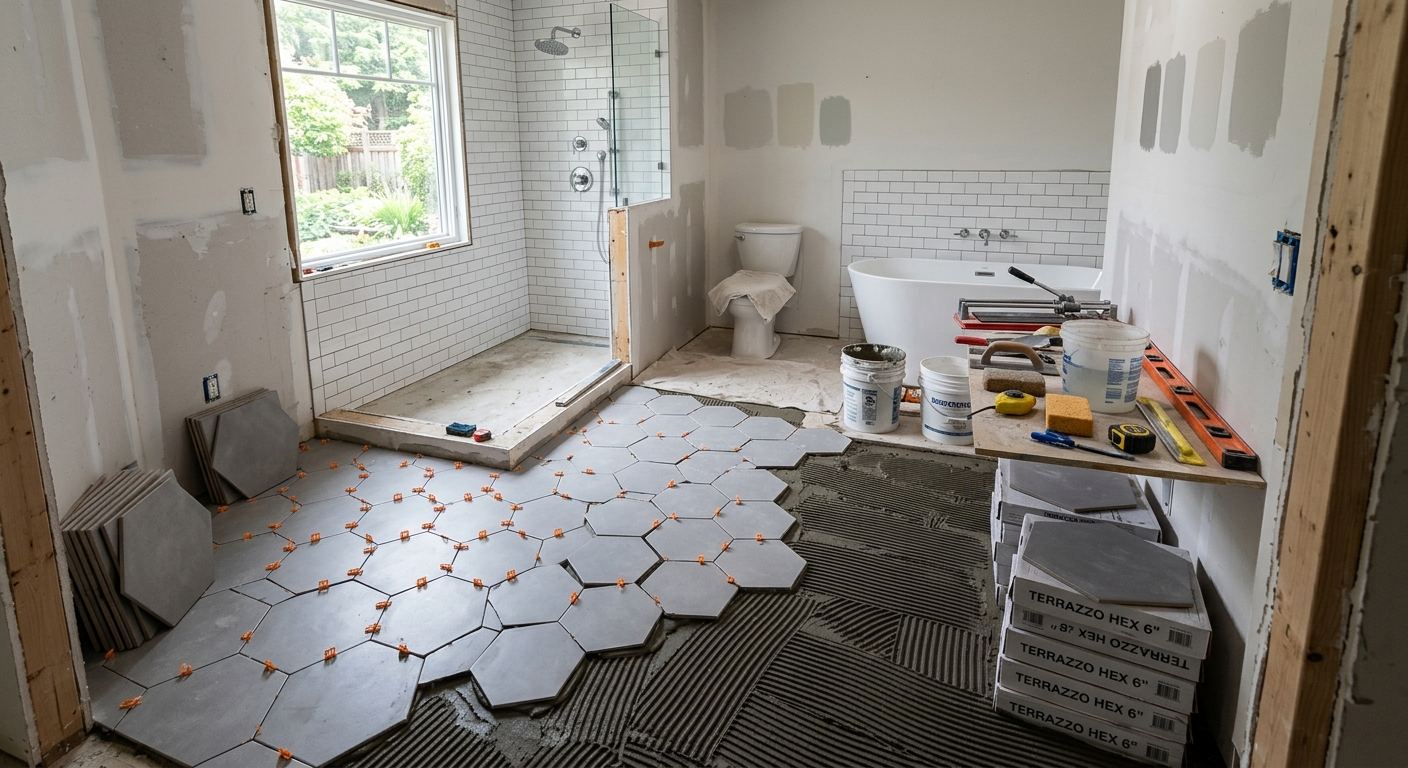
Bathroom renovation options and costs in Port Stanley
Bathroom renovations in Port Stanley typically fall into a few predictable tiers, but the final price comes down to how much you change once the walls and floors are open. With Port Stanley’s population at 2,148 (Statistics Canada, 2021 Census), you’ll generally see fewer competing crews than in the GTA, so scheduling can matter when trades are booked out. Just as important, much of the area’s housing stock reflects post-war and later eras, where older drain runs and dated venting layouts are more common—so it’s not unusual to discover issues like undersized drains or hidden asbestos-containing materials in older floor coverings. In the Toronto economic region, cost pressure is driven mainly by labour rates and the age of the home rather than weather extremes, and that’s why Port Stanley bathroom budgets often track Toronto’s higher contractor pricing. Trades in the area are also in demand around towns like St. Thomas and across the Elgin County corridor, which can tighten availability and push labour premiums for tiling, custom shower builds, and complex plumbing tie-ins.
In practical terms, a cosmetic refresh is the most budget-friendly route, while a high-end full renovation is where labour-intensive work—tile setting, waterproofing, plumbing rough-in, and electrical upgrades—adds up quickly. If you’re targeting a mid-range refresh with new tile and a new vanity, most homeowners can expect to land within the same broad Ontario pricing bands you see across the Toronto market. Use the table below to compare what each scope usually includes, then match your desired finishes to the right project tier.
| Renovation Scope |
What's Included |
Typical Duration |
Price Range |
| Cosmetic refresh (paint, fixtures, accessories only) |
Paint, caulking/trim, replace vanity or faucet (if keeping plumbing locations), toilet replacement, light fixture swap, accessories (towel bar, mirror), deep clean and caulk touch-ups |
2–5 days |
$3,000–$7,500 |
| Mid-range full renovation (new tile, vanity, tub/shower, electrical) |
New vanity and toilet, tub-to-shower or tub/shower refresh with updated valve where needed, tile floor and tub surround, waterproofing, exhaust fan (often with upgraded wiring), GFCI where required, new lighting and mirror, minor plumbing updates |
2–4 weeks |
$12,000–$22,000 |
| High-end full renovation (custom tile, steam shower, heated floors) |
Custom shower or steam-ready build, higher-end tile systems (including premium setting materials), heated floors, upgraded plumbing components/valves, enhanced waterproofing coverage, designer fixtures, recessed niche features, upgraded ventilation strategy |
4–7 weeks |
$22,000–$30,000 |
| Shower-only installation (convert tub to walk-in shower) |
Demo and removal of tub, new shower pan or pan liner, tile on walls and floor, new glass or curtain-ready layout, rough-in adjustments for drain/valve alignment, updated exhaust fan if needed |
2–3 weeks |
$8,500–$16,000 |
| Bathtub replacement or tub-liner install |
Remove and replace tub (or install quality liner), new caulk and sealing, vanity/faucet refresh if specified, verify drain and overflow condition, re-tile or patch surround as required |
5–10 days |
$1,200–$3,500 |
| Tile-only installation (floor + surround, existing layout kept) |
Tile floor and tub/shower surround using your tile, surface prep, waterproofing as required by system choice, grout/seal, reinstall fixtures where plumbing positions are unchanged |
1–3 weeks |
$3,000–$10,000 |
Prices are estimates only and vary by project scope, site access and material selection.
What affects the price of bathroom renovation in Port Stanley
In Ontario, two homeowners in Port Stanley can get quotes that differ by 30–50% for what sounds like the “same” bathroom—because the labour scope changes once a contractor opens up the room. In the Toronto economic region, bathroom renovation pricing is driven less by climate and more by regional labour premiums and the age of the housing stock. Older homes often hide plumbing and venting conditions that need bring-up work: cast-iron or undersized drain sections, galvanized supply lines, and ventilation that’s not adequate for modern moisture control. Once those issues are discovered, the contractor’s quote can move from a tile-only or mid-range plan into full renovation territory.
As a budgeting reality check, discovery of asbestos-containing materials in older floor tiles, vinyl flooring layers, or dated drywall compounds can trigger licensed abatement procedures. That typically adds $1,500–$5,000+ to the budget depending on containment, testing, and how much material must be removed. A second cost driver is electrical and ventilation: adding a proper exhaust fan, updating circuits to include GFCI protection, and making sure bathroom wiring meets current code can add labour and parts even when finishes stay similar.
Concrete examples from Port Stanley projects: (1) keeping the existing tub valve location usually keeps costs closer to the lower end of the shower-only band; moving the valve and drain to straighten the layout can push work into higher labour hours. (2) Choosing large-format porcelain tile often looks cleaner, but it can expose subfloor flatness issues—meaning additional prep if floors are out of level. (3) If you’re upgrading from a basic refresh into a full renovation band like $12,000–$22,000, the price difference often reflects waterproofing quality, substrate repairs, and the number of trades involved—not just “nicer” materials.
| Price Factor |
Why It Matters |
Cost Impact |
| Layout change — moving drain or supply lines requires rough-in work |
Plumbing rough-in, wall opening, and valve/drain alignment increase labour and material |
$2,000–$8,000 |
| Tile selection — large-format porcelain vs. mosaic vs. ceramic |
Complexity of cuts, levelling requirements, and breakage rates vary by product |
$500–$4,000 |
| Fixture tier — builder-grade vs. mid-range vs. designer brands |
Higher tiers cost more and often require more robust installation/finishing |
$800–$6,000 |
| Subfloor condition — rot or unlevel concrete adds scope |
Additional removal, patching, and underlayment/levelling board work |
$1,000–$5,500 |
| Electrical — adding GFCI outlets, exhaust fan, heated floor circuit |
Licensed electrical time plus materials (switches, wiring, fan/thermostat) |
$600–$4,500 |
| Waterproofing method — membrane type and extent |
System coverage and prep steps directly affect leak prevention and warranty confidence |
$700–$4,000 |
| Older-home surprises — asbestos tile, cast-iron drains, galvanized pipes |
Testing/abatement, drain upgrades, shutoffs, and extra patch repairs |
$1,500–$8,000+ |
| Bathroom size — sq ft drives tile and labour time directly |
More square footage equals more setting, waterproofing, grouting, and demo/clean-up time |
$1,000–$6,000 |
Permits & regulations in Ontario
In Ontario, some bathroom updates are straightforward and typically do not require permits, while others almost always do. In general, cosmetic work—like swapping fixtures in the same locations (for example, replacing a vanity, toilet, or faucet without moving supply lines), re-tiling that does not involve structural changes, and repainting—often stays under normal homeowner renovation practice. By contrast, you should expect permits and inspections when you relocate plumbing (moving a drain or supply line), add or modify ventilation that requires new electrical work, or make structural wall changes. Electrical work must comply with Ontario electrical code and be done (or signed off) by a licensed electrician.
A practical homeowner-friendly way to think about it is: if the work touches rough-in systems (plumbing behind walls, new wiring paths, major ventilation changes) or changes the building envelope, that’s the zone where permits are commonly required. If you’re unsure, ask your contractor to confirm which permits are required for your exact scope before work starts.
To verify a contractor in Port Stanley, follow a simple checklist: (1) confirm their Ontario trade licence details on the relevant provincial registry entry the contractor provides; (2) request a certificate of insurance showing general liability and ensure the coverage dates align with your project timeline; (3) verify WSIB/WCB coverage—ask for a clearance letter or proof of account status and ensure their subcontractors are also covered. Do this before you sign, and keep copies for your records.
Choosing tile, waterproofing and fixtures for your Port Stanley bathroom
For Port Stanley bathrooms, your budget is mostly shaped by three material decisions: tile choice, waterproofing system, and fixture tier. First, tile selection determines both appearance and installation complexity. Ceramic is typically the entry-level option and works well for straightforward installs, but it can be more sensitive to uneven substrates. Porcelain is denser and often preferred for floors and wet areas because it’s less porous, which is especially valuable in Ontario bathrooms where humidity needs to be managed year-round.
Second, waterproofing method is what actually prevents mould and call-backs. A basic paint-on membrane can work for certain applications, but bonded sheet membranes or a well-detailed system (including proper corners and transitions) typically offer stronger performance for showers. In the Toronto market, contractors often recommend a system that fully covers the shower walls and floor transitions with correct overlaps—this is where water damage claims are won or lost.
Third, fixture tier impacts both upfront cost and resale perception. Builder-grade fixtures can keep a renovation within the $12,000–$22,000 mid-range band, while designer brands and steam-ready valves push budgets toward the $22,000–$30,000 high-end range.
Here’s a dollar example that usually makes sense: spending an extra $1,000–$2,500 on a higher-performance waterproofing and better substrate prep is often justified because it reduces the risk of hidden leaks—far outweighing the cost of upgrading fixtures after a problem. Conversely, upgrading tile to natural stone without correcting substrate flatness can waste money, because expensive tile is only as good as the foundation beneath it.
| Material / Option |
Pros |
Cons |
Price Range |
| Ceramic tile (floor + walls) |
Good entry price, wide design options, familiar installation methods |
More limited performance vs. porcelain in wet areas; can show substrate unevenness |
$3,000–$7,000 |
| Porcelain tile (floor + walls) |
Better moisture resistance, durable for floors, modern looks with consistent sizing |
May require careful levelling; large-format porcelain increases layout precision needs |
$5,000–$10,000 |
| Natural stone (marble, travertine, slate) |
Premium visual impact, unique veining, high-end feel for resale |
Higher labour and material care; sealing and potential staining/etching risk |
$8,000–$16,000 |
| Frameless glass shower enclosure |
Clean, modern look; easier to keep visually open and bright |
Hardware costs more; must be installed level and square to avoid door issues |
$2,500–$6,500 |
| Prefab tub surround (acrylic) |
Fast install, good waterproofing when properly fitted, easier maintenance |
Less design flexibility than tile; seams and fit become critical |
$1,200–$4,000 |
| Custom shower pan (tile or linear drain) |
Best curb-free access and design control; linear drain can be very sleek |
More waterproofing and framing/detail time; higher labour risk if substrate isn’t prepared |
$4,000–$12,000 |
How to choose a bathroom renovation contractor in Port Stanley
Choosing the right contractor in Port Stanley starts with verifying Ontario compliance and reducing “unknowns” in the quote. First, confirm their Ontario trade licence and ask for their certificate of insurance showing general liability limits that cover your work site. Next, verify WSIB/WCB coverage: request proof such as a clearance letter or account documentation and make sure any subcontractors are covered too—don’t rely on verbal reassurance. If the contractor can’t provide documentation quickly and clearly, that’s a serious warning.
Then get 2–3 itemised written quotes. You want breakdowns that separate labour from materials (tile, thinset/membrane, fixtures, glass) and specify allowance amounts. Look for whether the quote includes permit pull (where required), disposal/recycling, and protection of floors and nearby finishes. Also compare scope definitions: “waterproofing included” should name the method; “electrical included” should specify what fixtures, fan, and circuits are being updated.
Review warranty details before you sign. Ask for workmanship warranty length and confirm whether product/manufacturer warranty is provided directly through the manufacturer and whether it’s transferable. For payment, follow a controlled schedule—never pay more than 10–15% upfront, and use a holdback until the job is complete and cleaned. Finally, get timeline terms in writing: a start date, an estimated completion window, and what happens if lead times delay materials (especially glass and custom tile).
- Request proof of Ontario trade licence before contract signing.
- Confirm current general liability insurance and the project address on the certificate.
- Verify WSIB/WCB clearance letter (and confirm subcontractors are covered).
- Get 2–3 itemised quotes with labour and materials separated.
- Ensure scope lists waterproofing type, thickness/brand (where possible), and coverage areas.
- Clarify exclusions: what’s not included (demo, disposal, drywall patch, trim, toilet wax ring, caulking).
- Confirm permit responsibility: who pulls it and what’s covered in the quote.
- Ask for the exact shower plan: pan liner vs. membrane, curb type, niche locations, drain location.
- Use a clear allowance list for tile/fixtures so pricing doesn’t “surprise” you later.
- Set payment milestones tied to inspection points and material delivery dates.
- Check workmanship warranty length and who honours it if a repair is needed.
- Ask about jobsite protection, dust control, and daily cleanup standards.
Red flags to watch in Port Stanley: vague scopes with no waterproofing method named; quotes that only show a lump sum with no allowances; contractors asking for large upfront payments (more than 15%); no proof of WSIB/WCB or liability insurance; and timelines that ignore lead times for glass, valves, and tile—without written contingency.
Frequently asked questions — bathroom renovation in Port Stanley
Do I need waterproofing behind the tile?
In almost all Port Stanley shower and wet-area installs, yes—waterproofing behind the tile is standard practice, and reputable Ontario contractors build it into the scope. Even when you keep the same layout, the risk is in grout joints, penetrations (valve stems, showerheads, niche shelves), and changes in plane where water can travel behind tile. Waterproofing methods vary: membrane systems (often sheet or detailed bonded systems) are selected based on whether it’s a tub surround, full shower, or custom shower pan with a linear drain. If you’re renovating toward a mid-range full bath budget like $12,000–$22,000, waterproofing should be clearly specified in your quote—not bundled vaguely as “tile prep.”
How do I compare bathroom renovation quotes?
Comparing quotes is easiest when you force them to be apples-to-apples. Ask each contractor for an itemised breakdown: demo and disposal, subfloor prep, waterproofing method, tile labour, fixture allowances, plumbing rough-in work, ventilation/electrical scope, and any permit-related work. Pay close attention to exclusions and allowances—if one quote includes exhaust fan + new wiring and another doesn’t, you can see differences quickly. Also compare bathroom size and layout: tile-only estimates change drastically with square footage and whether they include transitions, niches, or floor-to-wall waterproofing. In Ontario, it’s normal for quotes in the Toronto region to vary widely due to labour and older-home unknowns, so don’t judge only by total price.
Can I live at home during a bathroom renovation in Port Stanley?
Often, yes—many Port Stanley homeowners do remain living in the home, especially for cosmetic refreshes or tile-focused work. That said, a full demo and waterproofing phase can make the main bathroom unusable for a period, and plumbing access may be limited while rough-ins and inspections happen. For shower-only conversions or mid-range full renovations, plan for at least a short “limited use” window. Practical tip: set up a temporary wash routine (a backup sink setup or access to another bathroom if available) and confirm with your contractor the daily cleanup and dust control plan. If the job lands in the $12,000–$30,000 range, you should assume the disruption window is longer than a fixture swap and schedule your life around that phase.
What's the best bathtub material for a Port Stanley home?
There isn’t one material that’s “best” for every Port Stanley bathroom, but common choices depend on how much you want to change and how your home is built. Acrylic tubs and tub-liner systems are popular because they’re lighter and often easier to install with less structural adjustment. For a full renovation, replacement tubs can suit a refresh budget like $1,200–$3,500 if you’re keeping the plumbing locations. Cast iron tubs are extremely durable but are heavy and usually cost more to install; they’re typically chosen when you’re targeting a particular aesthetic and your substructure is ready. Whatever you choose, the more important factor is correct drainage connection, level installation, and proper sealing at the tub-to-tile junction.
Is it worth renovating a bathroom before selling in Port Stanley?
Renovating can be worth it in Port Stanley, especially if your bathroom is dated, has layout or moisture issues, or has surfaces that buyers will interpret as “maintenance risk.” The best ROI usually comes from addressing waterproofing, ventilation, and fixtures—because buyers notice mouldy caulking, poor exhaust performance, and worn finishes. If the existing plumbing is functional and you keep the layout, a cosmetic refresh plus targeted tile changes can be a lower-risk approach than a full reroute. If you’re considering a mid-range full renovation (often within $12,000–$22,000), focus upgrades where they reduce future repairs: reliable shower waterproofing, clean modern lighting, and updated ventilation. High-end builds (near $22,000–$30,000) can impress, but they’re best when the rest of the home supports that level of finish.
How do I plan a bathroom renovation on a tight budget in Port Stanley?
To renovate on a tight budget in Ontario, start by protecting the scope: keep the layout and plumbing locations if possible, and concentrate money where it prevents problems. A practical plan is often “cosmetic refresh + selective tile” rather than full rerouting—this avoids the labour-heavy parts of moving drain/supply lines and reduces the chance of discovering hidden plumbing or venting work. Ask for a quote that clearly separates tile-only work from shower conversion work so you can stage the project. If your budget is closer to fixture replacement or a bath/tub liner approach, work within the $1,200–$3,500 band and allocate remaining funds to waterproofing and ventilation upgrades. Finally, build a contingency for older-home surprises—especially if pre-1980 materials are present—since hidden conditions can change scope quickly.