Bathroom renovation options and costs in Smooth Rock Falls
Smooth Rock Falls homeowners usually face the same core choice: do you want a quick refresh, or do you want a full rebuild that addresses dated plumbing, venting, and waterproofing? With 87.1% of homes in the area built before 1981, many bathrooms are coming out of mid-century renovations where drain lines, supply routes, and electrical layouts weren’t designed for today’s exhaust requirements or modern fixtures. And because 1,200 people call the community home, contractor availability is often tighter than in larger Ontario centres, so pricing can reflect scheduling and labour demand. (Statistics Canada, 2021 Census)
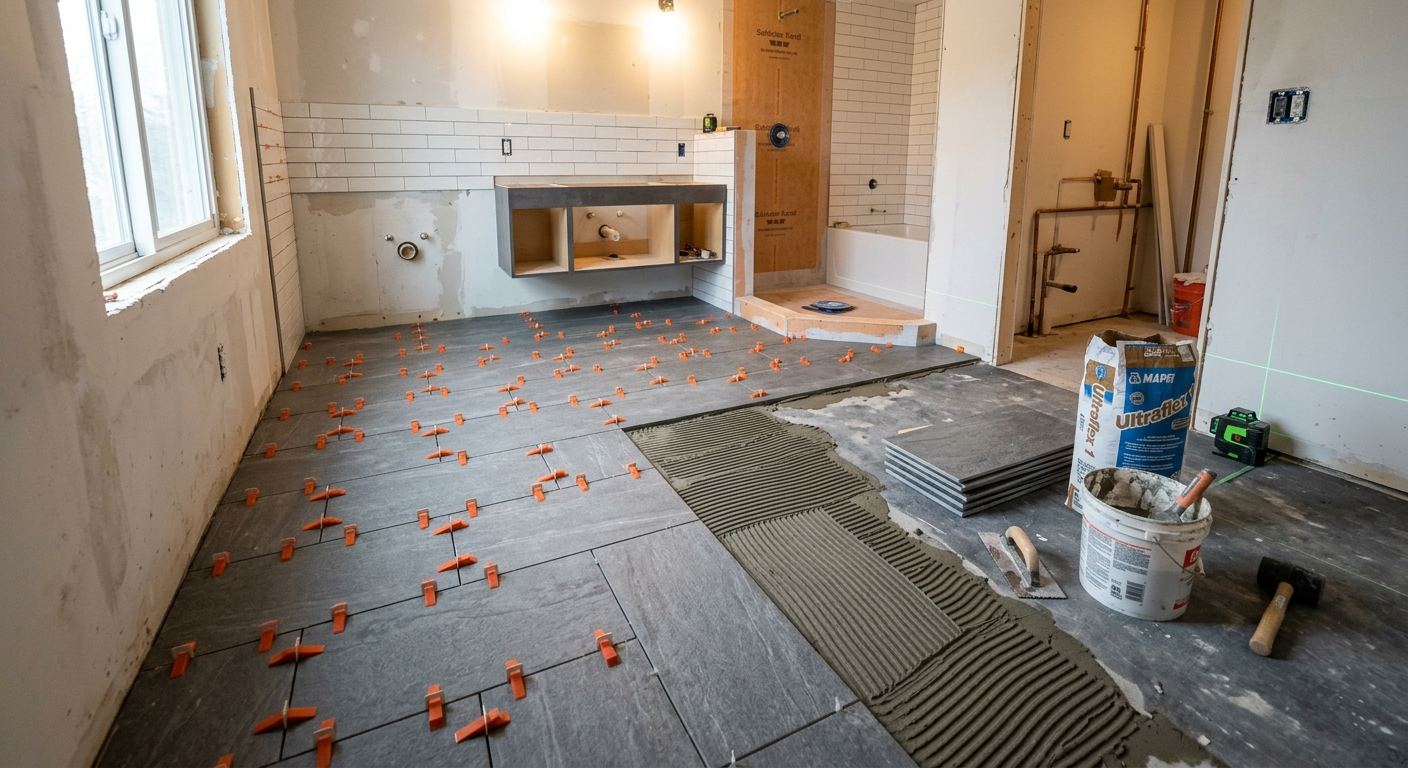
In Northeast Ontario, bathroom costs are shaped less by coastal humidity swings and more by what’s hidden once walls are opened. Many projects start with tile removal and wall access, then quickly turn into rough-in updates (shutoffs, venting paths, and subfloor corrections) that push labour hours and materials up. We also see discovery risk: older flooring or drywall compounds can contain asbestos, which triggers abatement steps and adds both time and cost.
Trade demand is especially high for tiling and waterproofing work around the downtown/Smooth Rock Falls core, where older single-detached homes concentrate and where homeowners often plan renos around heating-season timing. The next table compares realistic budget ranges for the most common scopes, so you can line up your goals with a number you can trust.
| Renovation Scope |
What's Included |
Typical Duration |
Price Range |
| Cosmetic refresh (paint, fixtures, accessories only) |
New vanity top or vanity refresh, toilet swap, faucet replacement, mirror/accessories, paint/trim touch-ups; existing tile kept |
3–7 days |
$3,000 – $8,000 |
| Mid-range full renovation (new tile, vanity, tub/shower, electrical) |
Tile floor + surround, new tub or standard shower base, new vanity, new exhaust fan (typical), GFCI upgrade if needed, basic plumbing updates, waterproofing, disposal |
2–3 weeks |
$15,000 – $27,000 |
| High-end full renovation (custom tile, steam shower, heated floors) |
Custom shower or tub deck, premium tile and membranes, heated floor circuit, upgraded venting plan, higher-end fixtures/valves, niche/bench details, enhanced waterproofing system |
3–5 weeks |
$27,000 – $35,000 |
| Shower-only installation (convert tub to walk-in shower) |
Remove tub, plumbing tie-ins for shower drain/supplies, waterproofing, new walk-in shower pan/base or tile pan, glass (if selected), exhaust assessment |
1.5–3 weeks |
$10,000 – $22,000 |
| Bathtub replacement or tub-liner install |
Old tub removal, new tub and trim install; liner install where suitable; basic plumbing tie-in, recaulk, quick waterproofing upgrades at seams |
2–7 days |
$2,000 – $6,000 |
| Tile-only installation (floor + surround, existing layout kept) |
Demo limited to tile areas, tile set with waterproofing for wet areas, grout/seal, transitions/trim, reinstall fixtures if re-used |
5–14 days |
$2,500 – $9,500 |
Prices are estimates only and vary by project scope, site access and material selection.
What affects the price of bathroom renovation in Smooth Rock Falls
Even when two quotes look similar, the final price in the Northeast and across Ontario can swing by 30–50% because bathroom renos are labour-heavy and scope changes once walls open. In small communities, the qualified pool of plumbers, electricians, and tile setters is smaller, so scheduling and minimum job charges matter. Separately, the age of the housing stock dominates cost more than weather: most homes were built before 1981, and older assemblies often hide cast-iron or copper drain sections, older venting routes, and supply piping that doesn’t suit modern valves and shower controls.
Once you start opening up, a “mid-range” plan can expand quickly. For example, finding cast-iron/corrosion at the drain stack or upgrading galvanized supply lines can add days of rough-in and testing. If pre-1985 materials reveal asbestos in vinyl floor tile or drywall compound, you’re looking at abatement protocols; that discovery commonly adds $1,500–$5,000+ depending on affected area and containment needs. Ventilation upgrades also add labour because older bathrooms may be under-ventilated for today’s moisture loads, even though climate isn’t the main cost driver inside the bathroom envelope.
Concrete Smooth Rock Falls examples: (1) keeping the same layout lowers cost because you avoid moving drains and redoing waterproofing runs; (2) switching from standard builder-grade tile to large-format porcelain can increase setting time and subfloor prep—often a net cost jump inside a full renovation budget (for reference, many mid-range full renovations land around $15,000 – $27,000); and (3) adding heated floors or steam features moves you toward the high-end range around $27,000 – $35,000.
| Price Factor |
Why It Matters |
Cost Impact |
| Layout change — moving drain or supply lines requires rough-in work |
New plumbing rough-in, patching, and re-waterproofing wet walls increase labour hours and material waste |
Often +$3,000 – $10,000 |
| Tile selection — large-format porcelain vs. mosaic vs. ceramic |
Harder tile demands better prep, more careful cuts, and longer setting/mortaring time |
Often +$800 – $4,500 |
| Fixture tier — builder-grade vs. mid-range vs. designer brands |
Higher tiers cost more and may require compatible valves, trim kits, or specialty plumbing components |
Often +$500 – $3,500 |
| Subfloor condition — rot or unlevel concrete adds scope |
Repairs, new underlayment, and leveling are critical before tile and waterproofing |
Often +$1,000 – $6,000 |
| Electrical — adding GFCI outlets, exhaust fan, heated floor circuit |
New circuits and correct vent fan wiring require licensed work and can trigger panel/cable upgrades |
Often +$600 – $4,500 |
| Waterproofing method — membrane type and extent |
Better membranes reduce failure risk, but add materials and prep time |
Often +$400 – $2,500 |
| Older-home surprises — asbestos tile, cast-iron drains, galvanized pipes |
Abatement, demo expansion, and disposal increase both time and permitting/inspection effort |
Often +$1,500 – $8,000+ |
| Bathroom size — sq ft drives tile and labour time directly |
More square footage means more mortar, grout, waterproofing coverage, and setting time |
Often +$1,000 – $7,000+ |
Permits & regulations in Ontario
In Ontario, many bathroom updates don’t require a permit, especially when you’re keeping the plumbing and walls in the same place. Cosmetic work—like swapping a vanity, replacing a toilet, changing a faucet, repainting, or retiling the same floor area and shower surround without moving plumbing—typically stays in the “no permit” bucket. However, permits often become necessary when you change the building’s plumbing or electrical systems or when you alter structural components.
Typically, work that does require a permit includes: relocating plumbing rough-ins (moving a drain line, moving a supply line, or changing where the shower/tub connects), adding or changing mechanical ventilation involving new ducting, and any electrical changes that add circuits or modify how power is routed (especially with exhaust fans or heated floors). Any structural wall changes (opening load-bearing areas or relocating framing) also triggers review. Work that typically does NOT require a permit is: fixture swaps in the same locations (toilet/vanity/faucet), replacing the same fan with like-for-like where permitted/local requirements are satisfied, and cosmetic tile replacement using the same layout.
Step-by-step verification for a homeowner in Smooth Rock Falls: (1) ask for the contractor’s Ontario trade licence number and confirm it via the province’s online licence registry; (2) request a Certificate of Insurance showing liability coverage and ensure it matches the project address; (3) confirm Workers’ compensation coverage (WSIB/WCB) for the contractor and workers—ask for the clearance letter or proof document; and (4) keep copies of the licence and insurance for your records before the first payment.
Choosing tile, waterproofing and fixtures for your Smooth Rock Falls bathroom
In Smooth Rock Falls, the biggest budget swing usually comes from three decisions: tile choice, waterproofing method, and fixture tier. Start with tile. If you’re aiming to control cost, ceramic tile (entry-level) can be a good fit for floors and walls, but it often brings higher breakage during cutting and a shorter service life in high-traffic areas compared with porcelain. Porcelain is typically the sweet spot for a renovation budget in Ontario because it’s denser, takes wear better, and is easier to match across floors and surrounds. If you want a premium look, natural stone (marble, travertine, slate) can look stunning, but it needs sealing, careful layout planning, and more skilled installation.
Next is waterproofing—the part most people underestimate. Ontario bathrooms deal with real daily moisture, so the right system prevents mould and grout deterioration. A quality paint-on membrane can work in limited applications, but bonded sheet membranes or a complete schluter-system approach provide better protection when properly installed over the substrate. This matters in older homes too: you may need subfloor leveling before any waterproofing goes down.
Finally, fixture tier affects both budget and resale. Builder-grade fixtures control first costs, while mid-range and designer brands often come with better valves, smoother finishes, and more robust parts. A practical example: upgrading the shower valve and trim as part of a mid-range renovation (often $15,000 – $27,000 for a full project) is usually better value than adding expensive floor tile if the waterproofing system is basic—because a failed shower wall can destroy the savings.
| Material / Option |
Pros |
Cons |
Price Range |
| Ceramic tile (floor + walls) |
Lower material cost, wide style options, good for budget renovations |
Less durable than porcelain in heavy-traffic areas; can chip at edges if substrate isn’t flat |
$35 – $90 per tile/mat style equivalent (installed ranges vary by scope) |
| Porcelain tile (floor + walls) |
More wear-resistant, better moisture performance, often easier to maintain |
Heavier tile can mean more careful handling and substrate prep; labour may increase with large-format |
$60 – $130 |
| Natural stone (marble, travertine, slate) |
High-end look and texture; premium curb appeal |
Requires sealing and more maintenance; installation is slower and more sensitive to layout |
$120 – $220 |
| Frameless glass shower enclosure |
Modern look, easier cleaning, visually enlarges the shower area |
Higher hardware/material cost; needs accurate framing/tiling alignment |
$1,800 – $4,500 |
| Prefab tub surround (acrylic) |
Fast install, consistent waterproofing surface, usually lower labour |
Fewer design options; repairs can be more complex if damaged |
$600 – $1,800 |
| Custom shower pan (tile or linear drain) |
Seam-resilient design, modern linear-drain look, tailored layout |
More prep and waterproofing work; increases overall shower conversion cost |
$2,000 – $6,000 |
How to choose a bathroom renovation contractor in Smooth Rock Falls
Choosing the right contractor matters more in Smooth Rock Falls than in bigger cities because small communities can’t absorb delays well—materials, tile scheduling, and plumbing rough-in windows all affect the final date. Start by verifying Ontario licensing and insurance. Ask for the contractor’s Ontario trade licence (and the licence type that matches the work), a Certificate of Liability Insurance with the project named, and proof of WSIB/WCB coverage (clearance letter or equivalent). If they can’t provide documents on request, that’s a serious warning sign.
Next, get 2–3 itemised written quotes—not a single lump sum. You want labour and materials broken out so you can tell whether waterproofing, disposal, and electrical tie-ins are included or “allowances.” Pay close attention to the exclusions list: disposal included or not, permit pull included or not, and what happens if asbestos abatement is needed. Warranties should be explicit: the workmanship warranty length, the product/manufacturer warranties, and whether they’re transferable if you sell your home.
For payments, never pay more than 10–15% upfront. Hold back a portion until the key close-in steps are complete (waterproofing verified, tile/grout sealed, and fixtures tested). Timeline matters too: require a start date and an estimated completion date in writing, along with what weather/ordering delays mean for the schedule.
- Ask for a licence number and confirm it matches the scope of work.
- Request liability insurance and confirm coverage limits are current.
- Get WSIB/WCB proof (clearance letter) before work begins.
- Get an itemised quote: labour, tile materials, membranes, fixtures, disposal.
- Confirm whether permits/inspections are included for plumbing/electrical changes.
- Verify waterproofing method in writing (membrane type and coverage areas).
- Ask who supplies and installs the exhaust fan and whether ducting is assessed.
- Ensure disposal/dump fees are included (or stated as an allowance).
- Confirm lead times for glass, vanities, and specialty tile.
- Require a detailed warranty statement for workmanship and products.
- Use a payment schedule with a holdback until punch list items are completed.
- Get start/completion dates and a process for change orders.
In Smooth Rock Falls, common red flags include: quotes with vague “allowances” for tile/fixtures that don’t match the stated finish level; contractors who can’t show insurance/WSIB documentation; no written scope for waterproofing or exhaust ventilation; inconsistent payment terms (asking for a large deposit up front); and builders who don’t explain what happens if asbestos or hidden drain issues are found once walls are open.
Frequently asked questions — bathroom renovation in Smooth Rock Falls
How long does a bathroom renovation take in Smooth Rock Falls?
Most bathrooms in Smooth Rock Falls finish in about 2–3 weeks for a mid-range full renovation, assuming materials are on hand and no major hidden issues appear. Cosmetic refreshes can be as short as 3–7 days, while high-end projects with custom tiling, steam features, or heated floors often stretch to 3–5 weeks. Older homes built before 1981 are common locally, so it’s wise to plan for possible delays if plumbing, subfloor, or waterproofing prep needs extra attention. Timing can also shift when tile orders or glass enclosures take longer. A good contractor will give you a start date and a realistic completion estimate in writing, plus a clear explanation of lead times and change orders.
Do I need a permit for a bathroom renovation in Ontario?
Often you don’t need a permit for simple cosmetic updates in Ontario—like replacing a vanity, swapping fixtures in the same location, repainting, or retile-for-retile work that keeps the same plumbing layout. Permits are more likely when you relocate plumbing (moving a drain or supply line), change ventilation with new ducting or wiring, or add electrical components like new exhaust fan circuits, GFCI upgrades, or heated floor circuits. Any electrical work must meet provincial code and be done/signed off by a licensed electrician. For Smooth Rock Falls homeowners, the best approach is to ask your contractor what parts trigger permits before work starts, then verify licence and insurance so inspections and responsibilities are clear.
What's the best tile for a bathroom in Smooth Rock Falls?
The “best” tile depends on your budget and how your shower and floor are built, but most homeowners in Smooth Rock Falls do well with porcelain for floors and key wet-area walls because it’s durable and moisture-resistant. Ceramic can work for a tighter budget, especially if your subfloor is flat and prep is done properly. Natural stone looks luxurious, but it needs sealing and more careful installation. In a full renovation budget (commonly $15,000 – $27,000 for mid-range scopes), it’s usually smarter to spend on waterproofing and proper substrate prep first, then select tile to match your lifestyle. If your layout isn’t changing, tile decisions can be controlled more tightly than if plumbing moves.
Should I do a tub-to-shower conversion?
A tub-to-shower conversion is often worth it if you want easier access, plan to age in place, or simply prefer a modern walk-in layout. It can also be a good choice when you’re already renovating and expect to replace worn fixtures and re-waterproof the shower area. That said, older homes sometimes require drain/supply tie-in updates, and those hidden changes can increase cost. Typical shower-only installations for a tub conversion often land around $6,000 – $16,000 depending on glass, pan type, waterproofing complexity, and whether electrical upgrades are required for a new exhaust fan. If your household uses the tub regularly (kids, soaks, mobility needs), a liner or reglaze option may be cheaper than a full conversion.
How do I prevent mold in a Smooth Rock Falls bathroom?
Mould prevention is mostly about moisture management and correct waterproofing, not just cleaning. In Smooth Rock Falls, where bathrooms are used daily, the key steps are: install a reliable exhaust fan sized and ducted correctly; use an appropriate waterproofing system behind the tile (membranes that match your substrate and shower geometry); ensure the pan/wet-area transitions are sealed; and avoid cutting corners on grout and sealant where applicable. In older houses built before 1981, you may uncover inadequate ventilation paths or subfloor issues that trap moisture—so the prep work is critical. Ask your contractor to describe the waterproofing method they’ll use and how they’ll test for proper drainage and seal integrity before final trim goes on.
What adds the most resale value in a bathroom reno?
Resale value tends to rise most when the renovation improves both function and perceived quality. In practice, buyers notice: a modern, well-lit vanity; a clean, durable tile installation; a leak-free shower (or an upgraded tub surround) with professional waterproofing; and strong ventilation with a properly installed exhaust fan. In older Northeast Ontario homes, updating rough-in plumbing and electrical safety features like GFCI can also be important, because it reduces “future problems” anxiety. If you’re targeting resale without overbuilding, a mid-range full renovation around $15,000 – $27,000 often offers the best balance—especially when you keep the layout and focus the budget on waterproofing, tile craftsmanship, and fixture reliability.