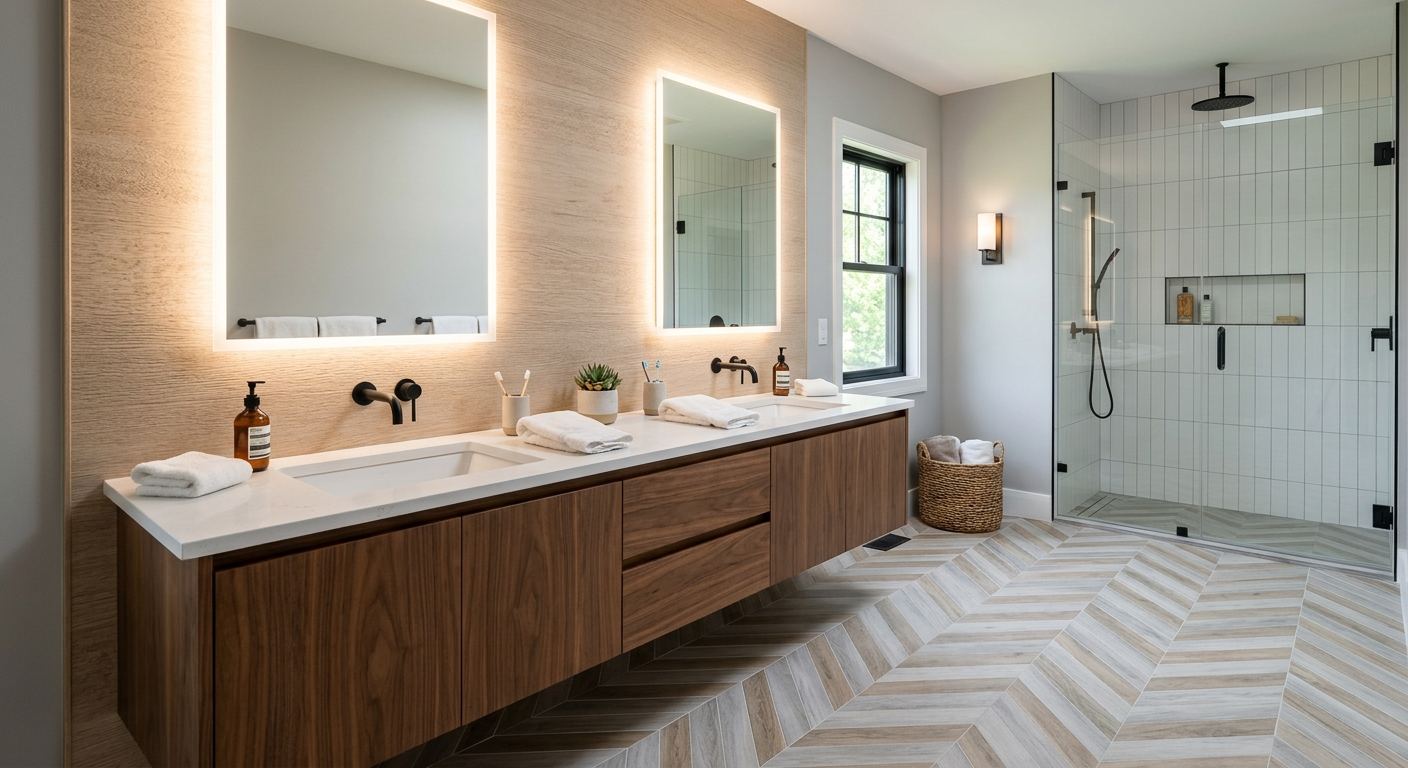
Bathroom renovation options and costs in West Humber-Clairville
West Humber-Clairville homeowners renovate for comfort, resale, and fixes after leaks—but the budget in this part of Toronto is usually shaped by the age of the housing stock and the labour premium in the GTA. With a population of 33,312 (Statistics Canada, 2021 Census), the area benefits from steady contractor availability, yet quotes can swing widely once walls come down in older 1960s–1980s homes. Those builds often have dated drain layouts, potential cast-iron or undersized drains, and sometimes asbestos-containing materials around older floor tile or drywall compounds—issues that don’t show up until demolition. Even though Toronto’s day-to-day “weather” doesn’t drive bathroom costs as much as in some climates, indoor humidity control still matters: poor venting and waterproofing failures lead to mould callbacks, which adds labour and rework.
In practice, the Toronto economic region’s bathroom renovations tend to land in the low-to-mid five figures for full work, and higher for custom showers, extensive plumbing updates, or heated floors. Contractors are especially in demand in the busy retail-and-housing corridors around West Humber-Clairville and the Humber College/airport-adjacent area, where turnover is high and homeowners want faster, code-compliant upgrades. If you’re trying to choose between options, start with what you’re changing—cosmetics are the cheapest, while layout/plumbing upgrades move you into full-reno pricing. Use the table below to compare realistic ranges for common scopes in West Humber-Clairville.
| Renovation Scope |
What's Included |
Typical Duration |
Price Range |
| Cosmetic refresh (paint, fixtures, accessories only) |
Paint, swap vanity/lighting (if already connected), replace toilet/vanity top, recaulk, add towel bars & mirrors; no plumbing relocation; no wall/floor demo beyond minor patching |
3–7 days |
$3,000 – $8,000 |
| Mid-range full renovation (new tile, vanity, tub/shower, electrical) |
Demo + disposal, new tub/shower or reglaze tub, new vanity, updated exhaust fan, GFCI/AFCI-compliant receptacle updates, waterproofing, floor + surround tile, basic plumbing refresh (shut-offs, valves), patch/drywall |
2–4 weeks |
$12,000 – $22,000 |
| High-end full renovation (custom tile, steam shower, heated floors) |
Custom shower (tile/linear drain), upgraded waterproofing system, heated flooring circuit, higher-end fixtures, frameless glass, more extensive plumbing/vent updates as needed, premium tile and trims, electrical upgrades |
4–7 weeks |
$22,000 – $30,000 |
| Shower-only installation (convert tub to walk-in shower) |
Demo tub area, new shower pan/linear drain or standard drain, waterproofing, tile surround, frameless/hinged glass option, valve and trim changes, venting check, floor tile |
2–3.5 weeks |
$8,000 – $16,000 |
| Bathtub replacement or tub-liner install |
Remove and replace tub and surround (or install liner), new faucet trim (if needed), re-waterproofing of walls, recaulk and silicone sealing, basic floor protection and matching floor patch |
1–2 weeks |
$1,200 – $4,000 |
| Tile-only installation (floor + surround, existing layout kept) |
Remove existing tile/threshold as required, substrate prep, waterproofing membrane, install new floor and wall tile, grouting, finishing trims; no major plumbing relocation |
1.5–3 weeks |
$3,000 – $10,000 |
Prices are estimates only and vary by project scope, site access and material selection.
What affects the price of bathroom renovation in West Humber-Clairville
In West Humber-Clairville and across the GTA, two quotes for “the same” bathroom can differ by 30–50% because the biggest drivers aren’t the outdoor weather—they’re labour rates, how much labour-intensive tile work you want, and how often older homes need plumbing/venting upgrades once walls are opened. Toronto’s skilled trades command a premium hourly rate, and bathrooms are high-work-density projects: tiling, waterproofing detailing, and finish carpentry all stack labour hours. In older post-war and 1960s–1980s homes (common throughout the Toronto economic region), hidden conditions like cast-iron drains, undersized venting, galvanized supply lines, or outdated shut-offs can inflate scope and push your project from a mid-range budget into the higher end of local ranges. Discovery of asbestos-containing materials (for example, older vinyl floor tile or certain drywall compounds) can trigger licensed abatement, adding roughly $1,500 – $5,000+ to the budget depending on extent.
Concrete examples I see locally: (1) keeping the current tub location can keep your full-reno budget closer to the $12,000 – $22,000 band, while converting to a walk-in shower with a linear drain often requires more substrate work and drain adjustments. (2) Upgrading the exhaust fan and adding a properly positioned GFCI/AFCI-compliant receptacle can be straightforward; however, in some older homes the wiring route is awkward once drywall is removed, which adds cost. (3) If the subfloor is uneven or has rot near the tub flange, crews may need extra underlayment/leveling and time-consuming tile rework; that can narrow your savings even when you stay with tile-only pricing like $3,000 – $10,000.
| Price Factor |
Why It Matters |
Cost Impact |
| Layout change — moving drain or supply lines requires rough-in work |
Moving plumbing means opening walls, re-routing drains/vents, and re-inspection |
Often adds $2,000 – $8,000 depending on how far lines must travel |
| Tile selection — large-format porcelain vs. mosaic vs. ceramic |
Harder substrates, more cutting, more labour for mosaics and large-format alignment |
Can swing $1,000 – $6,000 once labour and waste are included |
| Fixture tier — builder-grade vs. mid-range vs. designer brands |
Higher tiers cost more and may require additional installation components/parts |
Commonly $800 – $4,500 difference |
| Subfloor condition — rot or unlevel concrete adds scope |
Tile needs a stable, properly sloped base; repairs often mean extra demo and patching |
Frequently $500 – $3,500+ |
| Electrical — adding GFCI outlets, exhaust fan, heated floor circuit |
Bathrooms require safe protection; new circuits/additions take licensed time |
Typically $700 – $4,000 depending on complexity |
| Waterproofing method — membrane type and extent |
Good waterproofing prevents mould and expensive rework; better systems can cost more but last longer |
Often $600 – $2,500+ |
| Older-home surprises — asbestos tile, cast-iron drains, galvanized pipes |
Abatement, pipe replacement, and vent corrections expand scope after discovery |
Roughly $1,500 – $10,000+ depending on severity |
| Bathroom size — sq ft drives tile and labour time directly |
More surface area = more thinset, more cuts, more waterproofing, more cure time |
Typically $1,000 – $7,000+ across small-to-large bathrooms |
Permits & regulations in Ontario
In Ontario, many “finish-only” bathroom updates are straightforward. Cosmetic work—like swapping a toilet, vanity, mirror, light fixture (if you’re not adding circuits), repainting, replacing a tub’s visible trim, or retiling without moving plumbing—often does not require a permit. The moment you relocate plumbing (move drains or supply lines), modify ventilation in a way that includes electrical/circuit work, or make structural wall changes, permits and inspections become common requirements. Electrical work must comply with Ontario electrical code and be done or signed off by a licensed electrician, particularly when adding a new exhaust fan circuit, upgrading receptacles, or installing heated flooring circuits.
In West Humber-Clairville, the best workflow is: (1) ask your contractor what specifically requires a permit for your scope, (2) confirm they will pull permits and schedule inspections where applicable, and (3) get the project manager’s plan in writing before demolition. To verify Ontario licensing and insurance, homeowners should:
- Check the contractor’s Ontario trade licence and business details through the appropriate provincial public registry listings (ask them for the licence number first).
- Request a certificate of insurance (liability) showing current coverage limits.
- Confirm WSIB/WCB coverage or the equivalent proof of coverage document for workers.
- Ask for the clearance letter or confirmation form (many contractors can provide it quickly).
- Review the quote to see whether permits, inspection fees, and disposal are included.
That verification protects you if something goes wrong behind the walls—especially in older homes where hidden plumbing and electrical conditions are more common.
Choosing tile, waterproofing and fixtures for your West Humber-Clairville bathroom
In West Humber-Clairville, the three material decisions that most reliably control both budget and long-term performance are tile choice, waterproofing system, and fixture tier. First, tile: ceramic is a good entry point for floors and walls, but it’s less forgiving for heavy wet-area performance than porcelain in many GTA bathrooms because of higher absorption. Porcelain typically costs more but handles moisture better and usually makes sense when you want a “forever” look without brittle cracking. Natural stone (marble, travertine, slate) looks premium, but it can add cost in both material and installation labour—expect additional prep, sealing, and careful layout.
Second, waterproofing: Ontario’s indoor humidity cycles mean the bathroom needs a system that stays sealed under temperature swings and daily shower use. A quality paint-on membrane can work for certain assemblies, but for most shower floors/walls, many contractors recommend a bonded sheet membrane or a professionally installed system (including compatible seams and corners). The right choice reduces mould risk and prevents costly tear-outs.
Third, fixture tier: builder-grade fixtures can keep the project near the mid-range band, while mid-range and designer brands often raise the budget but can improve resale appeal and longevity. For a specific example, if upgrading from basic tile to mid-tier porcelain pushes your tile budget up by roughly $1,500 – $3,000, that spend is often justified when paired with a proper waterproofing membrane and correct backer/subfloor prep—because it prevents the “cheap look” from becoming an expensive failure.
| Material / Option |
Pros |
Cons |
Price Range |
| Ceramic tile (floor + walls) |
Budget-friendly, wide design selection, good for many bathroom wall applications |
Can be more moisture-sensitive than porcelain for floors; more prone to chipping if subfloor isn’t stable |
$3,000 – $7,500 |
| Porcelain tile (floor + walls) |
Low absorption, durable for wet areas, typically easier to keep looking new |
Higher material cost; large-format installation demands careful layout and setting |
$5,000 – $10,000 |
| Natural stone (marble, travertine, slate) |
High-end appearance, unique variation and luxury feel |
More labour and finishing, requires sealing/maintenance, heavier and more expensive cuts |
$8,000 – $16,000 |
| Frameless glass shower enclosure |
Modern look, easier visual cleaning, usually increases perceived value |
Costly hardware, needs accurate measurements and strong waterproofing/anchoring |
$2,500 – $6,500 |
| Prefab tub surround (acrylic) |
Fast install, consistent finish, good for budgets and timelines |
Less “custom” look than tile; edges/joins require careful sealing |
$1,200 – $3,500 |
| Custom shower pan (tile or linear drain) |
Best long-term performance when done right; excellent for curbless/modern layouts |
More prep and waterproofing labour; drain/lope planning must be precise |
$4,000 – $12,000 |
How to choose a bathroom renovation contractor in West Humber-Clairville
Choosing a contractor is less about the lowest bid and more about proof of capability. Start by verifying Ontario trade licensing (ask for licence number and confirm it matches their business), then request liability insurance documentation with current coverage limits. Next, confirm they carry WSIB/WCB coverage for workers; a reputable Ontario contractor should be able to provide a clearance letter or the coverage confirmation without pushing back. If a contractor can’t provide any of this, that’s a major warning sign—especially in West Humber-Clairville where older homes can expose plumbing, venting, and wiring complications once demolition starts.
Get 2–3 itemised written quotes. You want labour and materials broken out, not just one lump sum. Scope clarity matters: ask whether permits are included, how disposal is handled, who protects the home during demolition, and whether they include replacing damaged subfloor or drywall if found during the demo. Also confirm warranties: workmanship should be clearly stated (and ideally longer for shower waterproofing and tile installation), product/manufacturer warranties should be documented, and you should ask if warranties are transferable to a future homeowner.
For payment terms, never pay more than 10–15% up front. Hold back a portion until completion and final walkthrough. Finally, insist on a written timeline with a start date, milestone dates, and a completion estimate that reflects typical cure/dry times for waterproofing and tile.
- Licence number and business address verified before scheduling.
- Certificate of liability insurance provided and current.
- WSIB/WCB proof and clearance letter confirmed.
- Itemised quote: separate labour, materials, permits, disposal, and contingency.
- Clear waterproofing scope (membrane type, coverage areas, seam treatment).
- Tile scope includes substrate prep, waterproofing, and caulking details.
- Permit pull responsibility stated in writing (and inspection included if required).
- Product brands and model numbers listed for fixtures and shower components.
- Warranty length for workmanship and which items it covers.
- Schedule includes cure time for membranes and grout.
- Payment schedule capped with a final holdback until punch-list completion.
- Protection plan for floors/adjacent rooms and dust control during demo.
Red flags in West Humber-Clairville: (1) quotes that exclude disposal and demo prep while still sounding “complete”; (2) no mention of waterproofing method or membrane system; (3) vague electrical/plumbing language like “we’ll handle it” without listing what’s being updated; (4) refusal to provide insurance/WSIB documentation; (5) demanding large upfront payments (beyond 10–15%) or pushing to pay in cash without a paper trail.
Frequently asked questions — bathroom renovation in West Humber-Clairville
Is it worth renovating a bathroom before selling in West Humber-Clairville?
Usually, yes—especially when the current bathroom is dated or has visible wear (old tile, worn caulking, weak ventilation, or staining that suggests a waterproofing history). In West Humber-Clairville, buyers often compare bathrooms quickly, so a clean, modern finish can help show the home’s condition. That said, don’t overspend on a full custom build if the layout is structurally fine and plumbing is sound; sometimes a mid-range refresh that lands around the $12,000 – $22,000 band delivers the best value. The biggest ROI comes from preventing future problems: proper waterproofing, correct exhaust fan setup, and fixing any older-home drain/vent surprises discovered during demo. If you’re planning to sell soon, ask contractors for options that improve the “buyer impression” while keeping change orders under control.
How do I plan a bathroom renovation on a tight budget in West Humber-Clairville?
Start by protecting your labour spend: keep the plumbing footprint (same tub/shower/toilet locations) when possible. Moving drains and supply lines is one of the fastest ways to blow through a budget in Toronto, because it adds rough-in work, time, and inspection needs. Choose a simpler finish strategy: for example, tile-only upgrades can fit the $3,000 – $10,000 band if you already have a solid substrate and waterproofing plan. Prioritise where money prevents failure—good waterproofing and proper venting—because rework after mould is far more expensive. If your wiring or exhaust fan is outdated, consider upgrading to meet safe operation requirements even if you keep the rest cosmetic. Finally, get itemised quotes and ask for “trade-offs” (e.g., keep the layout, upgrade waterproofing, select mid-range fixtures instead of designer).
What's the difference between a cosmetic and a full bathroom renovation?
A cosmetic renovation is usually “no major demolition”: paint, lighting swaps, mirror updates, accessory changes, and sometimes replacing the vanity or toilet if you’re not moving plumbing. A full renovation means the contractor typically removes finishes down to the substrate, then reinstalls tile, waterproofing, fixtures, and often upgrades electrical (like GFCI/AFCI-compliant receptacles) and ventilation. In older West Humber-Clairville homes, full renovations are more likely to uncover issues such as cast-iron drain conditions, venting corrections, or even asbestos-containing materials that require licensed abatement. That’s why full renos often fall into the $12,000 – $30,000 local five-figure ranges, while cosmetic refreshes are commonly much lower. If you’re unsure, ask for a pre-demolition assessment and a clearly defined scope so you’re not paying full-reno prices for cosmetic work.
How do I choose the right contractor for my bathroom in West Humber-Clairville?
In Ontario, choose a contractor who can prove licensing, insurance, and worker coverage. Ask for their Ontario trade licence details, a certificate of liability insurance, and proof of WSIB/WCB coverage (often provided with a clearance letter). Then request 2–3 itemised written quotes so you can compare labour and materials separately—especially for waterproofing and tile prep. Carefully read inclusions and exclusions: disposal, permit pull (if required), electrical scope, and whether they repair damaged drywall/subfloor found after demo. Confirm warranty terms: workmanship coverage for tile and shower waterproofing should be stated clearly, along with product/manufacturer warranties. Finally, protect yourself with payment terms: keep upfront payments around 10–15% and hold back until the final walkthrough.
What's the most common mistake homeowners make in bathroom renovations?
The most common mistake is treating a bathroom like a “finish-only” project when the hidden conditions are the real problem—especially in older West Humber-Clairville housing. People often choose beautiful tile or fixtures but skip or underestimate waterproofing detail, ventilation upgrades, or the need to update drains/vents. Once mould or leaks show up, the “cheap” decision becomes expensive because you may have to remove tile and redo the membrane. Another frequent error is accepting a lump-sum quote without clear scope for permits, disposal, and electrical/plumbing work. This is how costs escalate after demolition. A good contractor will plan for Ontario code compliance and clearly explain what they’ll verify before closing walls—so you don’t pay for surprises midstream.
How long does tile installation take in a West Humber-Clairville bathroom?
Tile time depends on bathroom size, tile type, and substrate readiness, but typical installation schedules in West Humber-Clairville range from about 1.5 to 3 weeks for a floor + surround (not counting the full demolition/drywall phase). Porcelain and mosaic patterns can take longer due to cutting and layout, while large-format tile requires careful setting to avoid lippage. The timeline also depends on waterproofing: membrane application and cure times must be followed before tile goes on. If you’re doing tile-only work and the substrate is already flat and sound, you can often stay nearer the shorter end. If older-home surprises appear (uneven subfloor, weak cement board, or moisture issues), expect more prep time before installation starts.