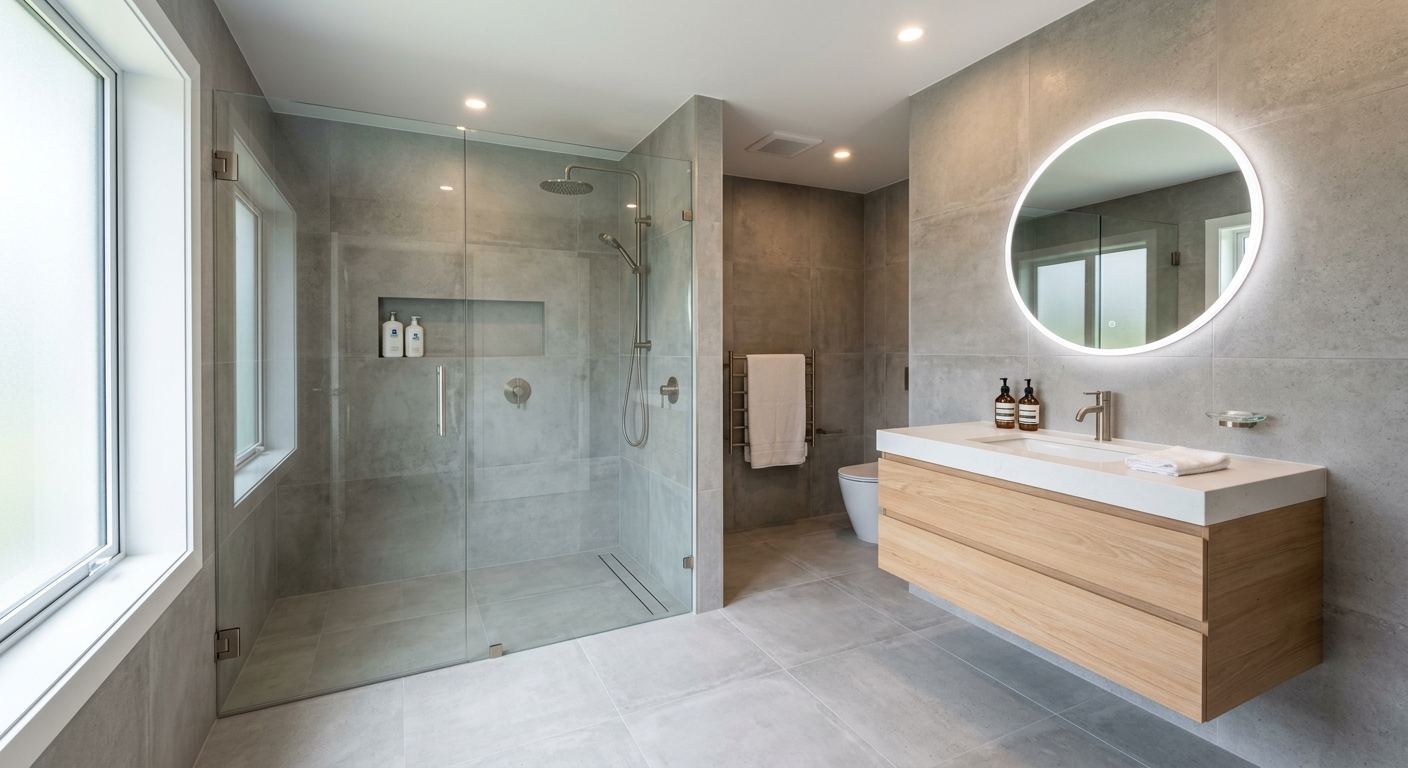
Bathroom renovation options and costs in Uptown
In Uptown, BC, the price of a bathroom renovation typically comes down to how much you change versus what you simply refresh. The good news is that many homeowners in Uptown are working with mid-century or older homes—Uptown’s population was 9,273 in 2021 (Statistics Canada, 2021 Census)—which means contractors are used to the “real world” issues that show up once walls come open. In many pre-1980 layouts, it’s common to find dated plumbing routings and drains that can be approaching the end of their service life, and that’s when renovations start to feel more expensive than a basic quote.
In the Lower Mainland–Southwest region, labour rates and the age of the housing stock are the main cost drivers—more than day-to-day climate. Metro Vancouver-area demand keeps plumbers, tilers, and electricians busy, so even “minor” revisions can require scheduling multiple trades. Once you open up a bathroom, projects often expand to include plumbing and venting upgrades to bring systems closer to current British Columbia requirements. You can also run into contamination concerns in older flooring or drywall finishes, which can add time and remediation.
For homeowners in Uptown’s older, denser pockets—where basements and narrow access are common—trade demand is especially high for qualified tilers and electricians because tight spaces slow down installation. If you’re ready to compare options, the table below breaks down common scopes and realistic Lower Mainland pricing to help you plan your next step.
| Renovation Scope |
What's Included |
Typical Duration |
Price Range |
| Cosmetic refresh (paint, fixtures, accessories only) |
New vanity or tap fixtures (no plumbing relocation), toilet refresh if reinstalled, paint, caulking, basic accessory updates |
3–5 days |
$5,500 – $12,000 |
| Mid-range full renovation (new tile, vanity, tub/shower, electrical) |
Demolition, waterproofing, floor + surround tile, vanity install, tub/shower or surround replacement, exhaust fan upgrade, GFCI electrical, disposal |
2–4 weeks |
$22,000 – $34,000 |
| High-end full renovation (custom tile, steam shower, heated floors) |
Custom layout work, premium waterproofing systems, designer tile installation, steam shower components, heated floor circuit, higher-tier fixtures and lighting |
4–7 weeks |
$38,000 – $55,000 |
| Shower-only installation (convert tub to walk-in shower) |
Remove tub, build shower base, waterproofing, tile (floor + walls), frameless or standard glass option, new valves (as needed), exhaust fan tie-in |
2–3 weeks |
$15,500 – $28,000 |
| Bathtub replacement or tub-liner install |
Replace tub (or install liner where appropriate), recaulk and seal, refit surrounding surfaces, limited tile touch-up or small surround work |
5–10 days |
$3,000 – $7,500 |
| Tile-only installation (floor + surround, existing layout kept) |
Tile removal to extent needed, cement board or prep as required, waterproofing, tile supply and install, grout/finishing, trim installation |
1–2 weeks |
$6,000 – $18,000 |
Prices are estimates only and vary by project scope, site access and material selection.
What affects the price of bathroom renovation in Uptown
Even when two homeowners ask for “the same” bathroom update, quotes across Lower Mainland–Southwest can differ by 30–50%—and that gap is wider when you compare against other parts of British Columbia where labour demand and trade availability are different. In this region, labour rates and scheduling pressure tend to be higher, and the housing stock is often older, so discovery work is a common cost driver rather than an exception.
In many Uptown-area homes, once drywall and finishes are opened, you may need drain stack or supply-line upgrades (for example, aged cast-iron drains or older galvanized supply plumbing). Also, older bathrooms often have insufficient ventilation, so adding a properly sized exhaust fan and ducting becomes part of “getting it right,” not just cosmetic work. That’s why the typical full renovation range of $18,000 – $45,000 can stretch toward the high end when plumbing/venting changes are uncovered. Discovery of asbestos-containing materials (commonly in older floor tile, drywall compound, or insulation) can add abatement requirements and cost—commonly in the $1,500 – $5,000+ range depending on findings and containment needs.
Here are a few concrete examples from Uptown: moving a toilet or vanity to improve storage usually triggers rough-in plumbing work and more wall opening, which raises labour and disposal. Upgrading from entry-level ceramic tile to porcelain often increases material cost and installation time due to larger-format panels and tighter layout tolerances. On the other hand, if your layout stays the same and your subfloor is sound, you can keep a shower conversion closer to the mid band—while a full bathroom with heated floors and custom glass typically heads into the higher $18,000 – $45,000 territory.
| Price Factor |
Why It Matters |
Cost Impact |
| Layout change — moving drain or supply lines requires rough-in work |
Alters plumbing pathway, wall opening, and venting connections |
Often +$3,000 to +$10,000 depending on distance and access |
| Tile selection — large-format porcelain vs. mosaic vs. ceramic |
Harder materials, more cutting, tighter tolerances, more waste |
Material + labour can add $2,000 to $6,000+ |
| Fixture tier — builder-grade vs. mid-range vs. designer brands |
Premium valves, shower systems, and lighting raise supply costs |
Often +$1,000 to +$5,000+ total |
| Subfloor condition — rot or unlevel concrete adds scope |
Requires prep, patching, and sometimes structural corrections |
Commonly +$800 to +$4,000 |
| Electrical — adding GFCI outlets, exhaust fan, heated floor circuit |
Licensed electrical, circuit planning, and code-compliant installs |
Often +$1,200 to +$6,000 |
| Waterproofing method — membrane type and extent |
Better systems reduce failure risk in BC humidity |
Usually +$500 to +$2,500 (but lowers long-term failure risk) |
| Older-home surprises — asbestos tile, cast-iron drains, galvanized pipes |
Remediation, disposal, and additional plumbing labour |
Can add $1,500–$5,000+ for abatement and more for plumbing |
| Bathroom size — sq ft drives tile and labour time directly |
More area means more tile, grout, waterproofing, and finishing |
Often shifts total by several thousand dollars from small vs. large layouts |
Permits & regulations in British Columbia
In British Columbia, cosmetic updates in a bathroom—like swapping fixtures, repainting, replacing a vanity, or retiling without moving plumbing—typically don’t require a permit. However, anything that changes the way plumbing or electrical is installed is where permits usually come into play. Relocating plumbing (moving a drain or supply lines), adding a new exhaust fan (especially when it involves new ducting and electrical circuits), or making structural wall changes generally requires permits and inspections.
For electrical, the work must meet provincial code and be performed by a licensed electrician (or done under appropriate authorization) with sign-off. For plumbing rough-in changes—like cutting into walls to reroute supply lines or adjusting drains—permits and inspection are commonly required before covering the work. If the renovation includes areas affected by older finishes, remediation steps must follow applicable safety requirements before trades proceed.
To verify a contractor in Uptown, ask for three things up front: (1) their BC trade licence/registration relevant to the work scope, which you can confirm through provincial online registry lookups; (2) a current certificate of insurance (liability) matching the project address and dates; and (3) coverage documentation for workplace risk—commonly WCB clearance/coverage letters depending on their setup. Then request that the contractor’s scope clearly identifies what permits they will pull, whether disposal is included, and when inspections are scheduled before closing walls and floors.
Choosing tile, waterproofing and fixtures for your Uptown bathroom
In Uptown, your three biggest budget levers are tile choice, waterproofing method, and fixture tier. First, tile: ceramic is usually the most budget-friendly and works well for smaller areas if you’re keeping the layout straightforward. Porcelain costs more, but it’s denser, handles moisture better for floors, and can reduce maintenance over time when installed with correct substrate prep. Natural stone (marble, travertine, slate) looks premium, but it increases risk and labour because it often needs extra care in selection, sealing, and leveling for a clean finish.
Second, waterproofing: British Columbia bathrooms deal with frequent moisture loads and long drying times during cooler seasons, so the system matters. A paint-on membrane can work in some limited scenarios, while bonded sheet membranes and detail-focused systems (including proper corners, seams, and transitions around niches and curbs) tend to be more reliable for long-term mould prevention. Third, fixtures: builder-grade trims can keep your initial cost down, but mid-range or designer shower valves and showerheads often have better performance and can improve daily comfort and resale appeal.
Where the price difference is justified: for example, spending more on porcelain tile and a robust waterproofing package for a shower conversion is usually worth it because the high labour is already there—your incremental material upgrade helps longevity. Conversely, upgrading every accessory to designer levels when you’re keeping a basic ceramic surround often doesn’t give you the same return as improving waterproofing details and ventilation.
| Material / Option |
Pros |
Cons |
Price Range |
| Ceramic tile (floor + walls) |
Lower material cost, wide style selection, good for wall use |
Can be less durable for floors depending on grade; requires correct setting for longevity |
$2,000 – $6,000 |
| Porcelain tile (floor + walls) |
More moisture-resistant, durable for floors, cleaner look with modern large formats |
Higher material cost; more precise layout and cutting |
$4,000 – $10,000 |
| Natural stone (marble, travertine, slate) |
High-end look, unique veining, strong curb appeal |
Needs sealing/maintenance; variation can increase waste; heavier install requirements |
$7,000 – $18,000 |
| Frameless glass shower enclosure |
Light, modern look; makes small bathrooms feel larger |
Hardware and installation cost; careful waterproofing and sealing required at edges |
$2,500 – $7,500 |
| Prefab tub surround (acrylic) |
Faster install, predictable performance, easier maintenance |
Less design flexibility than tile; seams must be sealed correctly |
$1,500 – $4,000 |
| Custom shower pan (tile or linear drain) |
Better accessibility options; improved drainage with linear designs; premium finish |
More prep and waterproofing detail work; higher labour cost |
$3,500 – $12,000 |
How to choose a bathroom renovation contractor in Uptown
Start by confirming British Columbia trade licensing and insurance before you compare prices. For each contractor, ask what licence(s) apply to the work they will do in your bathroom (plumbing/electrical/tile-related tasks depending on the scope) and verify it through the applicable online registry. Next, request a certificate of liability insurance—make sure it lists your address/project and covers the renovation period. For workplace coverage, confirm they can provide appropriate WCB/WCB clearance documentation where required; don’t accept “we’re covered” without paperwork you can review.
Then get 2–3 itemised written quotes, not lump sums. A good quote breaks labour and materials separately (tile, waterproofing, membranes, valves, glass, fixtures, disposal) and spells out what’s included in demolition and reinstallation. Read the exclusions line-by-line: removals, asbestos risk allowances, subfloor repairs, permit pull fees, and whether the price includes drywall reinstatement to a finished level. Also ask about warranty structure—workmanship warranty length (typical coverage is at least 1 year, often longer for parts of the system), manufacturer warranty for products, and whether warranties are transferable if you sell your home.
For payments, use a schedule that limits risk: never pay more than 10–15% upfront, and hold back a portion until the final walk-through and punch-list items are completed. Finally, require a written timeline with a start date target and a realistic completion estimate, since scheduling trades in Uptown can affect lead times and job sequencing.
- Verify BC trade licence/registration relevant to the scope (not just a general company registration).
- Request and review certificate of liability insurance before signing.
- Confirm WCB/WCB clearance documentation (or equivalent coverage proof) in writing.
- Get 2–3 itemised quotes with labour + materials breakdown (no vague “misc.” lines).
- Confirm whether permits are included, and who pulls them.
- Ask what happens if asbestos-containing materials are discovered during demo (abatement allowance and process).
- Require waterproofing method details (membrane type, how corners/niches are treated).
- Ask who is responsible for electrical sign-off if new circuits (exhaust fan/heated floors) are added.
- Confirm disposal, dumpster costs, and haul-away are included or listed separately.
- Get warranty terms in writing: workmanship, product warranties, and transferability.
- Use a payment plan with no more than 10–15% upfront and a final holdback until completion.
- Require a written schedule: start date, rough-in timing, tile lead times, and completion estimate.
Red flags I see with bathroom contractors in Uptown include: quotes that don’t specify waterproofing materials and methods, “all-in” pricing that omits permits/disposal, pressure to pay large deposits early, refusing to provide licence/insurance proof, and missing itemised exclusions for potential older-home findings like subfloor repairs or hidden plumbing issues.
Frequently asked questions — bathroom renovation in Uptown
How much does a walk-in shower cost in Uptown?
In Uptown, a walk-in shower typically costs more than a simple fixture swap because it usually includes demolition, a new shower base, waterproofing, tile, and often electrical updates for a better exhaust fan. For most conversions (turning a tub into a walk-in), you’ll commonly see pricing around the shower installation band of $8,000 – $25,000, with many projects landing in the mid range when the layout stays similar. If you want custom linear drains, premium glass, or you discover older plumbing that needs rerouting or venting upgrades, the budget can move upward quickly. Because Uptown sits within the Lower Mainland–Southwest where labour demand is strong, tight scheduling for tilers and plumbers can add cost if the project needs extra touch-ups or rework.
What's the ROI on a bathroom renovation?
ROI varies by neighbourhood condition and what you replace, but a bathroom renovation in Uptown generally improves livability first and resale second—especially when you address outdated finishes, ventilation, and safety concerns. High-impact upgrades include proper waterproofing, modern ventilation (exhaust fan), and durable tile/fixtures that age well. Pure cosmetic refreshes can be cost-effective if your plumbing and subfloor are solid, while full renovations usually make the biggest difference when older drains, dated supply lines, or ventilation deficiencies exist. Homeowners often compare a full renovation band of $18,000 – $45,000 to the long-term reliability of a properly built shower/tub and updated electrical. In British Columbia’s moisture-heavy bathroom conditions, the ROI is often tied to preventing premature failure (which protects the home value).
Do I need waterproofing behind the tile?
Yes—under typical British Columbia renovation practices, you should waterproof behind shower and wet-area tile. Tile alone is not a waterproof system; water can migrate behind it through grout lines and tile edges over time. The right approach depends on your shower configuration: a full shower needs a properly detailed membrane system to cover the correct surfaces and transitions (including seams, corners, and around niches or plumbing penetrations). In Uptown’s coastal Lower Mainland environment, moisture exposure is a constant, so robust waterproofing is the best way to prevent mould-prone failures later. When you’re converting a tub to a walk-in shower or doing a tile-only refresh in a wet zone, confirm the contractor’s waterproofing method in writing—membrane type, coverage, and how they handle overlaps and edges.
How do I compare bathroom renovation quotes?
Compare quotes using scope clarity, not just the total price. Ask each contractor for an itemised breakdown: demolition, waterproofing system, tile supply and labour, exhaust fan and electrical work, plumbing rough-in allowance, glass enclosure costs (if any), and disposal. Confirm what permits are included and whether the contractor will pull them before rough-in inspections. Make sure the quotes specify products or at least tiers (for fixtures and tile), because swapping “budget tile” for porcelain can shift budgets significantly. Also compare contingencies for older-home surprises common in Uptown (like cast-iron drains, galvanized supply lines, or potential asbestos-containing materials in pre-1985 finishes). A thorough quote protects you from hidden scope creep that can inflate a project well beyond the expected $18,000 – $45,000 full-reno band.
Can I live at home during a bathroom renovation in Uptown?
Often you can live at home, but it depends on the scope and which bathroom you’re renovating. For cosmetic refreshes or tile-only work, many households continue living in the home with minimal disruption. For mid-range full renovations or shower conversions, daily access to plumbing may be interrupted during demolition and waterproofing/tile curing. A practical plan in Uptown is to keep usage of the second bathroom (if you have one) and arrange temporary bathing options—especially during the 1–2 days when walls are open and again when waterproofing is curing. Ask the contractor for a written schedule and daily work plan. If you choose a shower installation, you may still be fine living at home, but expect limitations near the work zone. For budgets aligned with the shower conversion band of $8,000 – $25,000, disruptions are usually shorter than with full gut renovations.
What's the best bathtub material for a Uptown home?
The “best” bathtub material depends on your priorities: comfort, weight/load considerations, replacement ease, and how it will be finished. Common options include acrylic tubs (often the most cost-effective and lighter for installation), enameled steel (durable and stable, but heavier), and cast iron (very durable but heavy and pricier to replace). In Uptown renovations, acrylic is frequently the practical choice for value because it supports faster installation and pairs well with waterproofing and tub surround strategies. If your budget is closer to a bathtub replacement band of $1,500 – $6,000, you’ll likely be looking at acrylic replacement or a tub-liner approach where conditions allow. If you have older subfloor or plumbing constraints, the most important “material” decision is often whether the base and surround can be rebuilt correctly with waterproofing and proper drainage.