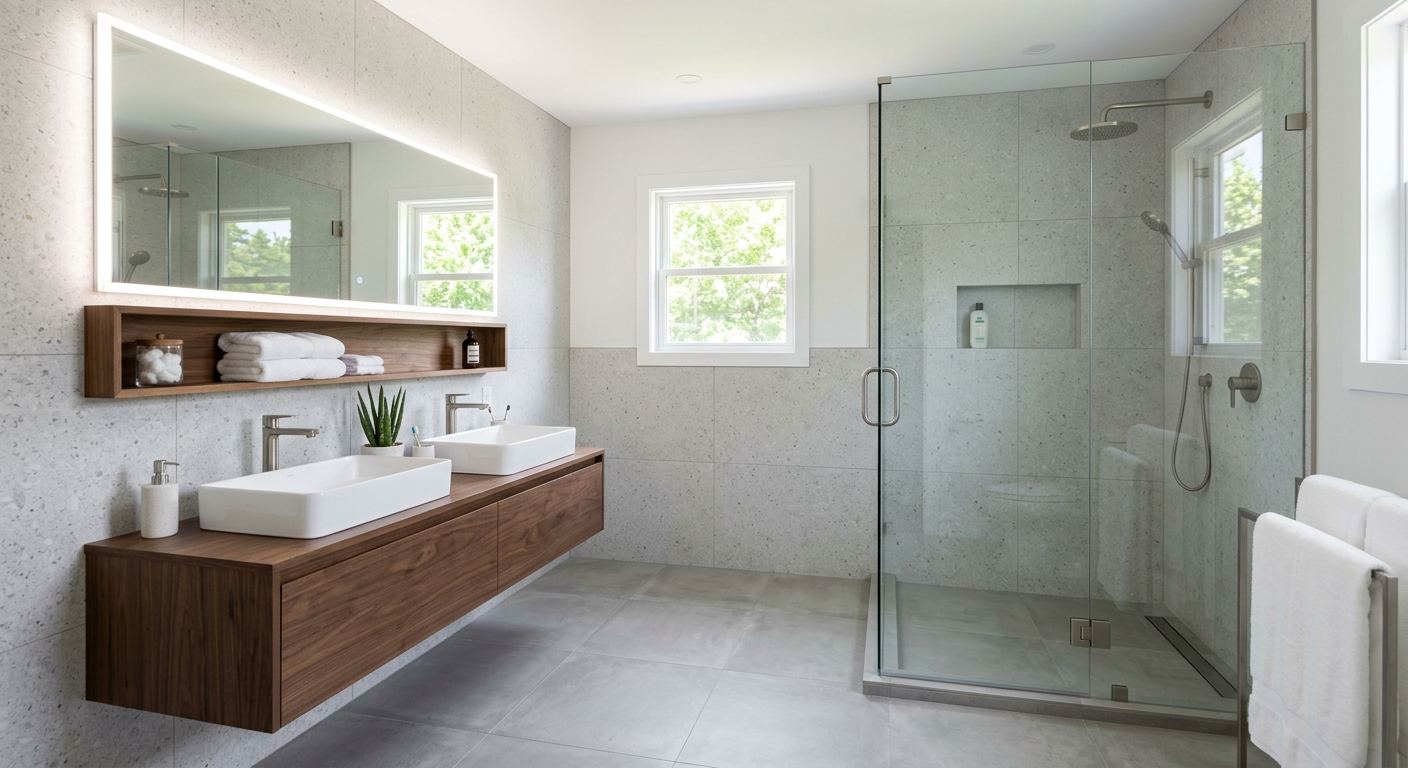
Bathroom renovation options and costs in East End-Danforth
Renovating a bathroom in East End-Danforth is all about choosing the right level of work for your home’s age, your materials, and how much hidden plumbing or electrical you uncover once walls and floors open. In this part of Toronto, you’ll often see older post-war and 1960s–1980s housing stock (Statistics Canada, 2021 Census), which commonly means dated drain layouts, original venting, and occasional surprises like aged wiring or deteriorated subflooring. That’s a big reason GTA budgets tend to cluster in the low- to mid–five figures for true “full renovations” rather than staying close to national averages. East End-Danforth itself is compact and busy—access, parking, and permit scheduling can add small but real overhead, especially around busier lanes and multi-unit properties.
Ontario costs here are driven more by skilled labour availability and the scope of labour-intensive tasks (tiling, shower builds, plumbing rough-in) than by weather. Toronto’s humid indoor conditions can also punish shortcuts: poor waterproofing shows up faster as grout darkens and caulking fails. In older walk-ups near Greektown (Danforth area) and the Broadview–Danforth corridor, bathroom trades are particularly in demand because many homeowners refurbish on staggered timelines as units turn over.
Below are realistic options you can compare line-by-line, then we’ll break down what pushes one quote higher than another.
| Renovation Scope |
What's Included |
Typical Duration |
Price Range |
| Cosmetic refresh (paint, fixtures, accessories only) |
New toilet/vanity top or vanity unit (no plumbing relocation), paint, replace light fixture, update accessories, re-caulk, replace mirrors (no structural changes) |
2–4 days |
$4,500–$9,000 |
| Mid-range full renovation (new tile, vanity, tub/shower, electrical) |
Demolition, waterproofing, floor and wall tile, new vanity and taps, tub or tub-shower surround replacement, new/exhaust fan (with electrical work), new GFCI outlet where required, improved ventilation and finishes |
10–16 days |
$12,000–$22,000 |
| High-end full renovation (custom tile, steam shower, heated floors) |
Custom shower or tub surround with premium tile, upgraded waterproofing system, heated floor wiring and controls, designer fixtures, recessed niches, improved electrical layout (fan + lighting), higher-end materials and trims |
16–24 days |
$22,000–$30,000 |
| Shower-only installation (convert tub to walk-in shower) |
Remove tub, build walk-in shower with waterproofing and tile or linear drain option, new valve/trim, new glass (if chosen), ventilation check and exhaust fan upgrades if needed |
8–14 days |
$10,000–$18,000 |
| Bathtub replacement or tub-liner install |
Drain and supply hookup, replace tub and surround where applicable, new caulking and sealants; liner option includes prep and surface coating (limited to specific tubs/conditions) |
3–7 days |
$2,500–$5,000 |
| Tile-only installation (floor + surround, existing layout kept) |
Remove existing tile (as needed), prepare subfloor, install new floor and shower/tub surround tile, grout/seal, re-caulk edges; assumes plumbing stays in place |
7–12 days |
$6,500–$14,000 |
Prices are estimates only and vary by project scope, site access and material selection.
What affects the price of bathroom renovation in East End-Danforth
Even when two neighbours request “the same” bathroom renovation in East End-Danforth, quotes can land 30–50% apart across Toronto and Ontario. The usual culprits are labour rates and the age of the housing stock, not the outdoors weather. Toronto trades command premium hourly rates, and bathroom work is labour-intensive: proper tiling, custom shower builds, and plumbing rough-in take time. In older homes, you’re more likely to open walls and find cast-iron or undersized drains that need upgrading for proper flow and venting, plus galvanized supply lines that may need replacement. Those are scope multipliers, not minor add-ons.
Asbestos is another real driver of cost. In pre-1985 construction, asbestos-containing materials can appear in vinyl floor tile or older drywall compound; once discovered, abatement protocols kick in and budgets can increase by about $1,500–$5,000+ depending on quantity and containment requirements. For a typical tub-to-shower conversion or a mid-range full renovation (often in the $12,000–$22,000 band), these hidden conditions are where the project can drift upward toward the upper end of local ranges.
Concrete examples we see in East End-Danforth: a slow-draining tub tied to an old drain stack often forces drain reconfiguration; an exhaust fan venting path that’s blocked by old framing may require duct routing (labour + drywall); and an out-of-level subfloor can add underlayment, smoothing, or even partial subfloor replacement before tile goes down. When the layout stays the same and plumbing is already code-compliant, you can keep costs closer to the $6,500–$14,000 tile-only range.
| Price Factor |
Why It Matters |
Cost Impact |
| Layout change — moving drain or supply lines |
Requires plumbing rough-in, patching, and sometimes vent adjustments to meet Ontario code |
$3,000–$8,000+ |
| Tile selection — large-format porcelain vs. mosaic vs. ceramic |
Harder cuts, more labour time, and higher material waste on complex patterns |
$1,000–$6,000 |
| Fixture tier — builder-grade vs. mid-range vs. designer brands |
Higher-end valves, trims, and finishes cost more and often require extra install time |
$500–$4,500 |
| Subfloor condition |
Rot, soft spots, or unlevel concrete may need replacement, membrane correction, or additional prep |
$800–$4,000+ |
| Electrical — adding GFCI outlets, exhaust fan, heated floor circuit |
Licensed electrical work and new circuits increase labour and inspection coordination |
$500–$3,500+ |
| Waterproofing method — membrane type and extent |
Better systems and full coverage reduce failure risk but cost more materials and labour |
$600–$3,000 |
| Older-home surprises — asbestos tile, cast-iron drains, galvanized pipes |
Abatement, drain/vent rework, and pipe replacement expand scope and schedule |
$1,500–$10,000+ |
| Bathroom size — sq ft drives tile and labour time directly |
More area means more thinset, setting time, backer prep, and waterproofing coverage |
~$1,000–$5,000 per size/complexity jump |
Permits & regulations in Ontario
In Ontario, many cosmetic bathroom updates don’t require a permit—especially if you’re not changing the plumbing, structure, or electrical scope. Typically, swaps such as replacing a vanity, mirror, toilet, faucet trim (without relocating the valve), paint, re-caulking, and retiling over the same layout usually fall under “like-for-like” finishes. However, permits are commonly required when you relocate plumbing (moving drain or supply lines), add or change exhaust fan ducting in a way that involves new venting, and when electrical work includes adding circuits or new fixtures that require inspection. Any electrical work must meet Ontario code and be done or signed off by a licensed electrician.
Plumbing rough-in changes also typically require a permit and inspection before walls are closed. Before starting in East End-Danforth, ask your contractor to confirm whether a permit will be pulled and who coordinates it. Step-by-step, you can verify the contractor’s Ontario trade licence and insurance this way:
- Search the online registry for the contractor/trade licence information provided on their proposal.
- Request a current certificate of insurance (liability) with expiry dates and confirm it covers renovation work.
- Ask for proof of WSIB/WCB coverage (as applicable to their workforce) or confirmation of clearance.
- Verify the electrician and plumber are licensed for their specific scope (ask for licence numbers or confirmation sheets).
- Confirm whether permit fees and inspections are included in the quote, and if not, who pays them.
Choosing tile, waterproofing and fixtures for your East End-Danforth bathroom
In East End-Danforth, your budget is usually determined by three material decisions: (1) tile choice, (2) waterproofing method, and (3) fixture tier. Tile affects both material cost and installation complexity. Ceramic is a good entry option if your goal is a clean look with straightforward installation, but porcelain is often the safer “mid” choice for floors and wet zones due to better durability and lower absorption. Natural stone (marble, travertine, slate) looks premium, but it demands careful sealing, more prep, and higher labour precision—especially on shower floors and transitions.
Waterproofing is where Ontario bathroom humidity punishes mistakes. A paint-on membrane is often limited in where it’s appropriate; bonded sheet membrane or a robust system designed for showers is typically stronger for long-term performance. If you choose a shower that’s tiled to the ceiling with niches or a linear drain, you’ll want the waterproofing system that matches those details rather than a one-size-fits-all approach.
Fixtures—builder-grade versus mid-range versus designer—affect cost and resale appeal, but they shouldn’t be chosen in isolation. For example, spending extra on a mid-range thermostatic valve and trim can be justified if you’re already doing a full renovation in the $12,000–$22,000 band; the “real” value comes from reliability and a smoother daily experience. Conversely, paying for natural stone while doing only a cosmetic refresh (and keeping dated shower waterproofing) usually isn’t where homeowners get the best return.
| Material / Option |
Pros |
Cons |
Price Range |
| Ceramic tile (floor + walls) |
Great for clean budgets, wide design range, simpler layout planning |
Can be less durable than porcelain in heavy-traffic wet zones; more care for water exposure |
$3,000–$7,500 |
| Porcelain tile (floor + walls) |
Highly durable, better moisture performance, good for consistent modern looks |
More expensive material; heavier tiles may need careful subfloor prep |
$4,500–$10,500 |
| Natural stone (marble, travertine, slate) |
Premium appearance and unique variation, high-end resale look |
Requires sealing/maintenance; more labour for selection, fitting, and finishing |
$8,000–$18,000 |
| Frameless glass shower enclosure |
Modern, easier to clean, increases perceived space |
Higher hardware cost; needs accurate framing/plumb for best results |
$2,000–$6,500 |
| Prefab tub surround (acrylic) |
Fast install, consistent finish, typically lower labour than tile walls |
Fewer design options; may not match custom tile aesthetics |
$1,200–$3,500 |
| Custom shower pan (tile or linear drain) |
Best watertight detail control, clean line aesthetics, ideal for accessibility conversions |
More labour for slope and drain detailing; requires meticulous waterproofing |
$4,000–$12,000 |
How to choose a bathroom renovation contractor in East End-Danforth
Start by verifying the basics that protect you in Ontario: licensing where required, liability insurance, and WSIB/WCB coverage if they employ workers. Ask the contractor for their Ontario trade licence details (and confirm any specialists—like electricians and plumbers—are licensed for their scope). Request a current certificate of insurance and check the effective dates. For workers, ask for proof of WSIB or WCB clearance/coverage so you’re not exposed if someone is injured onsite. A reputable company will provide these without pressure or vague answers.
Next, get 2–3 itemised written quotes—not just a lump sum. You want labour and materials broken out so you can compare waterproofing method, tile prep, electrical scope, and disposal. Read the scope carefully: what’s excluded (often demolition beyond a certain depth, subfloor rebuilds, or permit fees)? Is permit pulling included? Is waste disposal/hauling included, or billed separately? Also confirm warranty terms: workmanship (often for a defined period), product/manufacturer warranties, and whether they’re transferable if you sell your home.
On payment, never pay more than 10–15% upfront. Keep a holdback until completion and verify milestones. Finally, demand a timeline in writing: start date, inspection dates if permits apply, and an estimated completion window—especially important in East End-Danforth where scheduling trades around other projects can affect when tile and waterproofing proceed.
- Confirm Ontario trade licence details match the work they’re quoting.
- Request proof of liability insurance with coverage amounts and expiry dates.
- Ask for WSIB/WCB coverage proof or clearance letter.
- Get 2–3 itemised quotes with labour + materials, not lump sums.
- Check that waterproofing method is named (membrane type and coverage extent).
- Verify what’s included for tile backer/subfloor prep and leveling.
- Confirm electrical scope: exhaust fan, GFCI outlet, lighting, heated floors (if any).
- Ensure permit pulling and inspection responsibility is explicitly stated.
- Confirm disposal/hauling is included or priced separately.
- Ask about caulking/grout expectations and who supplies matching sealants.
- Review warranty length for workmanship and whether it’s in writing.
- Set a payment schedule with a holdback until final walkthrough and punch list.
Red flags to watch for: (1) they refuse to provide itemised labour/material breakdowns, (2) they can’t show current insurance or WSIB/WCB coverage, (3) they quote a “fixed price” without acknowledging older-home surprises (drains, venting, asbestos likelihood), (4) they won’t specify waterproofing and tiling prep details, and (5) they ask for large upfront payments (beyond 10–15%) without milestones.
Frequently asked questions — bathroom renovation in East End-Danforth
How do I plan a bathroom renovation on a tight budget in East End-Danforth?
If you’re trying to keep costs controlled in East End-Danforth, plan around the scope that changes labour the most. Start by deciding whether you truly need a full renovation or whether a cosmetic refresh can meet your goals. If plumbing and venting are staying put, you can target tile-only or partial upgrades and use your budget where it matters—waterproofing, proper prep, and a solid vanity/fixture choice. In our GTA market, tile-only projects commonly fall in the $6,500–$14,000 range, which is often the most budget-predictable path. To avoid surprises, ask for a pre-reno inspection once walls/floors are opened and set aside a contingency for older Toronto plumbing conditions and potential asbestos abatement.
What's the difference between a cosmetic and a full bathroom renovation?
A cosmetic refresh generally changes finishes without altering plumbing rough-in or structural elements. Think paint, new accessories, swapping a vanity top, replacing a mirror, updating light fixtures, and sometimes re-caulking and retiling if the layout and waterproofing plan stays consistent. A full bathroom renovation goes further: it typically includes demolition, new waterproofing, removal and replacement of floors/walls, updated electrical (often exhaust fans and GFCI outlets), and new fixtures—plus plumbing adjustments if needed to meet Ontario code. In pricing terms, cosmetic work is often far below a full renovation, while full renovations are typically within the local $12,000–$30,000 bands depending on finishes and whether you’re converting tubs/shower layouts.
How do I choose the right contractor for my bathroom in East End-Danforth?
Choose a contractor who can prove credentials and who explains the “how,” not just the “what.” In Ontario, ask for their trade licensing details (where applicable), a certificate of liability insurance, and proof of WSIB/WCB coverage or clearance. Then request 2–3 itemised quotes that separate labour and materials: waterproofing method, subfloor prep, disposal, and any permit pulling. Confirm warranty coverage in writing, including workmanship duration and manufacturer warranty terms. For East End-Danforth homes, also ask how they handle older-home surprises like cast-iron drains, galvanized supply lines, or potential asbestos-containing materials. The best contractors price for risk transparently—rather than by making your project “discover” hidden costs later.
What's the most common mistake homeowners make in bathroom renovations?
The most common mistake is under-budgeting for what happens after demolition—especially in older Toronto housing stock. Homeowners often assume the renovation will track the surface plan, but once tiles come up, you may find out-of-level subfloors, deteriorated drains, insufficient ventilation paths for exhaust fans, or the need to bring plumbing and venting up to current Ontario requirements. Another frequent issue is choosing finishes (tile/fixtures) before confirming waterproofing details and shower-pan/drain strategy, which can lead to costly rework. A third common error is accepting a quote without clear scope exclusions (permits, disposal, patching, electrical, or substrate replacement). Set expectations early, and insist on written scope, realistic bands (like $12,000–$22,000 for a mid-range full), and a contingency.
How long does tile installation take in a East End-Danforth bathroom?
Tile timelines vary with bathroom size, the condition of the subfloor, and whether you’re building a tiled shower with niches and a pan system. In East End-Danforth, for a typical floor + tub/shower surround tile scope where layout stays the same, you’re usually looking at about 7–12 working days for installation once prep is complete. This includes surface leveling/prep, waterproofing steps (if part of the system), setting tile, grouting, and finishing touches like caulking. If you choose a complex pattern, large-format porcelain, or a linear drain pan, it can extend longer due to careful cutting, slope work, and curing times. Your contractor should provide a start-to-finish schedule in writing so you can plan around access and inspections.
How much does a bathroom renovation cost in East End-Danforth?
For East End-Danforth, realistic bathroom renovation costs depend on scope and hidden conditions, with labour being the main driver in the GTA. A mid-range full renovation typically lands in the $12,000–$22,000 range, while higher-end projects with custom tile features, heated floors, or premium shower systems often approach the $22,000–$30,000 band. If you’re doing a shower-only conversion (like converting a tub to a walk-in shower), expect local pricing around $4,000–$12,000 for shower work depending on complexity, finishes, and whether electrical/venting changes are required. Tile-only installations commonly sit around $6,500–$14,000 when prep and waterproofing requirements are included. If your home needs plumbing venting updates or abatement, budgets can rise above these bands—so get an itemised quote before committing.